


![[Interview] Belarus Lukashenko fears Putin’s downfall so much that he is ready to change sides quickly, analyst says – EUobserver](https://i0.wp.com/static.euobserver.com/2026/09/WJ9pmESQ59FVrVTofl6APTA5zAvBB4AM.jpg?w=1920&resize=1920,1171&ssl=1 "[Interview] Belarus Lukashenko fears Putin’s downfall so much that he is ready to change sides quickly, analyst says – EUobserver")
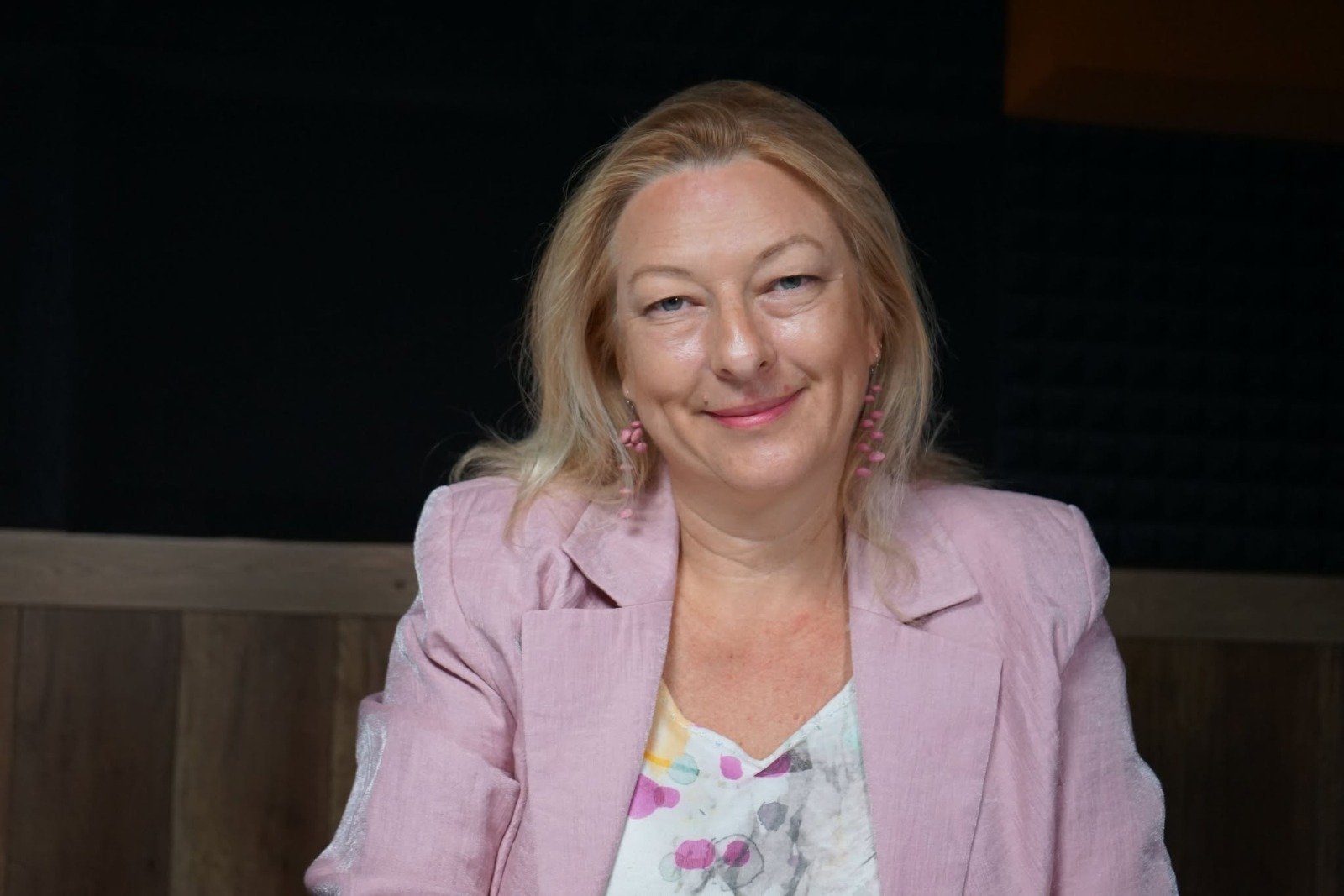
French political scientist Anaïs Marin has long focused on eastern Europe. From 2018 to 2024, she also served as the UN special rapporteur on human rights in Belarus.
Today, we primarily see Belarusian president Alexander Lukashenko as a dictator who brutally suppressed democratic protests after the rigged election in 2020. What was his reputation in Belarus before that?
From a sociological perspective, he fitted the definition of a “red director” — someone who managed a large agricultural enterprise in Soviet times. In 1994, he became president as a populist candidate, promising to fight corruption. He won a democratic election at the time, but subsequently reshaped all institutions and the constitution so that he could remain in power forever.
He evidently saw himself as the “father of the nation” and Belarusians as his children. He built his regime on one principle: if Belarusians did not demand rights from him, he would provide them with a paternalistic system resembling that of Soviet times. That is, a state that would care for people from birth to their deathbed. That was the Belarusian social contract.
To what extent is it true that he tried, at least partly, to manoeuvre between Russia and the West?
It is somewhat naïve to think Belarus had a choice. In reality, it has always been much closer to Russia for entirely obvious historical reasons and because of its structural economic dependence on Moscow. In my publications, I described Belarusian foreign policy as “dictaplomacy” — diplomacy typical of a dictator who has nothing to offer apart from his conditional loyalty.
What do you mean by that?
Lukashenko used the “threat” of normalising relations with the West primarily to blackmail Russia. Imagine a woman telling her husband: “Buy me another nice dress, otherwise I will go to the neighbour.” That was precisely what Lukashenko did, and it must be said that, until 2020, it always worked.
Even when he promised Europeans various concessions on democracy or human rights, he did so exclusively to blackmail Russia or secure the lifting of sanctions. Lukashenko never truly wanted to democratise Belarus; there is nothing of the sort in his DNA.
How much did that change in 2020?
After the protests, he was left alone and became completely dependent on Putin. Whether he liked it or not, the Kremlin eventually showed him who was boss. But people sometimes forget that Russians themselves feared the demonstrations. They were afraid that, if the revolution succeeded, the “contagion” could spread further. They called it a second Maidan, recognising that the demonstrations resembled the Russian protests on Bolotnaya Square in 2011 and 2012.
So, Lukashenko could previously blackmail Putin to some extent, but after the demonstrations his room for manoeuvre narrowed even further.
No one in the West even pretended that the situation in Belarus could “return to normal”. It was clear that Lukashenko had entered a so-called spiral of repression, in which more repression only leads to further repression. Life in Belarus had been terrible before, but after the protests there was no way back — there was no way to normalise relations with the West. All channels to the West were cut off, and only one person remained for Lukashenko to call: Putin.
It is worth recalling that, when Belarusian journalists at state television resigned in 2020 out of disgust at the brutality against protesters, Putin immediately sent his own reporters from Russian state television to Minsk. They continued broadcasting as if nothing had happened, except that they spread the messages of Russian propaganda.
Do we know what Lukashenko thought about Russia’s invasion of Ukraine, which Russia also launched from Belarusian territory? Two days after the start of the full-scale war, analyst Alexey Kazharski told me that Lukashenko had received an offer from his “supreme master” that he could not refuse.