



BAKU, Azerbaijan, November 6.
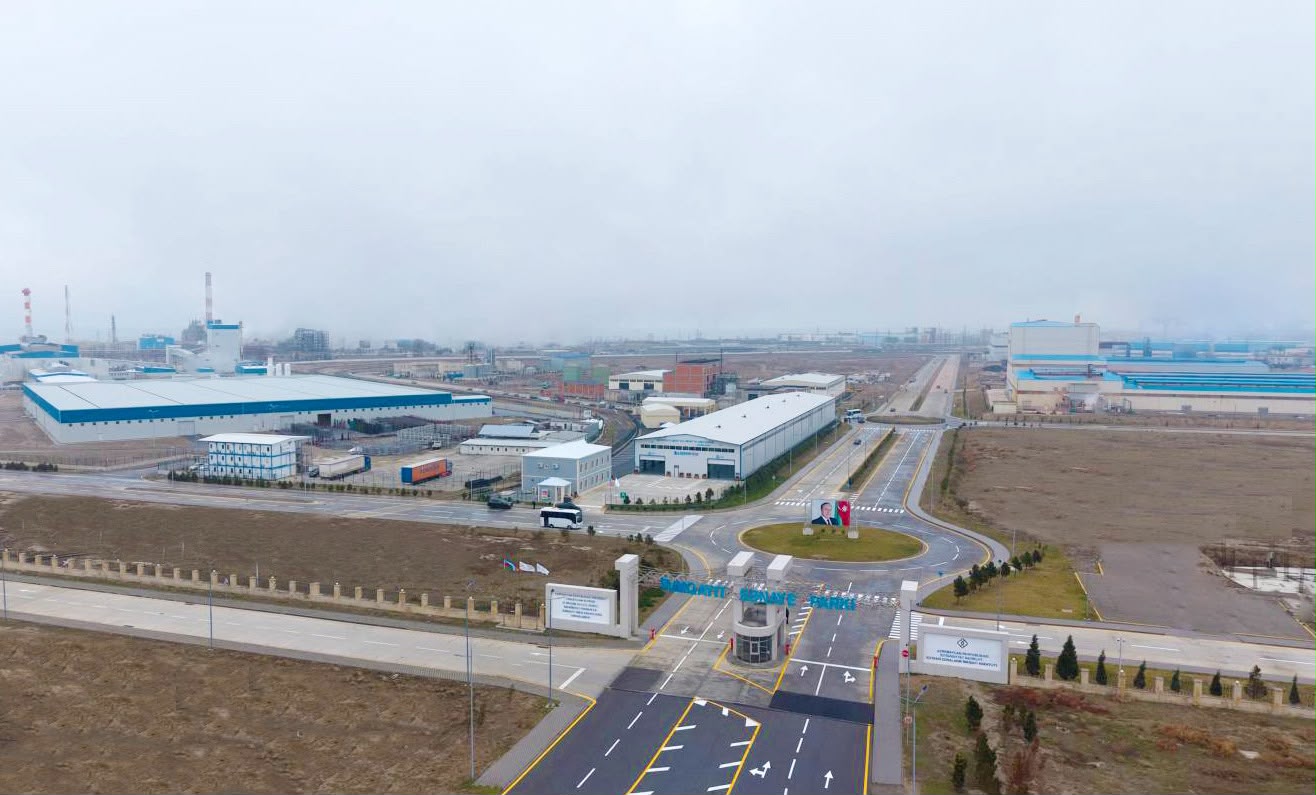
Azerbaijan’s Azerfloat company, operating at the Sumgayit
Industrial Park under the management of the Economic Zones
Development Agency under the Ministry of Economy, will export its
glass to the global construction market.
This was reflected in the agency’s report.
Specifically, Azerfloat plans to expand its production
capabilities and begin glass processing by 2027. The enterprise,
which manufactures products under the Garabagh Glass brand, also
aims to strengthen its position in international markets and
participate in global construction projects.
Azerbaijani product in new markets
Azerfloat began the production of clear glass in 2021. These
products have been introduced to markets in the US, Türkiye,
Ukraine, Georgia, Ireland, and Poland. Expanding the export
footprint is a key priority, and the company has already entered
the Saudi Arabian market. Glass has also been shipped to the
African continent on a trial basis. Meanwhile, Syria has shown
interest in the plant’s products; as the country undergoes
comprehensive reconstruction, there are tangible opportunities to
increase exports.
Glass processing and 70 new jobs
Currently, the enterprise’s daily production of clear glass
ranges between 250 and 270 tons. One of the company’s primary
objectives for the near future is to expand its production chain.
Plans are in place to commence glass processing at the plant
starting in 2027. This means that Azerfloat will be able to cut,
temper, laminate, and package the glass it produces, supplying it
to construction projects as a finished product. Developing this new
direction will enable the company to create added value, expand its
product range, and offer more comprehensive services to its
clients. Furthermore, the launch of the processing facility is
expected to create approximately 70 new jobs.
Targeting global construction projects
The company is also exploring opportunities to supply products
for larger-scale projects in foreign markets. Major construction
projects underway in Dubai, including those by Emaar, are among its
potential targets. The enterprise’s technological capabilities
allow it to offer products that meet the requirements of such
projects. In this regard, the transition to the processing stage is
of great significance. Supplying finished glass products directly
to construction sites will further enhance the company’s
competitiveness and its capacity to secure international
orders.
Logistical challenges in exports
One of the main challenges the company faces in accessing
foreign markets is high transportation costs. Although there is
strong demand and significant sales potential for the product in
Poland and other European countries, logistics costs impact the
final price, thereby weakening competitiveness. In some instances,
transportation costs, which can exceed the price of the glass
itself, significantly increase the total value of an order, making
the product more expensive for foreign buyers.
State support can expand export opportunities
A new state support mechanism plays a significant role in
alleviating the logistical challenges faced by exporters. Pursuant
to a decree issued by the Head of State on June 9, 2026, state
support is provided to cover transportation costs for the export of
non-oil and gas products originating from Azerbaijan. According to
official regulations, 70% of transportation costs incurred via
rail, air, or sea, as well as those involving vehicles registered
in Azerbaijan, are taken as the basis for calculation; for
transport involving vehicles registered abroad, this figure is 50%.
The mechanism has been in effect since September 1, 2026, and the
compensation amounts are paid on a quarterly basis.
Such a support mechanism can help reduce the company’s export
costs, thereby enabling its products to be offered at more
competitive prices in foreign markets. Consequently, this may
create additional opportunities for securing new orders, expanding
the sales footprint, and increasing export volumes.
Thus, the commencement of glass processing in 2027 could broaden
Azerfloat’s prospects for participating in international
construction projects, while the state support mechanism could
contribute to lowering logistics costs and strengthening the
company’s competitiveness in foreign markets.