



Country Terrine – pâté or terrine de campagne – is one the great classics of French charcuterie. Made with pork and pistachios, it is rustic, rich, full of flavour and far easier to make than most people imagine. Enjoy it for lunch, picnics or a relaxed grazing board.
Nagi’s Notes


I don’t think I’ve ever seen JB get so obsessed with cracking a recipe! He easily made over 30 terrines – actually, probably over 40 because this week alone he made 5 (!!) – tweaking tiny details each time until he was happy, then stress testing it to death (what happens if….??).
The end result is the best terrine I’ve eaten in Australia – including some from very fancy French restaurants. I have absolutely no hesitation saying this is every bit as good as the best terrines I’ve eaten in France!
Oh, it’s also unbelievably simple and costs 80% less than buying it. I can’t wait for you to make it!!

Country Terrine
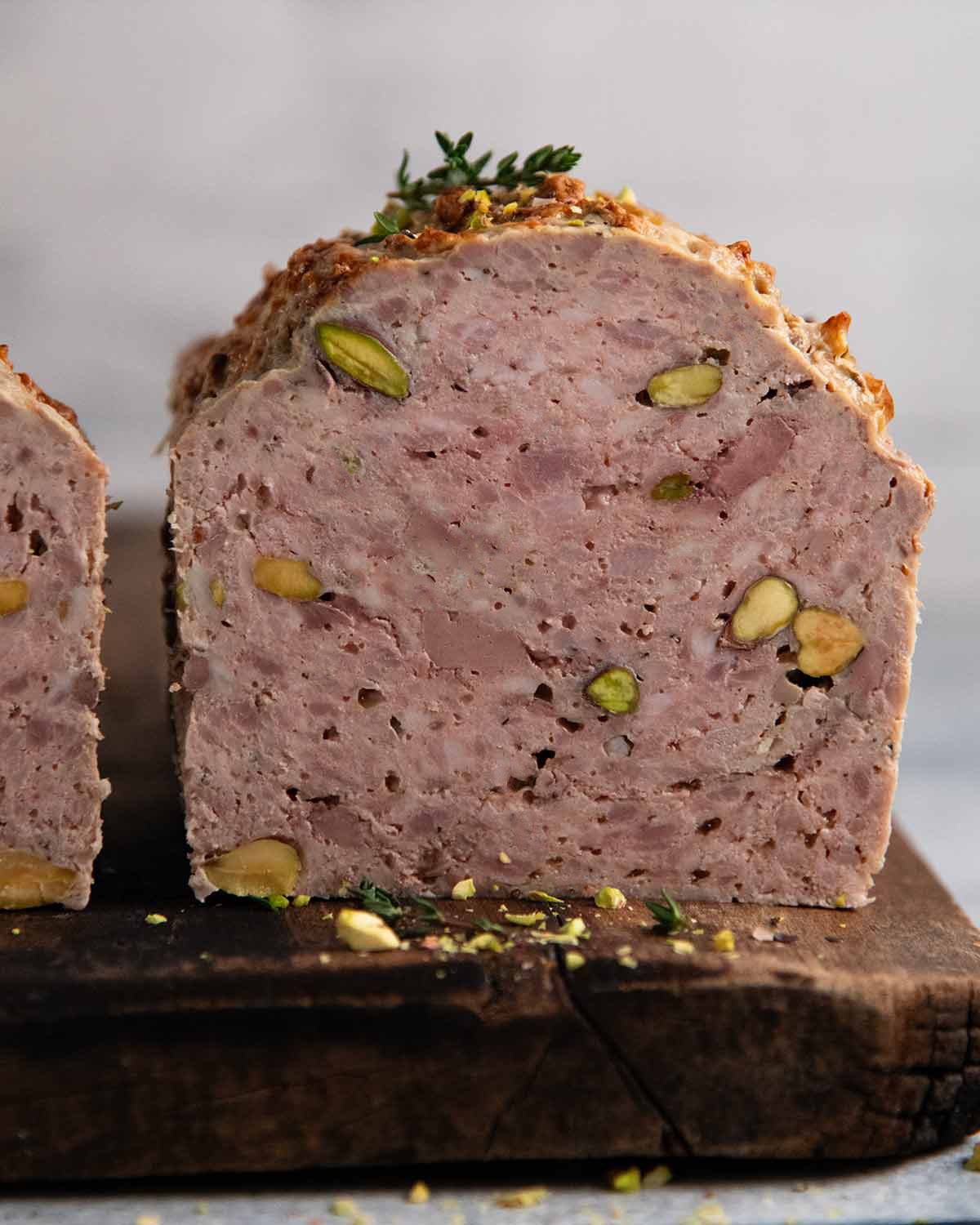
A terrine is one of the great classics of French charcuterie that you’ll find in every butcher and delis all over France. Think of it as a rustic country pâté – well-seasoned pork, gently cooked in a loaf tin until tender and sliceable. The flavour is rich with pork, and it has a soft texture so it can almost be smeared onto bread with a knife.
It’s hard to describe precisely because there is nothing else like it!
The name comes from the dish it’s traditionally cooked in – a deep, covered earthenware vessel called a terrine. These days, most home cooks use an ordinary loaf pan, which is what I use, but the name has stuck.
It’s a staple at bistros, often used for menu du jour (menu of the day) at lunch, and it’s right at home on any good cheese platter. I made countless terrines in my restaurant days back in Lyon, France, then later at a French restaurant in Manhattan.
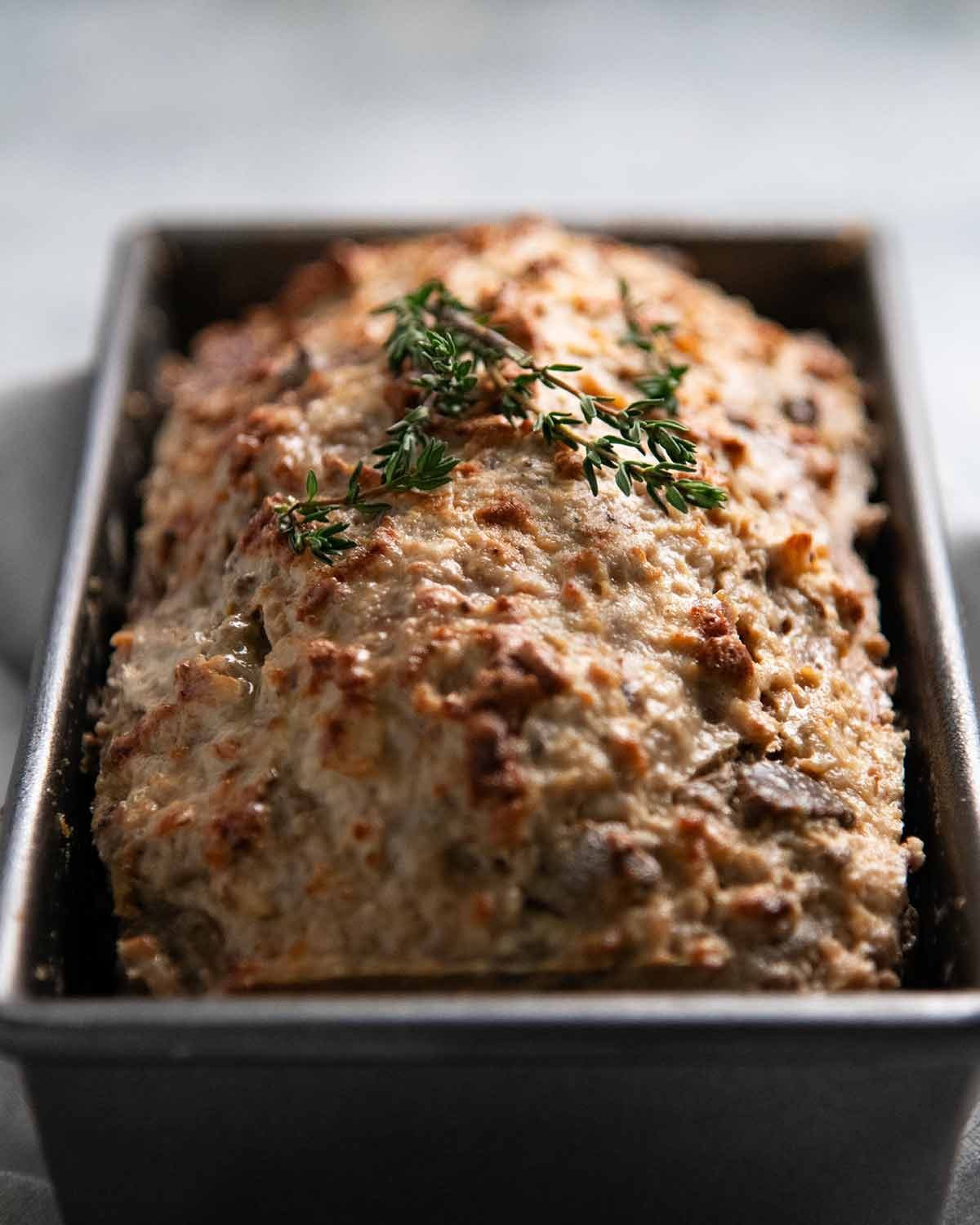
A homemade terrine
I wanted to bring you a homemade version that really tastes like the terrines I made professionally for years, but in a form any home cook can make.
It took me many more attempts than I expected – it’s a fine balancing act to get the seasoning, texture and moisture just right – and at one point, there were so many terrines packed in the fridge there was no room for anything else, and the team rechristened it The Terrine Fridge!
The recipe I landed on is incredibly straightforward, and I am genuinely proud of how authentic it tastes. Yet, it’s incredibly simple. You will be surprised! Nagi certainly was.
It also makes a lot of sense financially. A good French-style terrine can easily cost around $15 for a 150g slice, whereas for less than $30 you can make a generous 1.5kg loaf at home that will last for 5 days. The active hands-on time is only around 30 minutes too, though you do need a lead time of 2 days for marinating and refrigerating time.
Ingredients
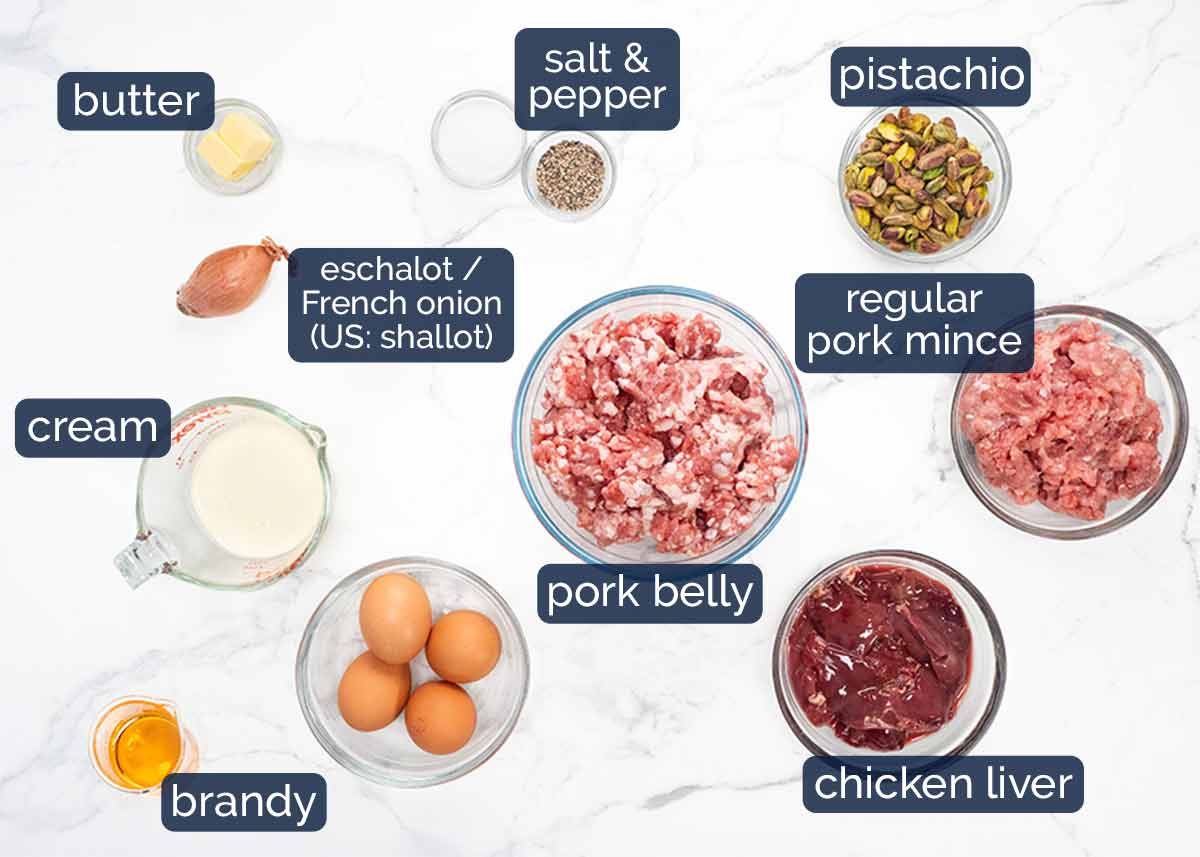
Terrine can be made using many different ingredients including meat, seafood, poultry and even vegetarian ones. This pork, chicken liver and pistachio terrine I am sharing today is the most classic flavour combination. Here is what you need.
-
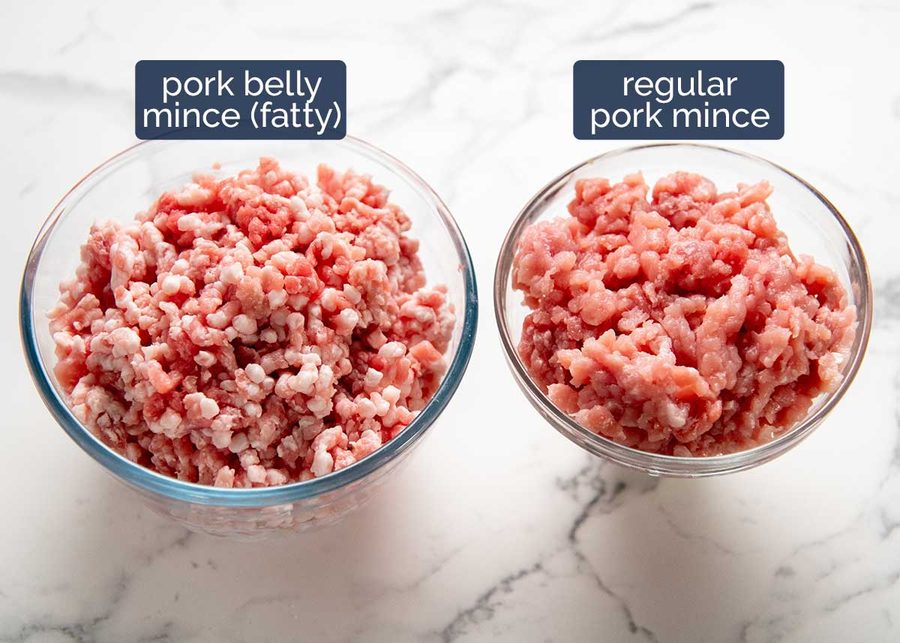
Pork belly mince (see photo below) – Pork belly is a fatty cut, and fat is essential in a country terrine. Without enough of it, the terrine will be dry, crumbly, lack flavour and will be more like a meatloaf than a terrine. That’s why I am using mostly pork belly meat here. As it cooks, the fat slowly renders through the terrine, keeping it tender and rich.
Ask your butcher to mince pork belly for you, or if buying pre-minced pork, make sure it is a very fatty one. Compare it to the photo below – it should be pale pink with plenty of visible white flecks of fat, and it’s more crumbly than regular pork mince.
-
Regular pork mince – While fat is essential for a good terrine, using only fatty pork would make it too rich. Regular (or lean) pork mince balances the richness of the pork belly, giving the terrine a firmer texture and a meatier bite while still keeping it beautifully soft.
-
Chicken livers – A classic ingredient in a French country terrine used to provide a more rustic taste and improve the texture. Don’t worry, they don’t make the terrine taste strongly of liver because they melt into the mixture as it cooks. Check “Note 2” in the recipe card below for cleaning instructions.
-
Brandy – Use cognac if you have it, which is the classic type of brandy used in French Country Terrine. Otherwise, use any inexpensive brandy – there’s no need to get fancy. Another opportunity to use the bottle you bought for Chicken Chasseur and Chicken Au Poivre!
-
Eschallots – Also known as French onions, eschalots or shallots (US name), these are the little onions that are purplish/white inside. They bring a sweeter, more delicate flavour to the terrine than regular onions, and they are finer so they almost melt away inside the terrine.
Don’t get confused with green onion (the long green stems) which are sometimes called shallots.
-
Butter – Just regular unsalted butter used to sauté the escallops.
-
Eggs – We need 2 whole eggs and 2 egg yolks. The eggs bind the terrine together, while the extra yolks add richness.
-
Cream – This brings richness into the terrine as well, and also helps a lot to keep the terrine tender. I tested this terrine with varying levels of cream and using the right amount really makes a difference.
-
Pistachios – Unsalted pistachios is the classic nut choice in terrines and pates of all sorts in French charcuterie, for both looks and flavour. I don’t think there is another nut that is an appropriate substitute here so if you don’t have pistachios, just leave them out.
-
Salt and pepper – To season the terrine.
How to make Country Terrine
This French country terrine isn’t difficult and the active hands on time is only about 30 minutes, if that. But it does take time – one night to marinate the meat, another for the terrine to chill and its flavours to come together.
-
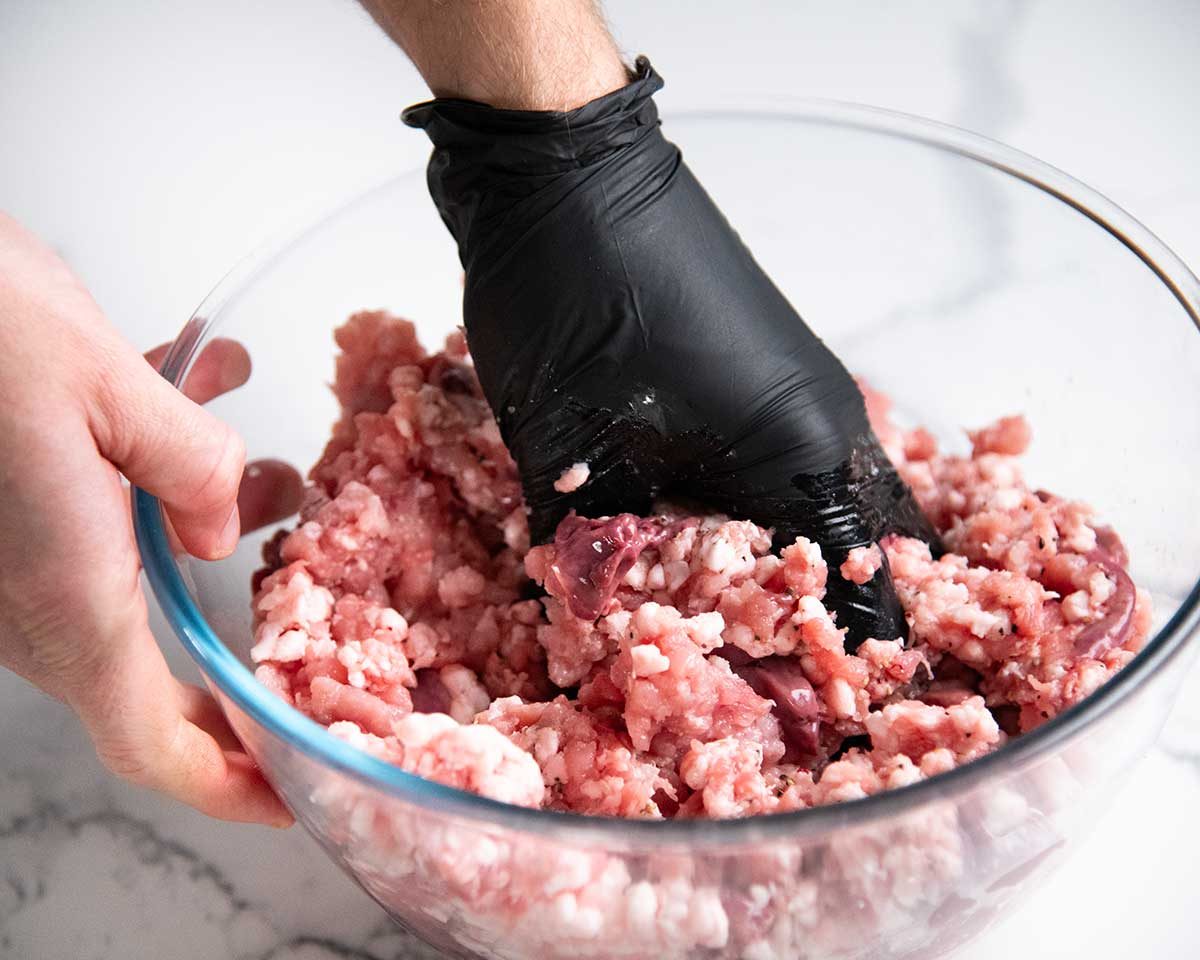
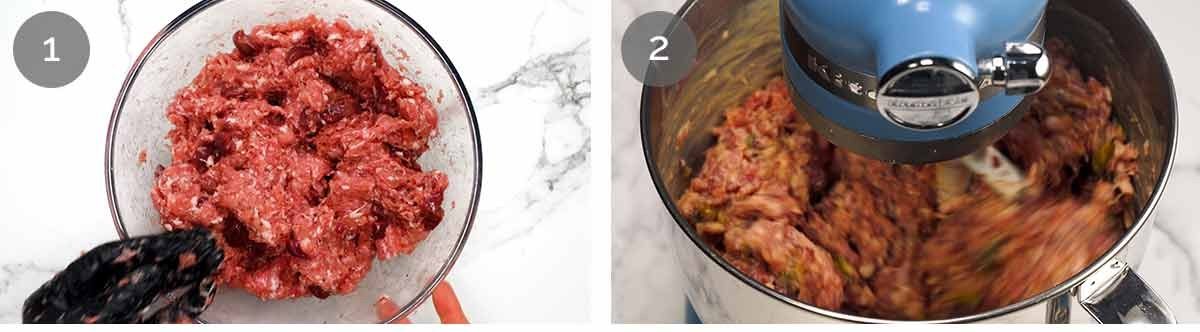
Marinate the meat – Place both the pork minces, chicken livers, salt, pepper and brandy in a large bowl. Use your hands to mix until everything is evenly coated, then cover and refrigerate overnight. This gives the seasoning time to penetrate the meat.
No marinating time? If you forget or don’t have the time, don’t worry – you’ll still end up with a great terrine. But marinating really does give the best result.
-
Make the terrine mixture – Sauté the eschalots in the butter, then put it in a stand mixer along with the marinated meat, eggs, cream and pistachios. Mix on low speed for 30 seconds, then medium speed for another 30 seconds, until evenly combined. You’re not trying to break down the meat into a paste, this is just to mix it together well. The slightly coarse texture is what gives the terrine its rustic look. Because of the volume of meat, it is easiest to do this with a stand mixer, but you can do it by hand.
Do not use a food processor as it will turn the meat into a paste and you’ll end up with a giant meatball instead of a terrine!
-
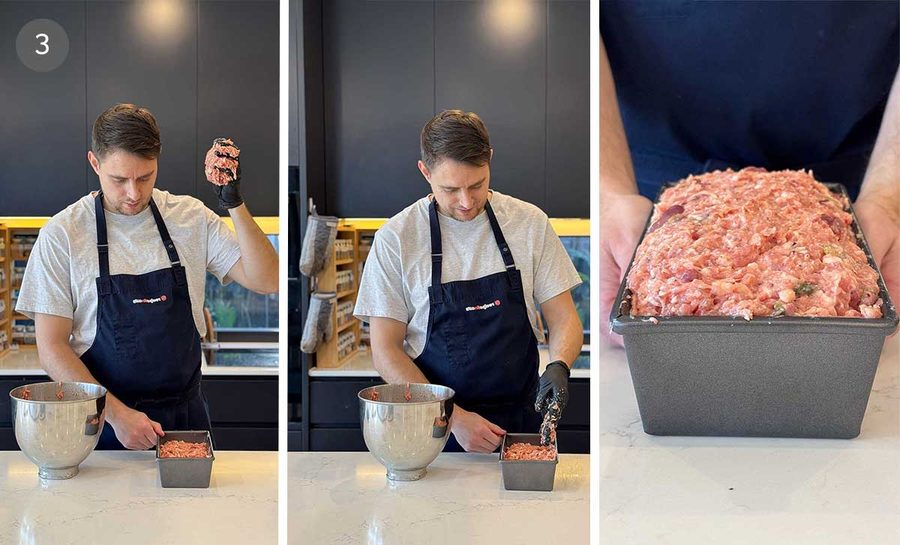
Fill the terrine – Transfer the mixture to the loaf pan one handful at a time, firmly slamming each handful into the pan and pressing it down before adding the next. This removes trapped air pockets and packs the meat tightly, giving you a smooth terrine that slices cleanly without unsightly holes or brown spots. I also like to give the terrine a few firm taps on the bench to help the mixture to become even more compact before baking.
-
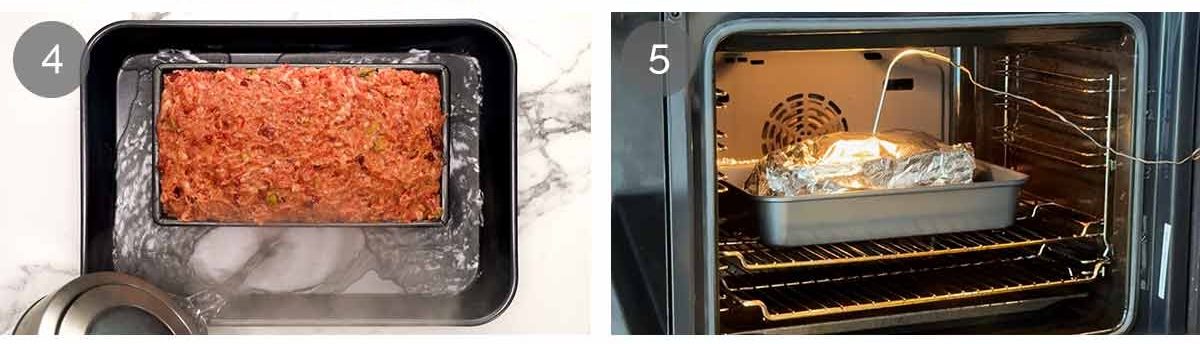
First bake – bain-marie (water bath) – Place the loaf pan in a roasting pan and pour in enough boiling water to come halfway up the sides of the loaf pan. Bake for 25 minutes at 220°C / 430 °F (200°C fan-forced). Baking inside a gentle hot water bath (bain-marie) prevents the outside from overcooking and helps the terrine to cook evenly.
-
Second bake covered – Reduce the oven temperature to 170°C / 340°F (150°C fan-forced). Loosely cover with foil, insert a thermometer into the centre and continue cooking until the internal temperature reaches 68°C / 155°F, about 75 minutes.
If you don’t have an oven-proof thermometer, use a regular meat thermometer and first check at 60 minutes. I don’t recommend making this without a thermometer as taking it out at the correct temperature is so important to ensure it doesn’t overcook and end up like a dry meatloaf. And if you undercook it, it is unsafe to consume – and you won’t know until the next day when you slice it.
-
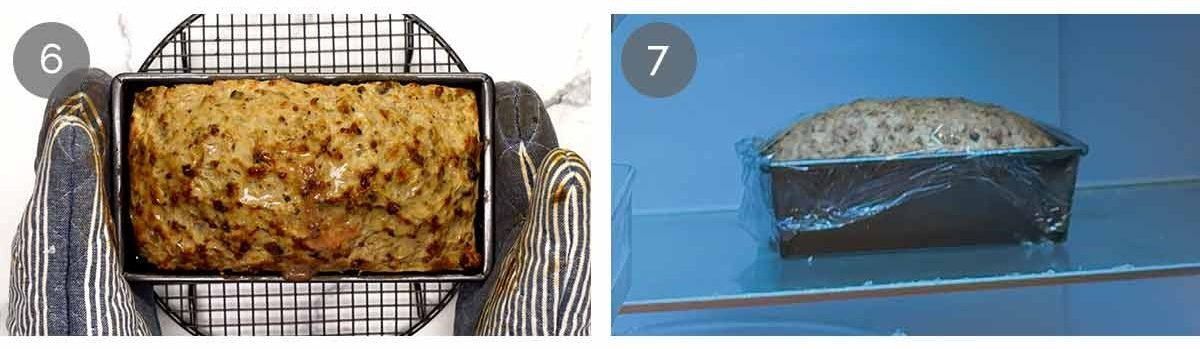
Rest 2 hours – Remove the terrine from the oven and leave it to rest on the bench for 2 hours. You will notice that there is juices and fat pooled around the edge of the pan. These will be absorbed into the terrine during the resting time and this helps make the terrine beautifully tender and soft.
The internal temperature will continue to rise to around 75°C / 167°F before slowly dropping to room temperature. The top will look quite pale when it first comes out of the oven, but don’t worry it will darken as it cools.
-
Refrigerate overnight – Cling wrap the terrine and refrigerate overnight before serving. As it chills, it firms up for neat slices while the flavours meld and develop.
-
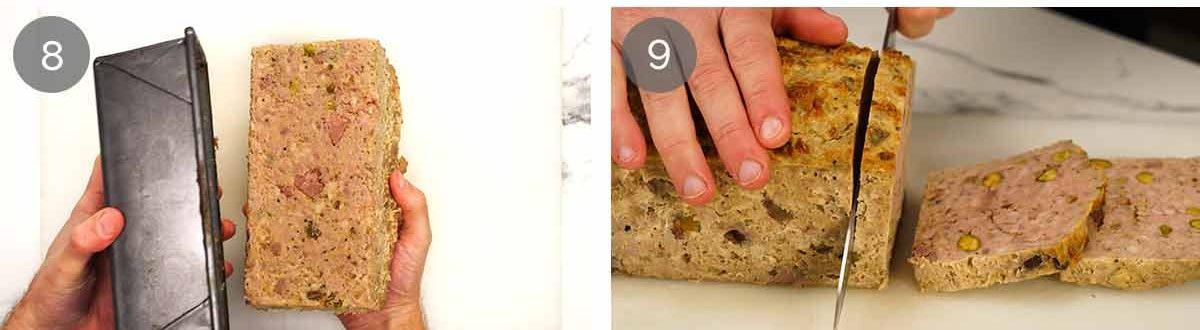
Un-mould – The next day, time for the big reveal! The chilled fat will have effectively glued the terrine to the loaf pan, so it won’t slide out on its own. There’s a few ways to make it release. I like to usually just run a blow torch over the outside of the pan to gently soften the fat around the edges, then invert and give it a gentle shake.
You could also just dip the outside of the loaf pan in hot water for a few seconds, or warm it briefly over a low flame on the stovetop.
-
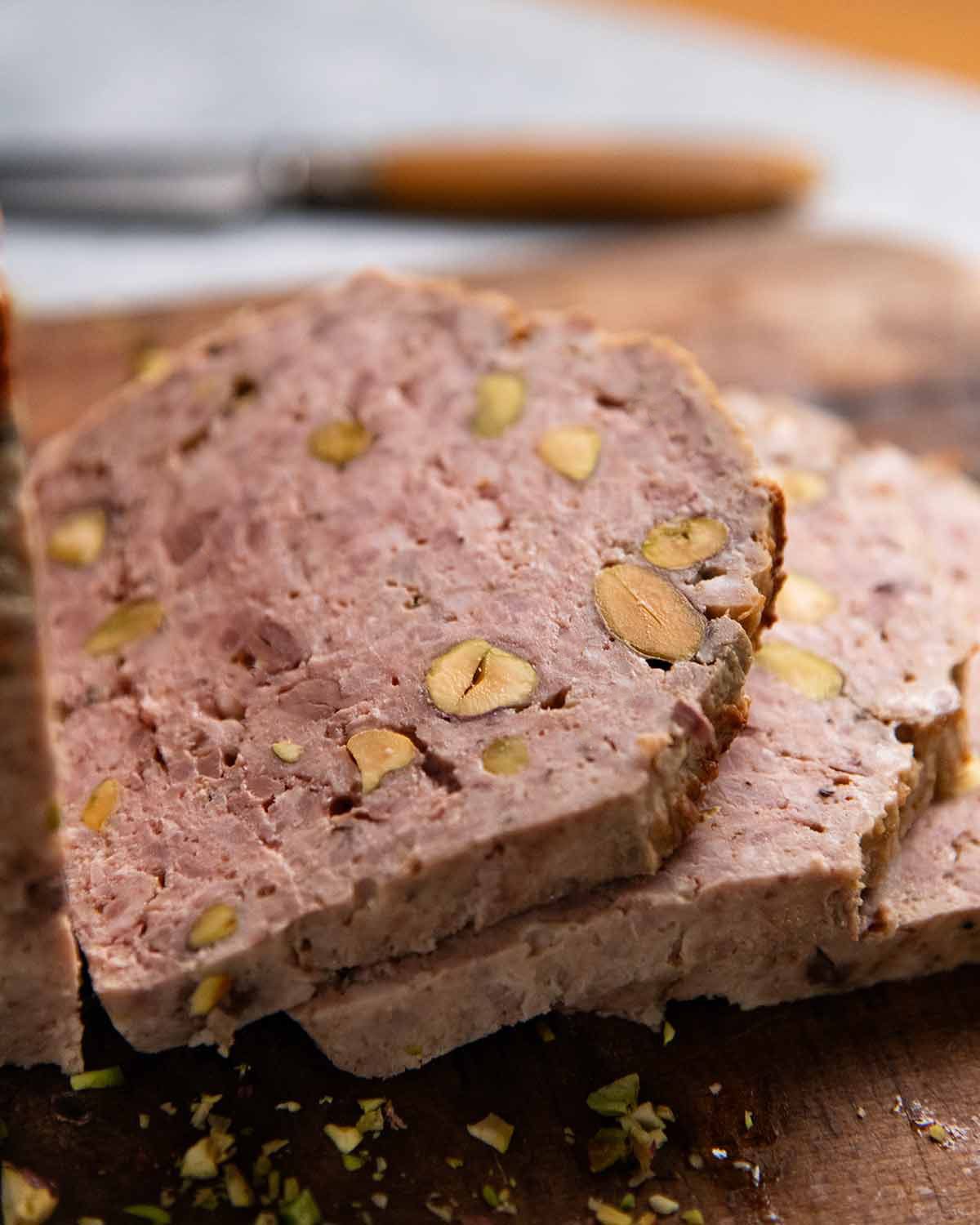
Slice to your preferred thickness (I like about 1 cm / 0.4″). Don’t be surprised if the beautiful blush pink colour starts to fade after slicing. This is completely normal, the freshly cut surface gradually oxidises when exposed to the air but it still remains delicious. To keep the cut slices pink, you will need to use curing salt. See FAQ for more information about this.
How to keep and serve Country Terrine
In charcuterie shops and butchers in France, terrines are displayed whole and cut to order. So keep yours whole in the fridge until you want to serve it. While it’s lovely fridge-cold, if time permits, allow it to come to room temperature because it becomes softer.
At home, we would just pull out a baguette or crusty bread and terrine, place it in the middle of the table for everyone to help themselves. My mother would bring it out as a light snack between meals or an entree before a main.
At bistros it is offered on the menu as a light lunch with a side salad (try this French baby gem lettuce salad) or as an entree.
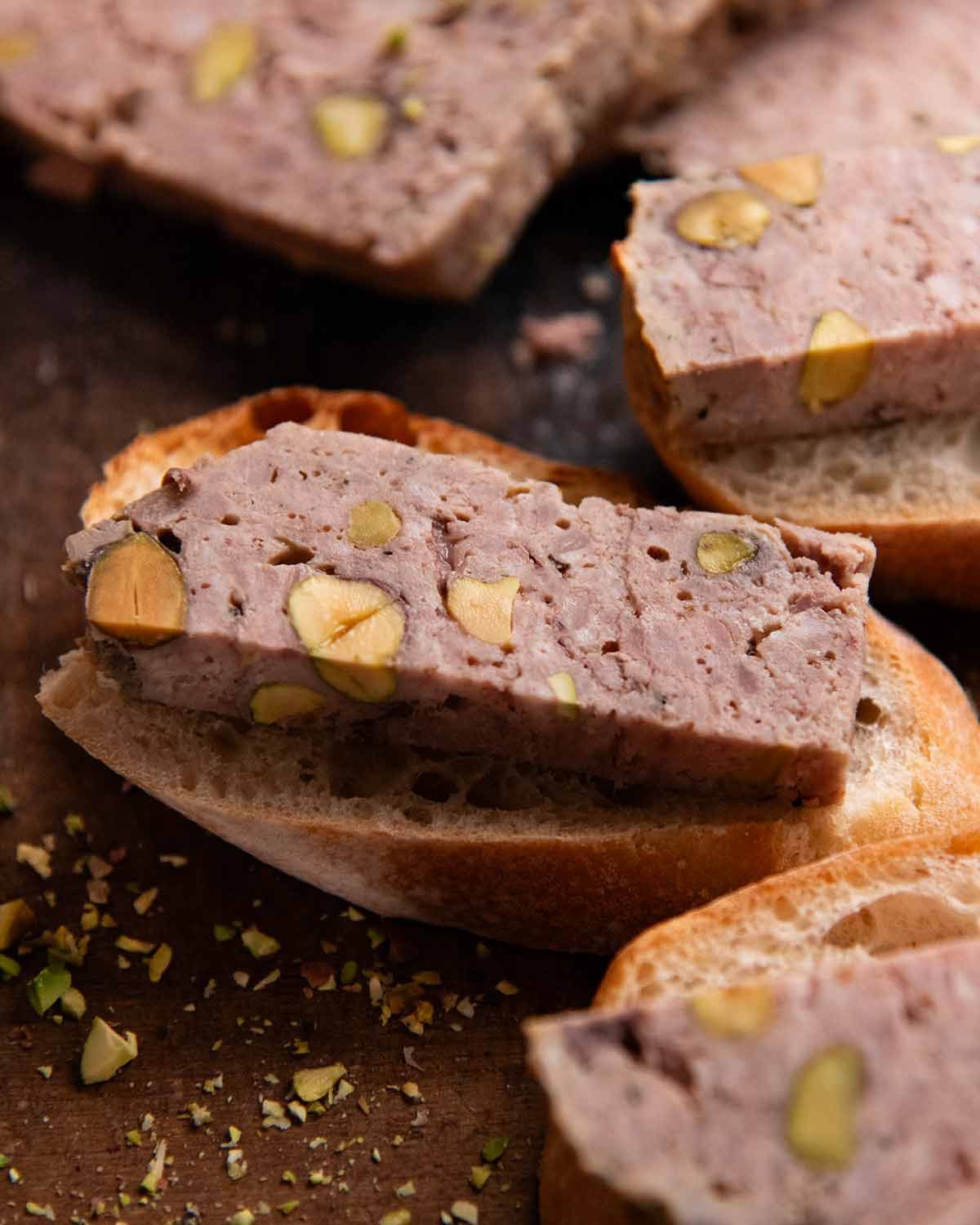
It is also often seen as part of a cheese board, or turned into canapés by placing slices on toasted bread (see the Life of Jaffle section below!), or packed for a picnic.
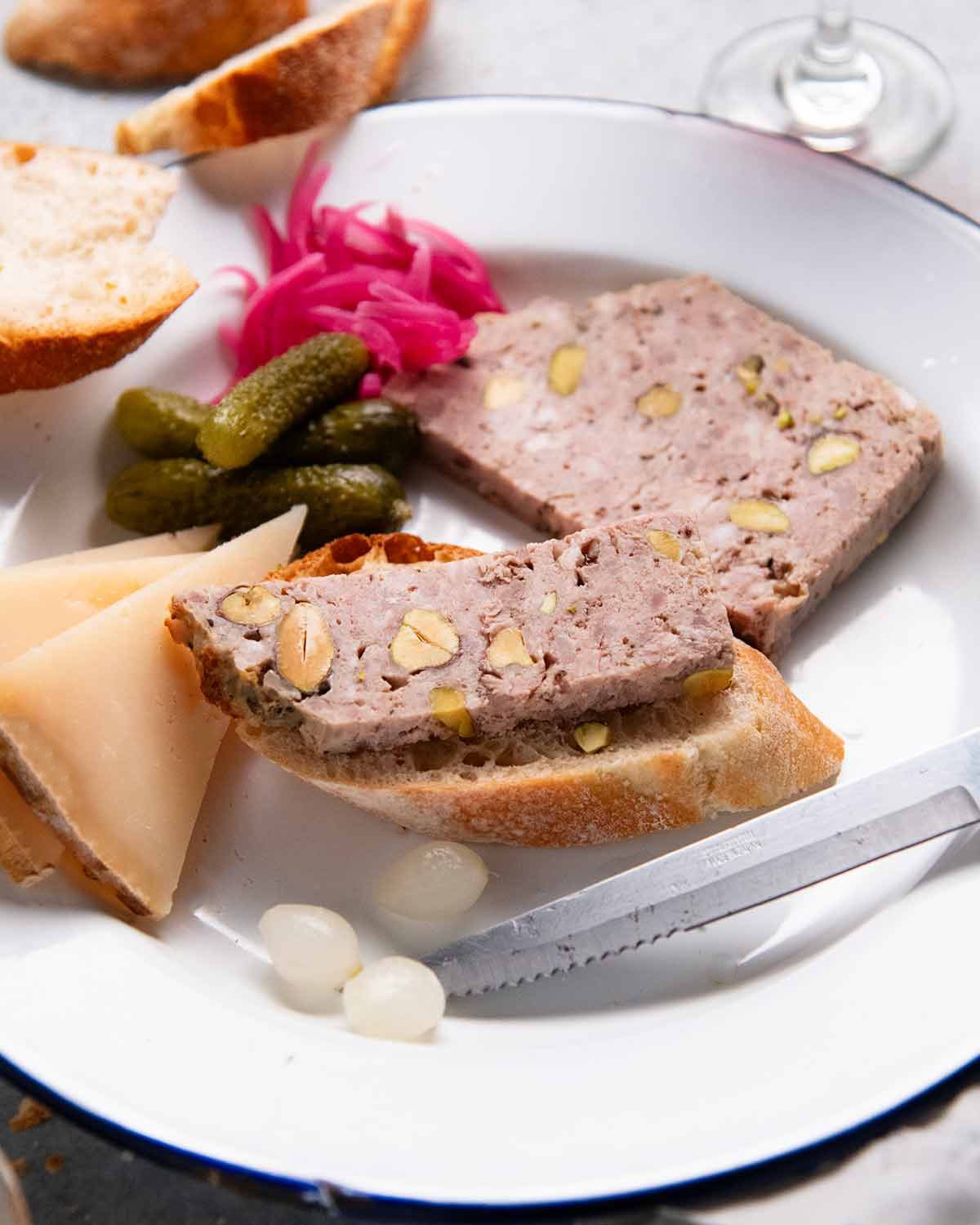
There’s really no right or wrong time to enjoy a terrine, just when you feel like it really! I’ve been having it for breakfast because I’ve made so many iterations in recent months. It took me more than 40 test batches to get here, and I’m so proud of how this homemade version turned out. I can’t wait to hear what you think. Bon appétit! – JB
FAQ – Country Terrine
Pork belly mince isn’t as common as regular pork mince, but it’s easier to find than you might think. Many butchers can make it for you on request by mincing skinless pork belly.
During most of my testing, I bought mine from a chicken shop “JC Chicken Shop” at Top Ryde City Shopping Centre in Sydney. They also sell very fatty pork mince made from pork offcuts, which worked just as well and was surprisingly inexpensive.
Curing salt (also called pink curing salt) is a special type of salt used to make cured meats and smallgoods such as ham, bacon, salami and terrines. As well as extending the shelf life.
I don’t use it here because this terrine is designed to be enjoyed within a few days and it still has a lovely blush pink centre when freshly sliced, even though the colour naturally fades over time. If you do decide to use curing salt, measure it accurately and make sure to use Cure #1, which is intended for cooked charcuterie like this terrine. Cure #2 is for dry-cured products such as salami and should not be used here.
These three are all part of classic French charcuterie and I understand it can be easy to mix them up!
A terrine is a coarse mixture of meat that’s gently cooked in a loaf-shaped mould (also called a terrine). It usually has a rustic texture with visible pieces of meat and is served cold or at room temperature in slices.
A pâté is a broader term that covers many meat preparations. It’s often much smoother than a terrine because the meat is blended into a fine paste, though some pâtés can still be a little rustic.
A pâté en croûte takes things one step further. It’s a terrine or a pâté (the rustic kind) baked inside a pastry crust. It’s then finished with a layer of savoury jelly to add flavour and give its signature beautiful slices. You’ll often spot stunning versions in French restaurants, delicatessens and charcuterie shops, decorated with intricate pastry patterns. It’s actually my favourite of the three, and one day I’d love to develop a RecipeTin Eats version!
A lot! I think I made this terrine more than 40 times before I was happy with it. And most of it was done alongside my banana bread testings. So a lot of loaf pans were being used at the time!
As usual, the biggest challenge was creating a terrine that’s achievable for home cooks without compromising on flavour or texture. I tested different binders (eggs alone or potato starch slurry), different ways of adding fat (pork belly mince, cream, egg yolks… or all three?). I experimented with different aromatics, different seasonings. I also tested cooking times, resting times, different meat ratios, and even versions made with only regular pork mince to see how much difference the extra fat really makes.
Every batch answered one question… and usually raised two more! But that’s exactly how this recipe came together. The result is a terrine that’s rich, full of flavour and reliable, with techniques and ingredients that are as approachable as possible for home cooks.
Watch How To Make It
Hungry for more? Subscribe to my newsletter and follow along on Facebook, Pinterest and Instagram for all of the latest updates.
Country Terrine – pork and pistachio
Prep: 30 minutes
Cook: 1 hour 40 minutes
Marinating + Resting: 2 days
Total: 2 days 2 hours 10 minutes
Appetizer, Party Food, Starter
French
Servings15 slices
Tap or hover to scale
Ingredients
CURING SALT OPTION (NOTE 4)
Prevent screen from sleeping
Instructions
ABBREVIATED RECIPE:
-
Marinate the pork, chicken livers, salt, pepper and brandy overnight. Sauté the eschalot in butter for 3 min. Add to the marinated meat with the eggs, yolks, cream and pistachios, mix. Pack into loaf pan.
-
Bake 25 min in hot water bath at 220°C / 430 °F (200°C fan) then cover with foil, reduce to 170°C / 340°F (150°C fan) and cook until the centre reaches 68°C / 155°F (about 75 min). Rest 2 hrs, fridge overnight, serve.
Make terrine mixture:
-
Marinate (Note 7) – Place both pork minces and chicken livers in a large bowl. Add salt, pepper and brandy. Mix well with your hands until everything is evenly coated. Cover and leave in the fridge to marinate overnight.
-
Preheat oven to 220°C / 430 °F (200°C fan-forced).
-
Sauté eschalot – Melt the butter in a small frying pan over medium heat. Add the eschalot and cook for 3 minutes, stirring regularly, until softened but don’t let it go golden. Set aside to cool slightly.
-
Terrine mix – Place the marinated meat in the bowl of a stand mixer. Add the cooked eschalot, eggs, egg yolks, cream and pistachios. Using the paddle attachment, mix on low speed for 30 seconds then on medium speed for another 30 seconds until well combined. It should be mostly smooth (not pureed) with a slightly coarse texture that gives the terrine its rustic look and a better bite. (Note 8 for no stand mixer)
-
Fill the terrine – Transfer the mixture to a loaf pan (21.5 x 11.5 x 7 cm / 4.5 x 8.5 x 2.75″) by taking a handful of the mixture and slamming it firmly into the pan. Repeat this 4 – 5 times, pressing the mixture down between each addition. This removes air pockets and packs the meat tightly, which gives a smooth terrine that slices cleanly without brown spots from air pockets. Give the terrine a few firm taps on the bench, this will help mixture to settle and become more compact before baking.
Cook:
-
Bake in a bain-marie (water bath) – Place the loaf pan in a roasting pan. Pour boiling water around it until it reaches halfway up the sides of the loaf pan. Bake for 25 minutes. Cover the terrine loosely with foil, still in the water bath. Lower oven to 170°C / 340 °F (150°C fan), and bake until the internal temperature reaches 68°C / 155°F, around 75 minutes. (Note 9)
-
Rest (Note 9) – Remove from the oven. The top looks quite pale but don’t worry, the colour will darken as it cools. Leave the terrine on the counter for 2 hours. As the terrine rests, the juices and rendered fat released during cooking slowly soak back into the meat, making it wonderfully tender and soft. The internal temperature will rise to about 75°C / 167°F after 15 minutes, then slowly drop to room temperature.
-
Refrigerate overnight – Cling wrap the terrine and refrigerate overnight. As it chills, it will allow the flavours to meld and develop. Don’t skip this, it’s well worth the wait!
-
Un-mould – The next day, un-mould. Run a blow torch briefly over the outside of the loaf pan to warm it slightly, then invert onto a board or platter. Alternatively, dip the pan in hot water, or warm it briefly over a low flame on the stove.
-
Slice and serve at room temperature. I cut mine 1cm / 0.4″ thick but it’s really up to you. The beautiful blush pink colour fades after slicing – that’s perfectly normal as the meat oxidises when exposed to the air.
-
Serving – Serve the terrine with slices of crusty baguette, pickles and mustard. Spread bread with a little mustard, top with a piece of the terrine and a pickle. Then enjoy. You’ve earned it!
Recipe Notes:
Regular pork mince – I use a combination of both fatty and regular pork mince to balance the flavour and texture. Using just fatty pork would be too rich. You can use regular pork mince (around 15% fat) or lean (around 10% fat).
2. Chicken livers – These add richness to the terrine without making it taste strongly of liver. Trim away any green or yellowish spots (these are bitter), then remove any obvious sinew or tough connective tissue. There’s no need to be too fussy – small pieces of membrane will soften during cooking.
3. Brandy – This is a classic ingredient in terrine. There is no need to use an expensive one. Cognac is preferred if you have it is the brandy that is typical used in France, but any brandy will do. Non alcoholic substitute – You can use low sodium chicken stock or non alcoholic wine, though the terrine will not have the subtle flavour that brandy adds to it.
5. Eschalots – Also known as French onions or shallots (US name), these are the little onions that are purplish/white inside. They bring a sweeter, more delicate flavour to the terrine than regular onions, and are also finer so they almost disappear in the terrine.
6. Pistachios – The classic nut choice. I’d rather leave it out than use a different type of nut.
7. Marinating – For the best flavour, marinate the meat overnight. If you forget or don’t have the time, don’t worry – you’ll still end up with a great terrine.
8. Mixing the terrine – If you don’t have a stand mixer, it can be done by hand. Don’t use a food processor, it’s too powerful. Whisk together eggs, cream and eschalots (including residual butter in pan) in a large bowl. Add marinated meat and pistachios, use your hands to mix well.
9. Internal temperature – An oven safe thermometer is useful here but if you don’t have one, check first at 60 minutes using a regular meat thermometer.
10. Resting – Like cooking any meat, resting lets the juices and fat around the terrine be absorbed back into the meat, keeping it moist and tender.
Leftovers and storage – Store the terrine in an airtight container in the fridge for up to 5 days. In fact, it’s even better on the second or third day as the flavours continue to develop. Suitable for freezing? To be checked.
Nutrition per serving.
Nutrition Information:
Calories: 428cal (21%)Carbohydrates: 1gProtein: 14g (28%)Fat: 40g (62%)Saturated Fat: 15g (94%)Polyunsaturated Fat: 4gMonounsaturated Fat: 17gTrans Fat: 0.05gCholesterol: 174mg (58%)Sodium: 676mg (29%)Potassium: 241mg (7%)Fiber: 0.1gSugar: 0.4gVitamin A: 2063IU (41%)Vitamin C: 4mg (5%)Calcium: 22mg (2%)Iron: 2mg (11%)
Life Of Jaffle
Jaffle was completely fixated on these little terrine canapés the whole time, staring at them with his puppy eyes that are impossible to resist. I couldn’t expect him to sit through a terrine photoshoot without a reward! So rest assured, once we wrapped up, he earned himself a little taste for being such a patient model.

And because one Jaffle photo is never enough, here’s another of him doing what puppies do best, running and jumping around the grass. The team here loves him so much and we are so grateful to have him around.
And I still catch myself calling him “Dozer” from time to time. Old habits are hard to break. Missing you Dozer. ❤️