



It’s been a little over a month since we informed you about a new device that would help authorities track more details than the supposed “limited car information” that automated license plate readers (ALPRs) like Flock say they track. But a new report from 404 Media found Flock cameras are tracking a lot more than just your license plate, car, and other vehicle features. The cameras are tracking you, too.
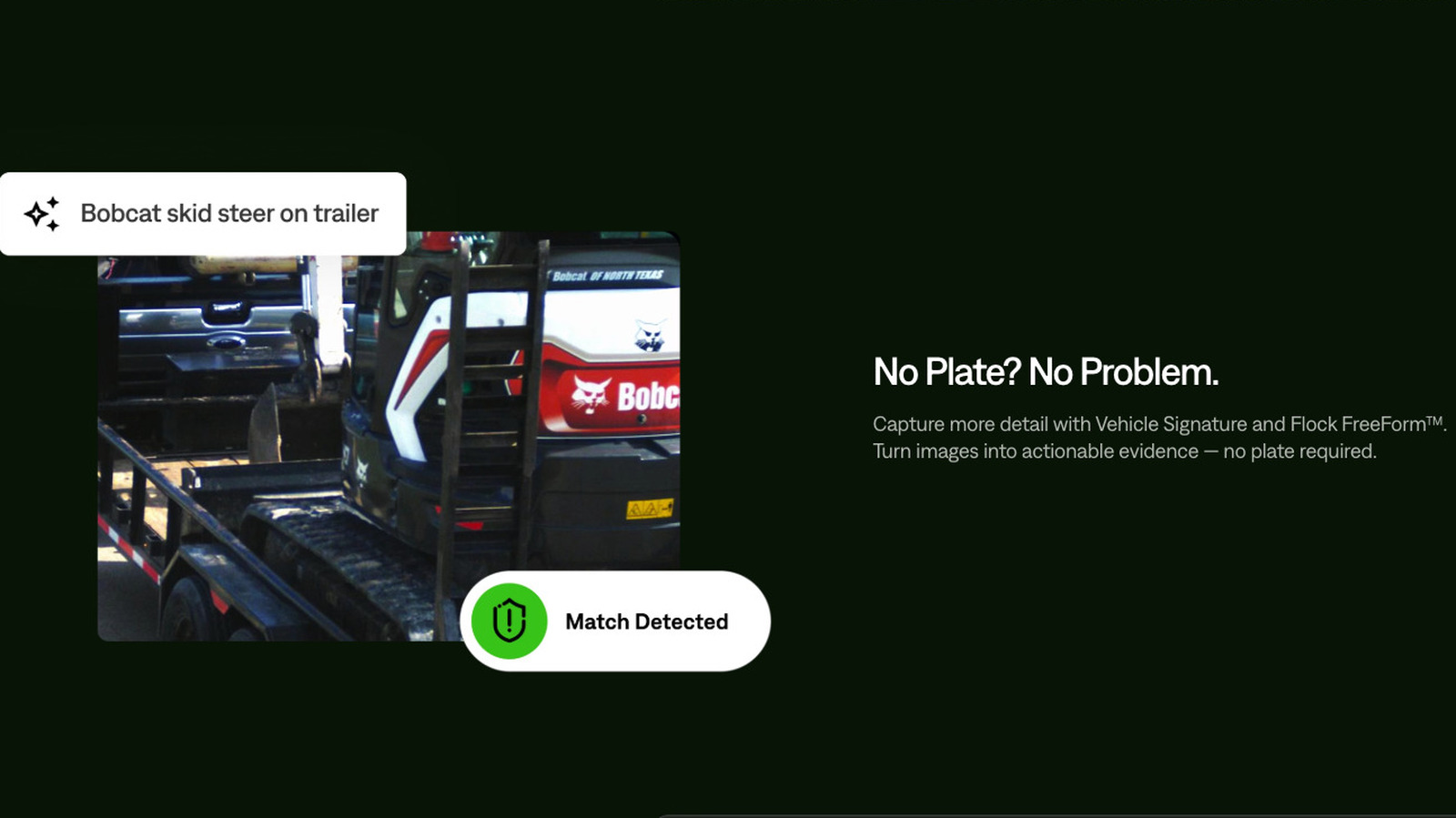
The story, published Thursday, found that police departments were using a special tool provided by Flock services called FreeForm. On Flock’s site, it describes the tool as expanding on Vehicle Signature — which consists of a vehicle’s plate, color, make, model, and identifiable details like roof racks, bumper stickers, and dents — enabling “searches based on everyday language such as ‘white sports car with a racing stripe’ or ‘red pickup truck with a dog in the bed.'”
Flock doesn’t hide the fact that this is possible either. These searches are touted on its website. Additional data reviewed by 404 Media’s team found examples searches by authorities have included a looking for “male with tattoos,” “man weasring [sic] black t-shirt and shorts,” and “white woman wearing grey shirt, blonde hair, black shorts with blue and white shoes.”
Finding people was as easy as typing that identifying information into Flock’s “text_prompt” field in the FreeForm search. It’s not limited to just characters and numbers for your license plate.
No Plate? No Problem.
Flock’s FreeForm search is a feature on its Condor cameras. These are equipped with “people detection alerts” and “Guardian mode” which automatically zooms in on people and vehicles, and takes note of what they look like as seen in the screenshot above. Sure, Flock argues it doesn’t collect “personal information, facial recognition, or anything tied to individuals,” which is technically true. Nothing is recognized and automatically tied to you. However, if you pass a Flock camera, specifically a Condor, your person and outer characteristics are stored in someone’s database, and however that data is handled is searchable by either local authorities, or whomever else that data is shared with.
Where this becomes a concern is when we look back to stories like my report from earlier this month on the police officer who pulled over a woman he was stalking via Flock searches, or prior stories on women that were found to be tracked for abortions, or ICE searching Flock’s national data to find immigrants. Now it’s not just finding vehicles tied to people. Authorities can put in descriptions to find anyone they might find interesting, whether legally searched or not.
Flock outright denies that anyone can use the search for attributes like “race, ethnicity, religion, nationality,” and some of those items are not realistically searchable or identifiable by camera, anyway. But in FreeForm someone can search for a brown, black or white person, with certain identifiable features like their hair, tattoos, clothing, etc., and still find a “person of interest,” outside of vehicle and plate data.
Serious privacy concerns with a company that touts privacy first
Tom Bowman, policy counsel for security and surveillance at the Center for Democracy & Technology, told 404 Media in a statement, “This is a classic bait-and-switch. Your town was pitched a tool to catch stolen cars and finds missing kids. It’s like being sold a smoke detector and only later finding out it’s been recording every conversation in your house.”
The timing of these findings could not be any more poignant, as the Los Angeles Police Department, one of Flock’s largest customers, let its contract expire (although it’s currently being renegotiated) due to concerns with Flock’s handling of its data ownership. California has strict privacy laws, which Flock cameras have already had to adhere to so that the department could use it. For instance, data had to remain with the LAPD and not be shared with any entity outside of the department. The LAPD shared in a statement that it had “serious concerns around civil liberties and civil rights” and that “we have a responsibility to ensure that any technology we use is supported by strong protections for individual privacy and the security of the information entrusted to us.”
The fact that Flock hasn’t entirely been forthcoming about its software usage, and how it can be utilized, likely won’t help the LAPD, Californians, or a disgruntled American public with feeling any more comfortable with its technology being used anywhere. For a company that touts “privacy first” on its own site, the claim is near laughable considering this latest discretion, which is bound to be cited as another reason more cities will look to cut ties with its “service.”