



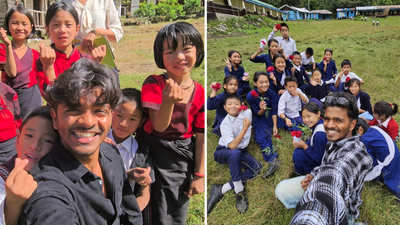
A journey of nearly 3,000 kilometres took Ali Ashqar from Areekode in Kerala’s Malappuram district to Karo, a remote village in Arunachal Pradesh’s Shi-Yomi district, close to the India-China border. The 28-year-old teacher chose to work at a school where poor roads, landslides, limited electricity and unreliable internet make everyday life difficult. Today, he teaches at NSCBAV School, which has 102 students, and also works with teachers, parents and the local community.Ashqar’s story came into wider public attention after videos of students celebrating Onam at the school went viral. But his work in the region began well before the celebrations brought the children into the national spotlight.As reported by The Better India and various media, Ashqar moved to Arunachal Pradesh and joined NSCBAV Karo in the remote Shi-Yomi district. His responsibilities extend beyond classroom teaching to teacher training, organising school activities, engaging with the community and working closely with parents.
From Kerala to a school near the China border
Ashqar’s educational journey took him through several parts of India. According to Manorama Online, he completed his bachelor’s degree in Kerala, pursued his master’s degree in Punjab and earned his B.Ed. in Puducherry. He also worked in Kashmir for some time.His interest in travelling and teaching in different parts of the country eventually took him to Arunachal Pradesh. While studying for his M.Ed. at a university in Shi-Yomi between 2022 and 2024, he became familiar with the region and decided that he wanted to work in Karo.He was drawn to the school despite its remote location and limited access to electricity and the internet. He subsequently joined through an NGO. The school was facing serious difficulties when he arrived. As reported by The New Indian Express, it had no hostel, students were dropping out and the institution was on the verge of closure. The government and an NGO stepped in around the time Ashqar joined as a language teacher. The school now has 102 students.
Landslides, poor roads and limited electricity make daily life difficult
Teaching in Karo involves challenges that are not usually part of a teacher’s routine in a city. According to The Better India, poor roads, landslides, unreliable electricity and limited network connectivity affect everyday activities. Medical facilities and essential shops can be several hours away.The distance from the village to the nearest city also makes it difficult to arrange supplies. During the school’s Onam preparations, Ashqar told The New Indian Express that the journey to procure materials involved travelling around 200 kilometres.“The village is very far from the city, so procuring everything was difficult. It is around 200km away, but because of the condition of the roads, the journey can take almost eight hours. There is also limited electricity and internet connectivity here,” he said.He added that teachers, students and villagers worked together to arrange the celebration. Villagers contributed vegetables, while other supplies had to be brought from the city.Despite these difficulties, Ashqar has continued teaching and sharing the children’s activities through his Instagram account, @teacher_tales__. His posts include students singing, dancing, participating in school activities and spending time at the hostel. Ashqar hopes to install smartboards and set up at least one properly equipped smart classroom.
How a Malayali teacher introduced Onam to Arunachal students
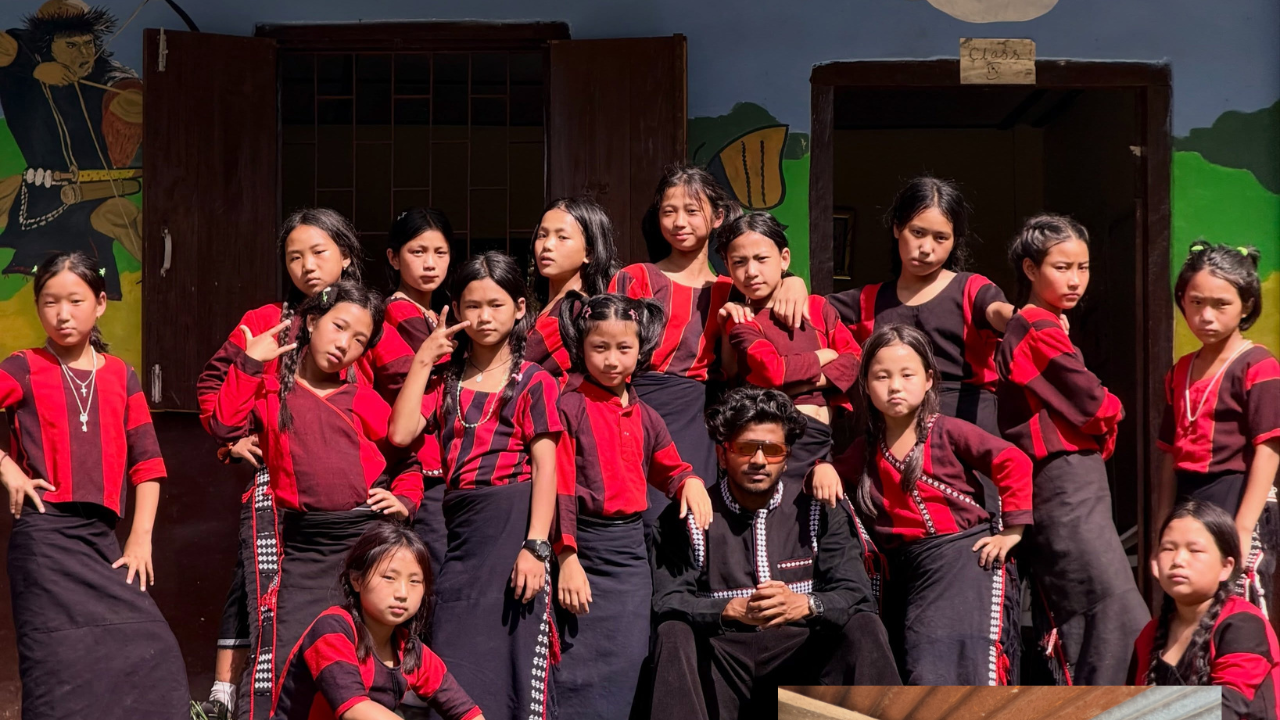
Image courtesy: Instagram/@teacher_tales__
The school’s Onam celebration in 2026 brought Ashqar and his students considerable attention online. He organised the event with the school’s other teachers, introducing the children to Malayalam songs, traditional food and the customs associated with the festival.One video of the celebration crossed around five million views. Union Minister Kiren Rijiju also shared a clip. Ashqar explained why he wanted the children to take part in the festival. “Onam is a celebration where people come together regardless of religion or background. I wanted the children to understand that spirit of different traditions coming together and the sense of togetherness it carries,” he told The New Indian Express.The celebration included an elaborate dance performance lasting nearly eight minutes. Students performed to Malayalam folk and film songs. They also danced to popular social-media tracks and Tamil songs.The festivities went beyond the performances. According to Manorama Online, teachers wore mundu and sarees, while students arrived in gal, a traditional local outfit. Children and teachers collected flowers from village homes to make a pookkalam, and banana leaves were used for decorations and the meal.The school also prepared an Onam sadya with rice, sambar, rasam, pappadam, pickle, banana chips and payasam. Ingredients and other supplies had to be brought from shops around 200 kilometres away.
“I want the outside world to see these children”
For Ashqar, the attention generated by the Onam videos also offered an opportunity to show people what the students at the remote school could do. He said the students were delighted when the video became popular and kept asking him to make more videos.With 102 students now enrolled, NSCBAV Karo is no longer the institution described in earlier reports as being close to shutting down because of falling student numbers. Ashqar hopes to build on this progress by improving classroom facilities and giving children in the remote village access to more learning resources.