




Want to bookmark your favourite articles and stories to read or reference later? Start your Independent Membership today.
Already a member?
Log in
A blue tsunami swept the country Tuesday night with Democratic candidates toppling Republicans up and down the ballot even in once-reliable, deep-red states.
The midterm elections wipeout was being placed squarely at the feet of President Donald Trump who had asked voters to “pretend” like he was on the ballot.
The reasons why Democrats took controlling majorities in the House and Senate are myriad, ranging from Americans’ displeasure at the Trump administration’s brutal campaign of immigration enforcement to repulsion at alleged corruption by Trump and his inner circle. But like Clinton strategist James Carville’s much-quoted motto, for millions of voters the midterms were about a single issue – “the economy, stupid.”
While Trump focused on multimillion-dollar pet projects in the nation’s capital, Americans’ frustrations grew. Some 73 percent of U.S. voters disapproved of how he was handling gas prices and another 69 percent weren’t happy with the cost of living, according to a New York Times/SNS survey in late October.
The Independent has analyzed how these kitchen-table economic issues played out in Iowa, Kansas and Nebraska – three states long considered Republican strongholds that saw unexpected Democratic wins, and where voters faced particularly high gas prices, grocery bills and the brunt of Trump’s tariffs.
Ghastly gas prices
The national average gas price on Election Day was $4.15, up from $2.98 when Trump attacked Iran February 28, according to motor club AAA.
The Middle East conflict led oil shipping to be reduced to a near-standstill in the Strait of Hormuz, a busy maritime route bordering Iran. It essentially cut off 20 percent of the world’s oil supply and sent U.S. gas prices soaring.
Gas stayed above $4 nationally for more days in 2026 than any year in history, Patrick De Haan, head petroleum analyst at price-tracking site GasBuddy, posted on X last month.
“Americans do not like policy choices that are well-documented that contribute to higher prices,” De Haan told The Independent in an email. “Every state saw gas prices on election day higher nominally than ever before. As gas prices are a very visible issue, it was not a surprise that high gas prices hurt the incumbent party.”
The pain was even more severe in Iowa, Kansas and Nebraska, all of which voted for Trump in 2024. Prices in trio of states rose an average of $1.50 from February until Election Day, compared to $1.14 nationally, according to AAA. Kansas drivers have paid 57 percent more for gas since February, while Iowans are paying 60 percent more and Nebraska drivers were forking over 62 percent more for every gallon, AAA also noted.
High gas prices hit these states harder because drivers log more miles on the road, on average, to get where they need to go, according to data from insurance marketplace Policygenius.
While residents of major coastal cities may have experienced higher prices at the pump, they typically don’t put in as many driving miles as Midwesterners because of more abundant public transportation.
Here are average annual miles driven in Kansas, Iowa and Nebraska compared to California and New York:
- Kansas: 14,781 miles
- Iowa: 14,745 miles
- Nebraska: 14,846 miles
- New York: 10,167 miles
- California: 12,524 miles.
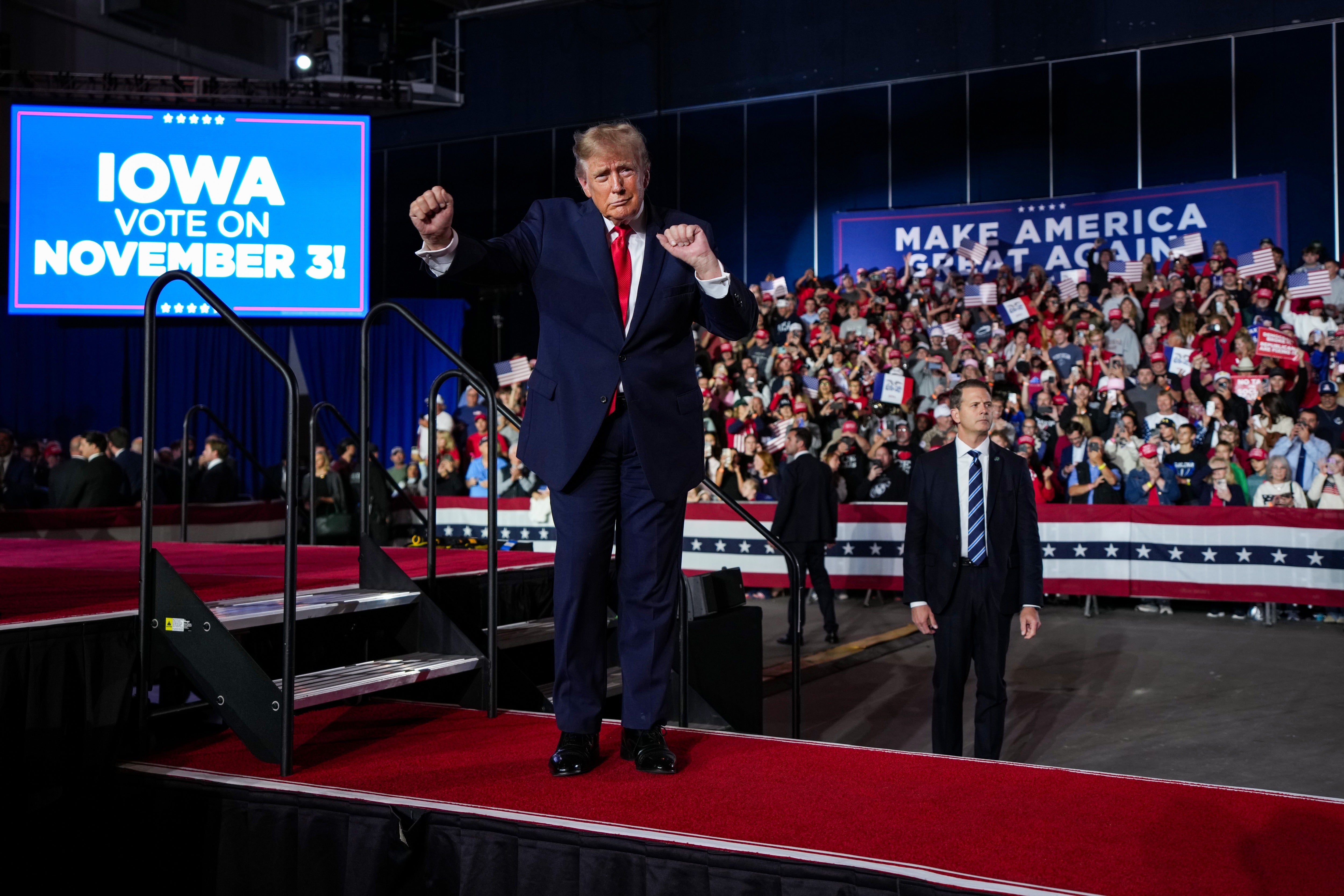
In late October, Trump addressed the gas-price crisis in a way that provided little solace for voters. “The United States oil and gas business is making hundreds of billions of dollars,” Trump said. “I don’t give a damn, I’m going to say it – we’re making a freaking fortune.”
Trump’s seeming indifference to high fuel prices has been even more painful for rural and agricultural workers in these states because they are more likely to drive diesel vehicles. A gallon of diesel was $6.29 on Election Day, a staggering 67 percent higher than it was the day Trump started the war in Iran, according to AAA.
Some 70 percent of Iowans said the administration’s policies have turned gas prices into “a moderate or severe hardship,” according to a CNN/SSRS poll in early October.
Supermarket sting
Trump’s Iran war sent affordability shockwaves through the U.S. economy, pushing inflation up to three-year highs before settling at 3.7 percent in September. However that’s still a full percentage point higher than it was went voters elected Trump in November 2024, according to data from the Bureau of Labor Statistics.
Grocery prices, already elevated compared to 2025, crept up as record diesel costs made it more expensive for companies to transport food. The cost of groceries in Iowa, Kansas and Nebraska rose faster than the national inflation rate for the first two years of Trump’s second term, according to data from the Council for Community and Economic Research:
- National: 3.31%
- Kansas: 3.55%
- Iowa: 3.46%
- Nebraska: 3.64%

While Trump touted big gains in the stock market, that likely didn’t have an impact on Midwest voters struggling with the cost of everyday items, said Michael E. Goldberg, executive director of the Veale Institute of Entrepreneurship at Case Western Reserve University.
“Rising prices on everyday essentials create an inescapable reminder that overrides positive macroeconomic data (like GDP or stock gains) and severely punishes the governing party,” Goldberg told The Independent in an email. “We saw how that played out.”
Tariff troubles
In April 2025, Trump announced a long list of tariffs on countries exporting goods into the U.S. Ranging from 11 percent to 50 percent, the president insisted that U.S. trade partners – not American businesses and consumers – would cover the cost of levies.
More than a year later, experts tell a different story. Trump’s tariffs cost consumers an average of $1,100 and small businesses have paid an average of $426,000.
The tariffs hit the Midwest hard. Fertilizer, which farmers rely on to grow crops, rose by 45 percent from September 2025 to September 2026, according to the New York Farm Bureau.
Kansas, Iowa and Nebraska felt the impact more than nearly everywhere else as they’re among the nation’s top five states for gross farming income, according to the Department of Agriculture.
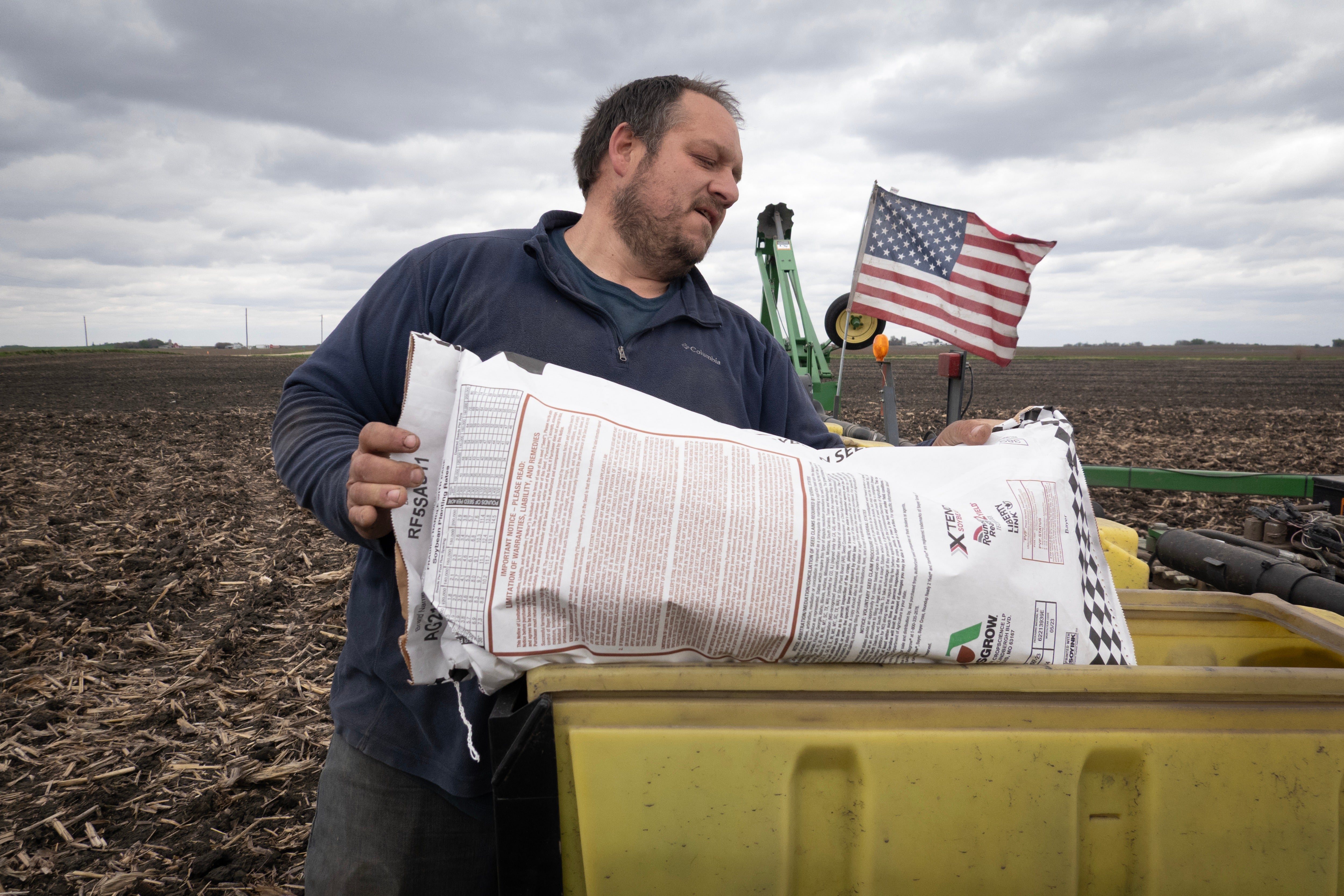
Farmers did not take that price increase lightly. Julius Schaaf, a corn and soybean farmer for more than four decades, told MSNOW at an October Trump rally that the president’s trade policies were wreaking havoc.
“A lot of the people that supported him were farmers that have a lot of equity in their property, and they can weather a storm for a while,” Schaaf said. “But you talk to the young guys that are just getting started and trying to buy inputs and inputs have gone through the roof – they’re the ones that are really struggling.”
Schaaf was not alone in his concern about tariffs. Some 55 percent of Iowans said Trump’s tariffs are “a bad thing for the state,” according to a CNN/SSRS poll in early October.
Reversal of fortunes?
Democratic House Minority Leader Hakeem Jeffries has said that the party’s top priorities for 2027 are ending the Iran war and repealing Trump’s tariffs, two moves that could save money for consumers and business owners.
But those savings won’t happen overnight, Susan MacManus, professor emeritus of political science at the University of South Florida, told The Independent in an email.
“It will take time to see any drops in prices that will significantly impact consumers,” MacManus said. “The economy is exceptionally complex, and it will take time for legislation to go into effect.”