



The Citroen 2CV concept was clearly developed by fans of the original French runabout.
It previews a production model due for release by 2028 with a base price of around €15,000 (A$24,000), which will be built in Europe and meet E-Car regulations. It’ll join the Ami quadricycle, currently priced from €8490 (A$13,600), and the e-C3, priced from €12,990 (A$20,850), at the low end of Citroen’s electric vehicle (EV) lineup in Europe.
Instead of a tiny petrol engine, there’s an electric motor and a battery. But unlike past retro revivals like the Mini, Volkswagen Beetle, and Renault Twingo, the 2CV concept hasn’t grown dramatically larger – in fact, at 3.76m long, it’s actually shorter than its 3.86m forebear.
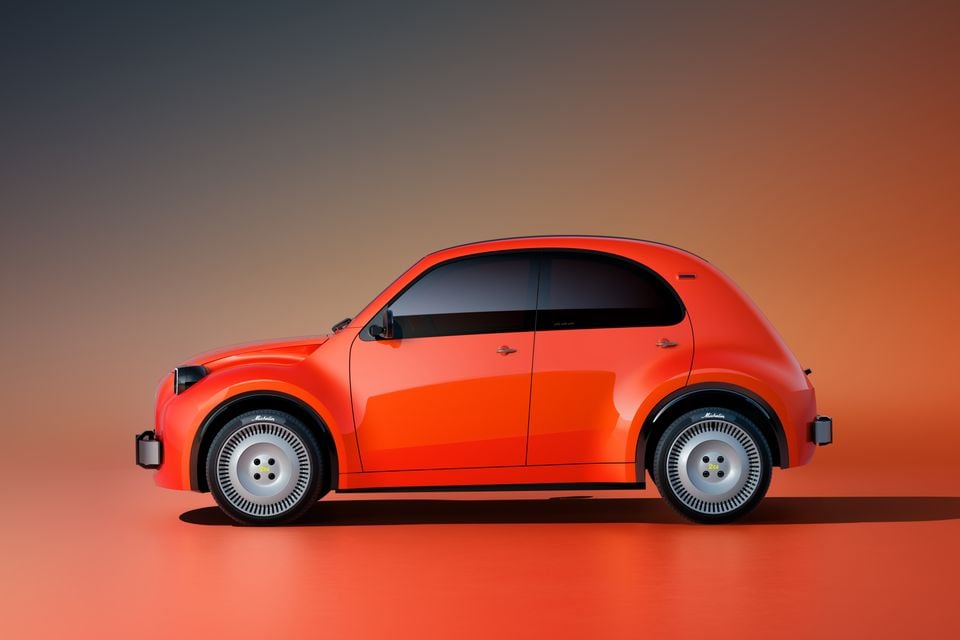
Citroen is also targeting a weight of one tonne, arguing less mass means it can use a smaller and more cost-effective battery.
It has also had a goal of simplifying various design elements to keep production and repair costs down, with the concept employing various flat surfaces, as well as bumpers separated from the bodywork and air intakes beneath the windscreen.
Citroen says it didn’t set out to recreate the 2CV, but rather to imagine a small, practical and enjoyable electric car for the future. It used the iconic model from its back catalogue for inspiration.
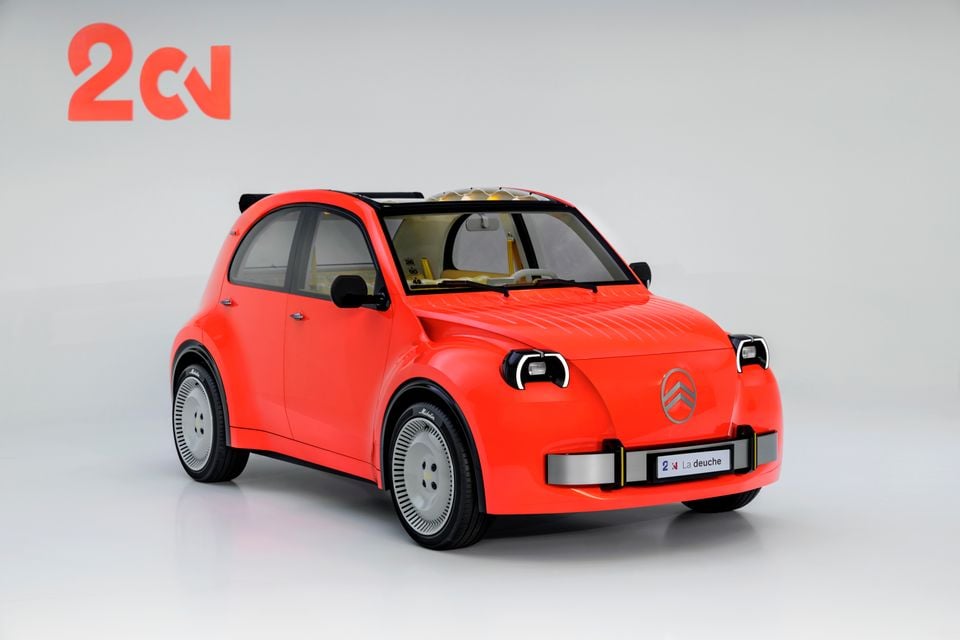
The concept hews closely to the classic 2CV, from its tall, rounded body to its free-standing headlights, C-pillar-mounted indicators, and canvas roof.
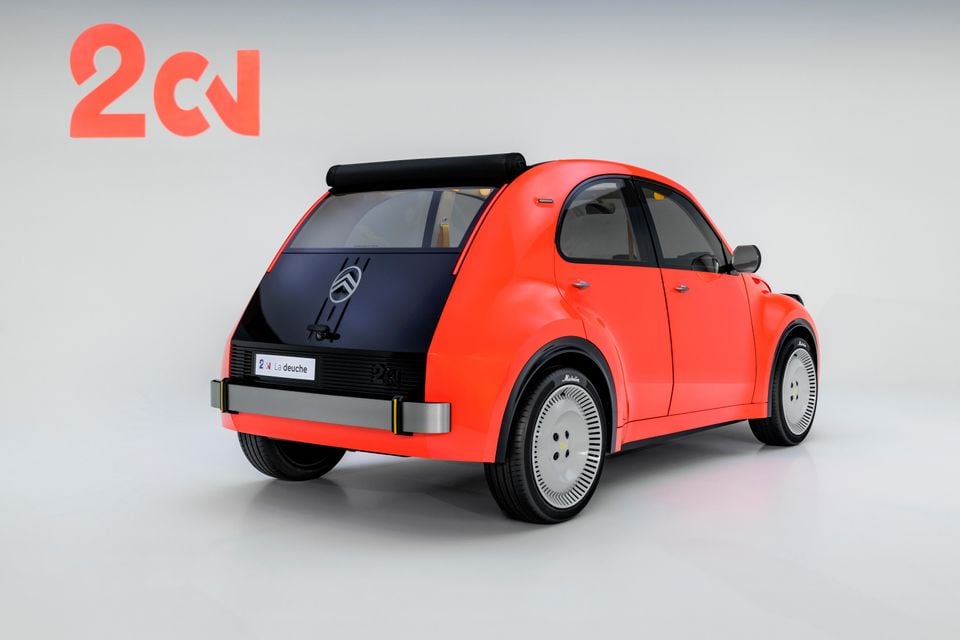
The steel wheels are considerably larger, measuring 18 inches, but they’re intended to resemble those on the original car; they’re wrapped in Michelin tyres.
Instead of small tail-lights located near the bumper, there are thin, vertical assemblies on either side of the rear window.
The retro flair continues inside, with a simple, almost hollowed-out dashboard finished in textured fabric that still incorporates the modern technology expected in 2026.
The single-spoke steering wheel, gear selector and 8.0-inch infotainment touchscreen are connected to a cylinder.
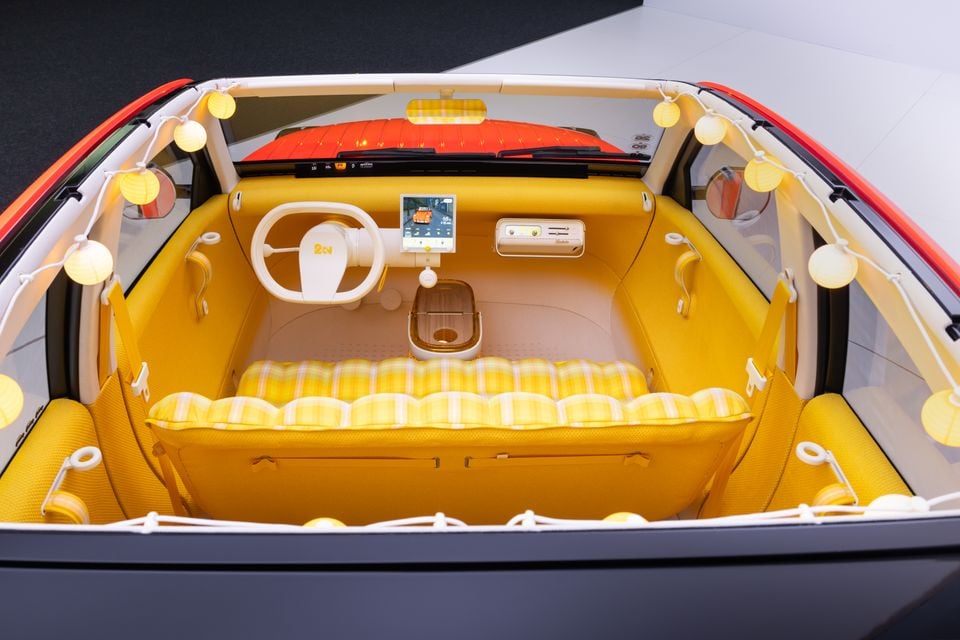
To the right of the touchscreen is the Radioën, a detachable radio that doubles as a speaker and can be enjoyed outside of the vehicle, while ahead of the driver is a digital instrument display at the base of the windscreen.
Instead of a centre console, there’s a removable storage basket, while the door handles are made from soft straps, and the front and rear bench seats are upholstered in vibrant yellow and white tartan upholstery. The front bench seat is also removable.
There are even hints of beige throughout the cabin, a nod to the Bakelite trim of yore, while wood and bio-based plastic trim are also applied.
The crowning touch in this sunny cabin is the use of string lights around the opening fabric roof, making the 2CV feel more like a Parisian patio than an economy car.
The concept is dotted with Easter eggs, including a brake pedal with a tortoise on it and an accelerator pedal with a rabbit on it.
Citroen hasn’t provided any technical specifications for the concept apart from its overall length, so it’s unclear how much power it has or what battery it uses.
However, Citroen says that at startup the electric motor has been tuned to sound like the old 2CV. The horn, too, sounds like the original.
The original 2CV was conceived not long after Michelin took Citroen out of bankruptcy in the 1930s, but work on the car had to be concealed after World War II began.
After being redesigned to meet the restrictions imposed by post-war rationing, the 2CV was revealed at the 1948 Paris motor show and went on sale in Europe in 1949 with a 6.6kW 375cc engine.
Among its many radical features were radial tyres, a folding fabric roof, long-legged suspension, and front-wheel drive.
The name was simple: it stood for “two horses”, or “two taxable horsepower”, referring to the tax class it competed in. It was designed to transport four people and 50kg of potatoes, reach 60km/h, and be easy to drive, economical, and simple to maintain, with both rural and urban buyers targeted.
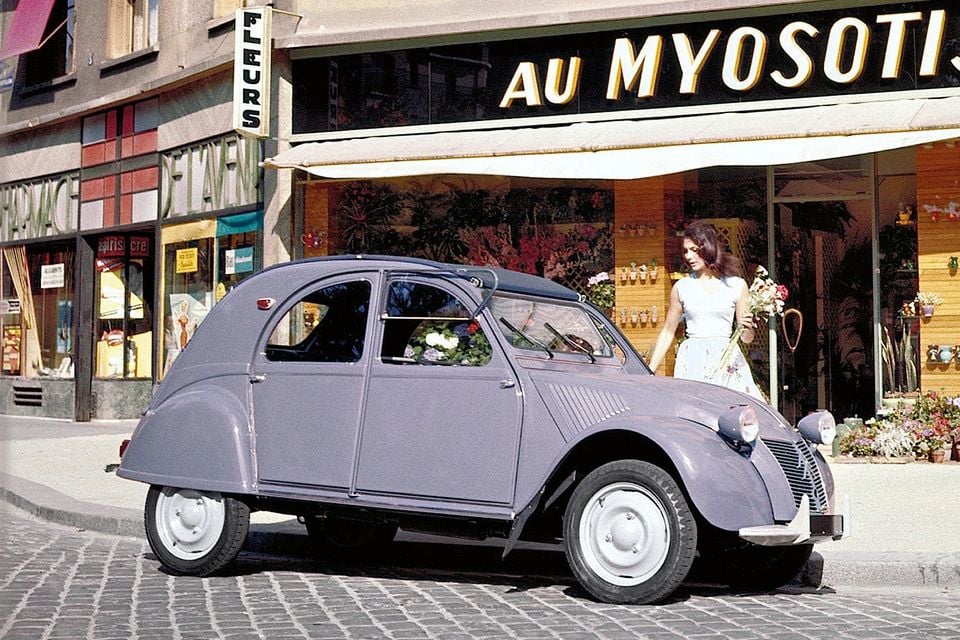
The 2CV went on to spawn a few derivatives, including the Ami sedan, Mehari off-roader, and Dyane hatch, which was meant to replace it, but actually went out of production before its progenitor.
Like Volkswagen’s Beetle, the 2CV had a remarkably long run, only going out of production in 1990.
While the original 2CV was briefly offered in Australia during the 1950s, the revived version is highly unlikely to come here following distributor Inchcape’s decision to drop the Citroen brand locally in 2024.
Click an image to view the full gallery.
MORE: Explore the Citroen showroom