



The WNBA‘s eight playoff teams are preparing for the more physical, deliberate style of basketball that arrives with the postseason. Rotations will tighten, half-court possessions will increase and controlling the area around the basket will become essential.
Our examination of the playoff field now moves to the position most responsible for controlling that territory. After ranking the league’s premier guards and forwards, the third and final installment of this three-part series focuses on the centers whose size, strength and interior presence can shape the championship race.
Interior Dominance Takes Center Stage
The modern WNBA center is responsible for far more than scoring near the basket. The position requires rim protection, rebounding, screening, interior passing and the mobility to defend pick-and-roll actions. Elite centers must also punish switches, command double-teams and create open opportunities for perimeter teammates.
Those responsibilities grow more important in the playoffs. Outside shots can become less dependable under postseason pressure, increasing the value of paint production, offensive rebounds and second-chance points. At the other end, a dependable defensive anchor can erase mistakes, discourage penetration and allow perimeter defenders to play more aggressively.
This group includes dominant scorers, elite rebounders, gifted facilitators and imposing rim protectors. Some serve as the centerpiece of their team’s system, while others provide the physical foundation that allows their guards and forwards to flourish.
Because several playoff teams do not employ a traditional center, the ranking includes players officially designated as centers and forward-centers who regularly handle the position. Here is our ranking of the top centers from this year’s WNBA playoff field: (Minnesota, Golden State, Las Vegas, Atlanta, Indiana, New York, Washington and Dallas):
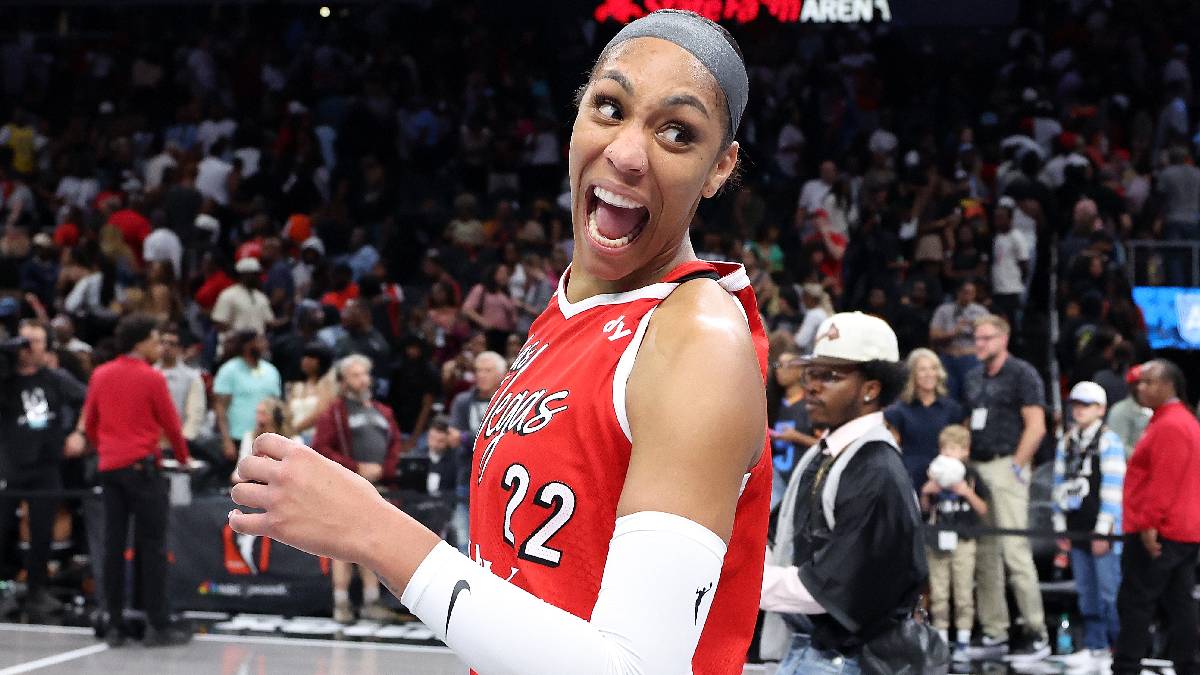
1. A’ja Wilson, Las Vegas Aces
A’ja Wilson is not merely the best center in the playoff field; she remains the WNBA’s most dominant overall player. She leads the league with 26.0 points per game while contributing 9.4 rebounds, 2.0 blocks and 1.4 steals. Her dominance is further reflected in her league-leading 32.0 player efficiency rating and 8.0 win shares.
Few players can influence a game in as many ways. Wilson can overpower defenders in the post, face up and score from midrange, stretch the defense and command double-teams that create open opportunities for her teammates. Defensively, her timing, mobility and instincts allow her to protect the rim without sacrificing the versatility needed to defend in space. Her decision to remain home during the 2026 FIBA Women’s Basketball World Cup allowed her to recover and rest rather than absorb the physical demands of international competition and should leave her refreshed for the season’s most important stretch.
Of course she’s the fastest player to hit 5’000 ✨
A’ja Wilson is the fastest player in league history to reach 5’000 career points!@_ajawilson22 // @WNBA pic.twitter.com/1P5sPTzTAy
— Las Vegas Aces (@LVAces) June 26, 2025
2. Aliyah Boston, Indiana Fever
Aliyah Boston has developed into one of the league’s most efficient and complete interior players, averaging 16.9 points and 8.3 rebounds while anchoring Indiana’s frontcourt. Her 24.6 player efficiency rating ranks second in the WNBA, trailing only Wilson, and reflects her ability to produce without requiring the offense to revolve entirely around her.
Her screening creates space for Caitlin Clark and Kelsey Mitchell, while her soft hands, footwork and body control make her extremely effective as a roller and interior finisher. Boston can establish deep post position, punish smaller defenders and convert through contact. She is also an excellent passer who can facilitate from the elbow or short roll when opponents pressure Indiana’s guards, giving the Fever another way to attack aggressive defensive coverage.
Kelsey Mitchell drives and kicks to Aliyah Boston for three 🎯 pic.twitter.com/q8qMjE68TA
— Indiana Fever (@IndianaFever) August 23, 2026
3. Jonquel Jones, New York Liberty
Jonquel Jones remains one of the league’s most difficult centers to defend because she combines traditional interior strength with legitimate perimeter range. She is averaging 14.6 points, 9.0 rebounds and 2.7 assists, giving New York another offensive hub alongside Breanna Stewart.
Jones can punish smaller defenders on switches, stretch opposing centers beyond the arc and dominate the defensive glass. Her 21.1 player efficiency rating and 5.2 win shares reflect her impact at both ends. The 2024 WNBA Finals MVP also owns extensive postseason experience, making her especially valuable when New York needs a physical scorer during slower, half-court playoff possessions.
Andddd, another one 😉 pic.twitter.com/qajoNci9xM
— WNBA (@WNBA) August 29, 2026
4. Shakira Austin, Washington Mystics
Shakira Austin is enjoying the strongest season of her career, averaging 16.8 points and 9.4 rebounds while emerging as Washington’s interior anchor. She ranks third in the league with 2.8 defensive win shares and owns a 100.9 defensive rating, making her one of the WNBA’s most effective defenders.
Her combination of size, length and mobility allows her to influence both ends of the floor. Offensively, Austin can score as a roller, establish position in the post or face up and attack slower centers off the dribble. Her improving touch and expanding offensive repertoire make her increasingly difficult to defend without additional help, while her activity on the glass creates valuable second-chance opportunities. Austin’s defensive versatility may matter even more in the postseason.
How did Shakira Austin finish this over A’ja Wilson? 🤯 pic.twitter.com/b2uzFVsMB7
— Sports on Prime (@SportsonPrime) August 14, 2026
5. Alanna Smith, Dallas Wings
Alanna Smith’s ranking reflects the impact she can provide when healthy, though her World Cup injury creates uncertainty entering the postseason. The 2025 co-Defensive Player of the Year can protect the rim, hedge against ball-handlers and switch onto smaller players without disrupting Dallas’ defensive structure.
Offensively, she doesn’t have glaring stats (6.0 PPG, 3.9 RPG, 1.0 APG), but she can stretch opposing centers away from the basket, set intelligent screens, and keep the ball moving. Her shooting creates driving lanes for Dallas’ guards, while her decision-making makes her effective without requiring significant touches.
When available, Smith can play alongside Jessica Shepard, allowing Dallas to maintain size while using two mobile, skilled frontcourt players. Her experience and defensive communication would be particularly valuable against elite interior scorers. However, this ranking is based on Smith’s proven ability and potential impact, not a guarantee that she will enter the playoffs healthy or available.
Alanna Smith 👏👏👏 pic.twitter.com/yGnyuPhulF
— Dallas Wings (@DallasWings) July 3, 2026
6. Kiah Stokes, Golden State Valkyries
Kiah Stokes is another center whose influence extends well beyond her scoring average. She owns the league’s best defensive rating at 96.7 and ranks fifth with 2.6 defensive win shares. Stokes protects the rim, controls the defensive glass and provides the physical interior presence that allows Golden State’s perimeter defenders to pressure the ball aggressively.
Stokes understands positioning, rarely demands offensive touches and willingly handles the screening and defensive assignments that create opportunities for teammates. She also brings three championship rings from her years with Las Vegas, giving the Valkyries an experienced player who comprehends exactly how postseason basketball changes.
WHAT A RUN BY KIAH STOKES 🦾
She drains the corner triple, then rises up for the big time block that leads to a Gabby lay!
GSV-CON | League Pass
Tap to watch: pic.twitter.com/zcVtyFPNrr— WNBA (@WNBA) August 26, 2026
7. Lauren Betts, Washington Mystics
Lauren Betts has provided Washington with valuable interior depth during her rookie season after being selected fourth overall. The 6-foot-7 center is averaging 6.4 points, 4.4 rebounds and 1.1 assists while shooting 54.9% from the field in a reserve role. She gives the Mystics a legitimate rim protector and low-post option behind Austin.
Her size alters shots even when she doesn’t record a block, and her soft touch makes her an efficient finisher. Betts may not receive significant postseason minutes immediately, but her rim protection, rebounding and interior presence could become critical against bigger opponents or whenever Austin encounters foul trouble.
Lauren Betts tonight 🔥
• 18 points
• 4 rebounds
• 2 steals
• 8/9 FG
• 21 minutes played pic.twitter.com/6Ofy45sQXQ— Women’s Hoops Network (@WomensHoops_USA) June 13, 2026
8. Han Xu, New York Liberty
At 6-foot-11, Han Xu adds a completely different dimension behind Jones. She is averaging 6.4 points, 2.6 rebounds and 0.7 blocks in only 14.0 minutes per game while shooting 50.8% from the field and 40.2% from 3-point range. Her combination of exceptional height and perimeter touch forces opposing centers to defend well beyond the paint, creating additional space for New York’s guards and cutters.
Han demonstrated her considerable upside against Chicago, producing a season-high 19 points, five rebounds and two blocks in just 17 minutes. She shot 6-for-8 from the field and 2-for-3 from beyond the arc, becoming only the second player in WNBA history to record at least 19 points, five rebounds and two blocks while shooting 75% or better in fewer than 20 minutes.
Her defensive mobility can be tested in space, but her length, shooting and extensive international experience make her a valuable situational option. Han can change a matchup quickly when New York needs additional rim protection, floor spacing or scoring from its second unit.
Han Xu was on top of her game tonight 🔥
19 PTS | 10 REB | 2 STL | 2 3PM#FIBAWWC pic.twitter.com/RKzYVGYzWW
— FIBA Basketball (@FIBA) September 7, 2026
9. Makayla Timpson, Indiana Fever
Makayla Timpson gives Indiana an athletic change of pace behind Boston, averaging 5.5 points while more than doubling her scoring and rebounding from last season. Her speed lets her run the floor with Clark, while her length and quick leaping ability make her an effective lob target, offensive rebounder and weak-side rim protector.
Timpson recorded her first career double-double in August and later contributed 10 points and eight rebounds against Connecticut. Although her postseason minutes may be matchup-dependent, her energy, mobility and defensive activity give Indiana a valuable alternative when Boston rests or encounters foul trouble.
Kelsey Mitchell grabs the steal and goes no-look to Makayla Timpson in transition 👀 pic.twitter.com/iCVb0AjEGI
— Indiana Fever (@IndianaFever) August 8, 2026
10. Li Yueru, Dallas Wings
Li Yueru has provided Dallas with a dependable change-of-pace center whose impact exceeds her modest averages of 3.3 points and 2.6 rebounds in 10.3 minutes per game. The 6-foot-7 veteran gives the Wings valuable size behind their primary frontcourt options, setting sturdy screens, occupying defenders around the basket and creating additional possessions through her rebounding. Her production projects to about nine rebounds per 36 minutes, showing how effectively she attacks the glass in limited minutes.
Yueru can also finish through contact, draw fouls and occasionally stretch the defense from the perimeter. Although she does not carry a major offensive role, her physicality and international experience let Dallas maintain its interior presence when the starters rest or when matchups demand another true center. She has become a useful situational piece who can provide efficient minutes without requiring touches.
Li Yueru tonight 🔥
• 20 points
• 4 rebounds
• 2 steals
• 7/14 FGpic.twitter.com/K9fljj0KDW— Women’s Hoops Network (@WomensHoops_USA) August 13, 2025
Honorable Mentions
Madina Okot, Raquel Carrera and Brianna Turner
Madina Okot, Raquel Carrera and Brianna Turner provide three distinctly different forms of situational frontcourt value. The 6-foot-6 Okot averages 5.4 points and 3.3 rebounds while shooting 57.6%, giving Atlanta an athletic finisher and forceful rebounder off the bench. Carrera averages only 1.4 points and 1.1 rebounds in limited action, but the 6-foot-3 rookie’s physicality, international experience and perimeter touch add versatility to New York’s rotation.
Turner has contributed 1.7 points and 2.3 rebounds in 12.9 minutes per game, yet her impact extends beyond the box score. A two-time WNBA All-Defensive First Team selection, she supplies Las Vegas with proven rim protection, defensive mobility and rebounding – qualities that could become especially important after NaLyssa Smith’s season-ending injury.
W.G. Ramirez is a veteran sports writer from Las Vegas and a Staff Writer at Ballislife.com. Follow him on X at @WillieGRamirez.