



Three Cup Chicken (San Bei Ji) is a popular Taiwanese dish of chicken braised in a sweet-savoury soy sauce with lots of garlic and ginger. It’s a great quick recipe that takes 10 minutes to cook, and it’s got the sort of flavours that’s a guaranteed hit with everyone – kids, grown ups, fussy eaters!
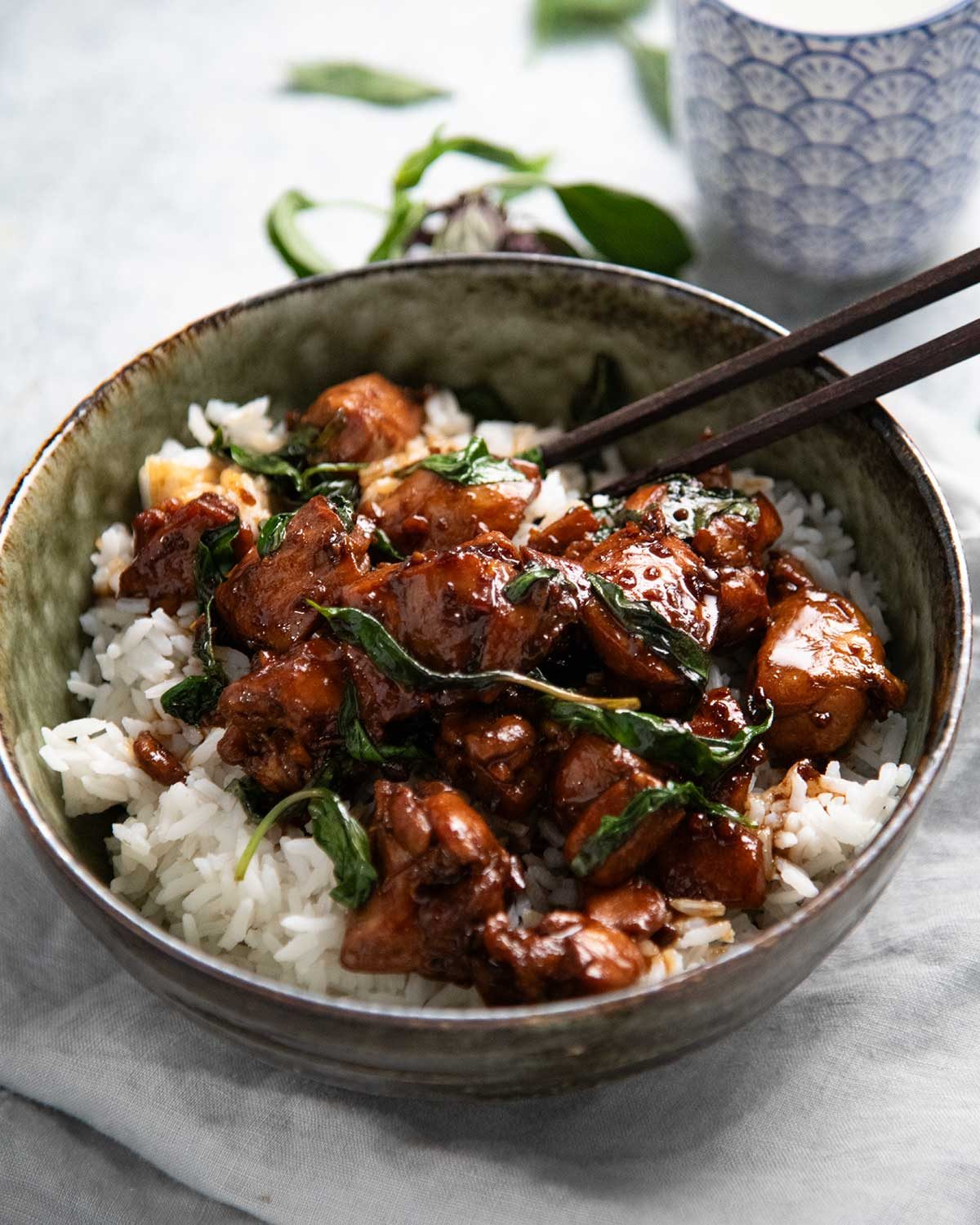
Taiwanese Three Cup Chicken
I love finding new recipes that tick all my mid-week dinner boxes – quick, pantry staples, universally loved flavours – but is something a bit different. Plus, I get to tell people “it’s Taiwanese”. It sounds far more exotic than “chicken in soy sauce” and makes me seem much more worldly than I really am. 😂
Actually, Three Cup Chicken originates from the Chinese mainland, but over time also became very popular in Taiwan. Today it’s identified more with Taiwan than its mainland China origins. The name is said to have come from the sauce made with 1 cup of each soy sauce, sesame and cooking wine. We don’t use that much (!!!) but the ingredient ratios are not that far off so maybe there is some truth to it the tale!
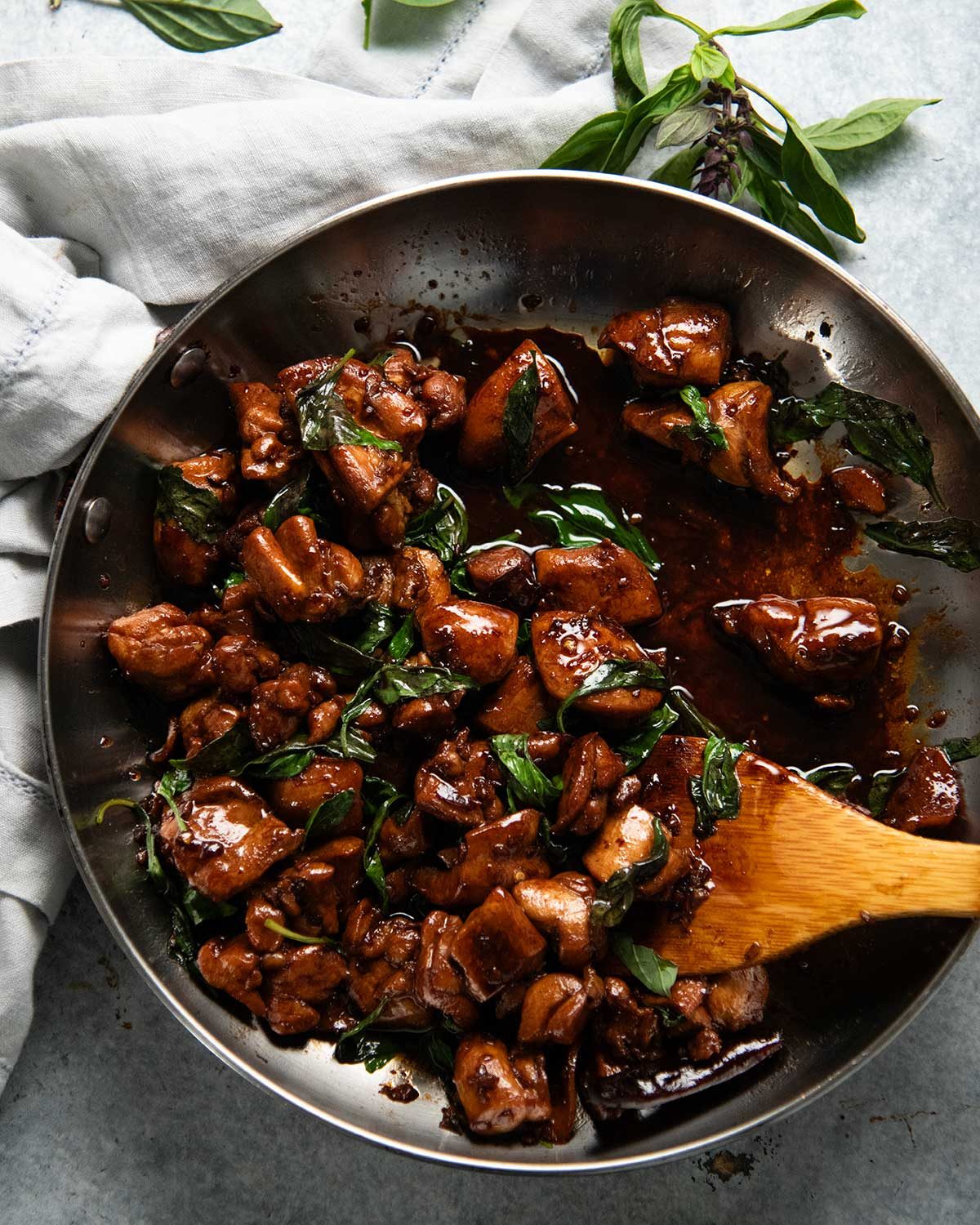
Unlike a typical stir fry which is stirred and tossed, the chicken is gently braised in the sauce so it absorbs all the flavour as it reduces into a glossy syrup that coats every piece. It takes just 10 minutes on the stove and is made for serving over plenty of rice.
So, let me get onto the recipe and show you how easy it is to make, so you too can start dropping “Taiwanese Three Cup Chicken” into very conversation too! 😂
Ingredients in Taiwanese Three Cup Chicken
Here’s what you need to make this. Short ingredient list and basic ingredients! If you’ve already spied Thai Basil and are thinking that isn’t exactly basic….. I concur. But regular basil or even green onion works really well too. So I’m still counting this one as basic. 🙂
1. THE CHICKEN AND AROMATICS
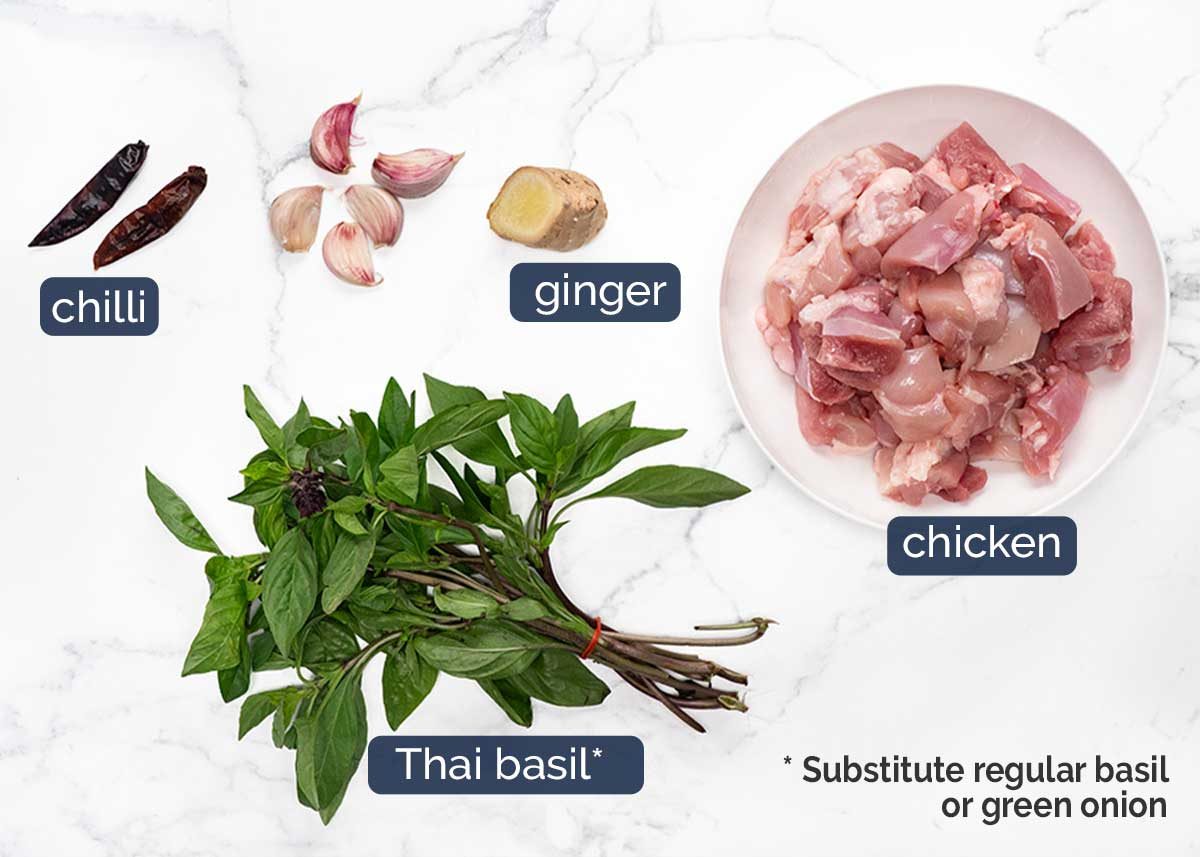
Chicken – I really recommend using thigh rather than breast here because it is holds up better to the braising (ie. juicier). As noted the introduction, bone-in pieces of meat are traditionally used in this dish which you can absolutely opt for if you prefer. But I’ve used boneless for convenience – faster to cook, and no picking bones out as you eat.
Garlic and ginger (lots!) – This dish gets a huge amount of flavour from plenty of garlic and ginger. You’ll need 6 slices of ginger and 1½ tablespoons finely minced garlic (about 5 to 6 cloves).
The ginger is traditionally sliced rather than minced so it gently perfumes the sauce as it braises, rather than ending up mixed through it. Just pick the slices out as you eat, or mince the ginger if you prefer.
Thai Basil – Taiwanese food uses Thai Basil a lot! It tastes like Italian basil except it has a slight aniseed flavour to it. It’s the same basil used in Thai food, like Thai Basil Chicken! However, if you don’t have it, you can substitute with regular basil in a pinch (the flavour is quite similar) or even green onion cut into batons – sure, it won’t strictly be Three Cup Chicken but it’s still a very tasty chicken dish!
Dried chilli – This is kept whole rather than chopped, so it adds a faint, barely noticeable spiciness. If you don’t have whole chillies, use chilli flakes instead (red pepper flakes). Or, for no spiciness at all, just omit it.
three cup chicken sauce
Here’s what you need for the sauce.
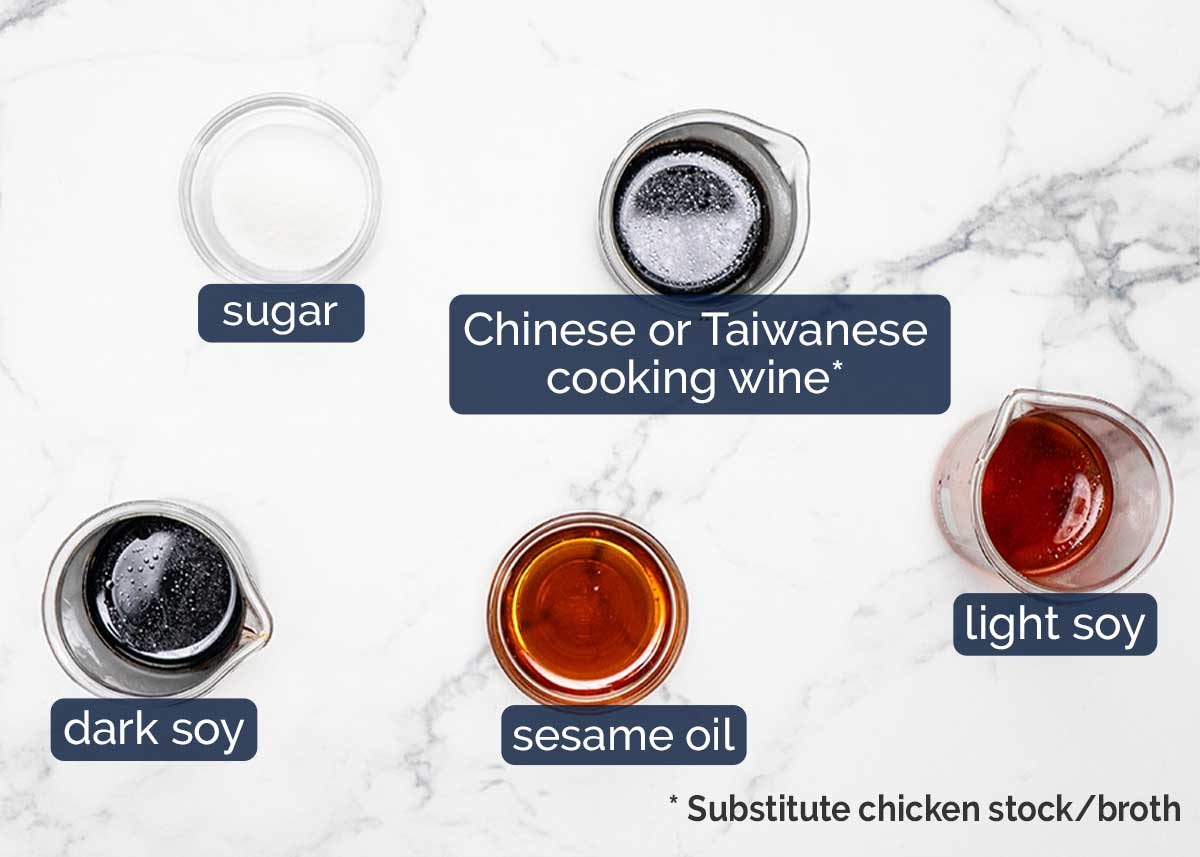
Chinese cooking wine (Shaoxing wine) – or Taiwanese cooking wine which would be the traditional choice if you can find it (mijiu). This brings extra depth of flavour into the sauce, as well as salt. If you’ve ever made a simple stir fry and thought the sauce tasted dull, like it’s missing “something” – a little slosh of cooking wine would fix it. 🙂
Light and dark soy sauce – Light soy brings salt, while dark soy adds colour and richer soy flavour. Dark soy is what stains the chicken that lovely golden colour!
Regular soy can replace light soy. You can also replace dark soy with light or regular soy, though the chicken and sauce will be paler and milder. Don’t replace light soy with dark – it’s far too intense!
Sugar – Three Cup Chicken sauce is a little bit sweet. Some restaurants make it sweeter than others. I use 1 tablespoon which makes it so you can taste a bit of sweetness, but doesn’t make the sauce sweet like, say, Chinese Orange Chicken.
Sesame oil – A distinct flavour in this dish, though subtle! Stir it in at the end because sesame oil loses its aroma when cooked. Be sure to use toasted sesame oil (brown), which has a much stronger flavour than untoasted sesame oil (yellow), the type mostly sold in health food stores in Australia.
How to make Taiwanese Three Cup Chicken
The speed at which this cooks will surprise you – it surprised me! It should not take you more than 10 minutes from start to finish. If it does, it means the chicken has been on the stove longer than necessary and will not be as succulent as it could be.
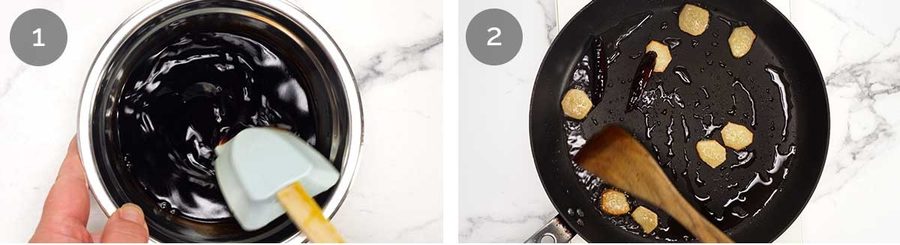
Mix sauce – Pour the ingredients into a small bowl and give it a quick mix.
Flavour the oil – Heat the oil on medium in a non-stick pan. Then toast the ginger and chillis for 30 seconds to flavour the oil. You don’t want the ginger to go too golden at this stage, else it will burn when searing the chicken (as I found out first hand).
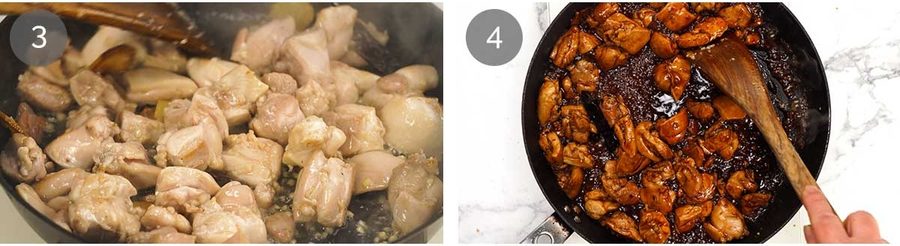
Seal chicken – Turn the heat up to high then add the the chicken and toss for 2 to 3 minutes to seal the surface, but keep it raw on the inside. Once the outside of all the chicken changes from pink to white, add the garlic and toss for another 30 seconds (it will smell amazing because we use lots of it!!)
Add sauce – Pour in the sauce, mix, then bring it to a simmer. Lower the heat to medium high so it’s simmering fairly energetically. Not wildly rapid like boiling water for pasta (sauce will reduce too quickly) but not gently (the sauce will take forever to reduce).
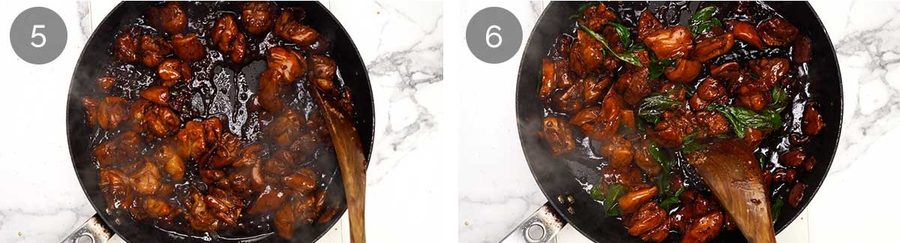
Braise 5 minutes – Simmer for 4 to 5 minutes, stirring every now and then so the chicken gets coated and stained by the sauce, until the sauce reduces down and becomes like a thin syrup. When you drag the spatula across the base of the pan, you should be able to briefly see the base before the sauce covers it back up. By this time, the chicken should also be a lovely golden mahogany colour.
💡 The video is a helpful guide for sauce thickness. Don’t reduce and let it thicken too much yet because it will thicken more (and quickly) in the next step, plus as you serve, and you’ll be left with no sauce! 😢 Though, if it does, just add a splash of water and you’ll resurrect it, so don’t fret!
Finish – Add the sesame oil and basil leaves, then stir for 20 seconds or so just until the basil wilts. And you’re done!
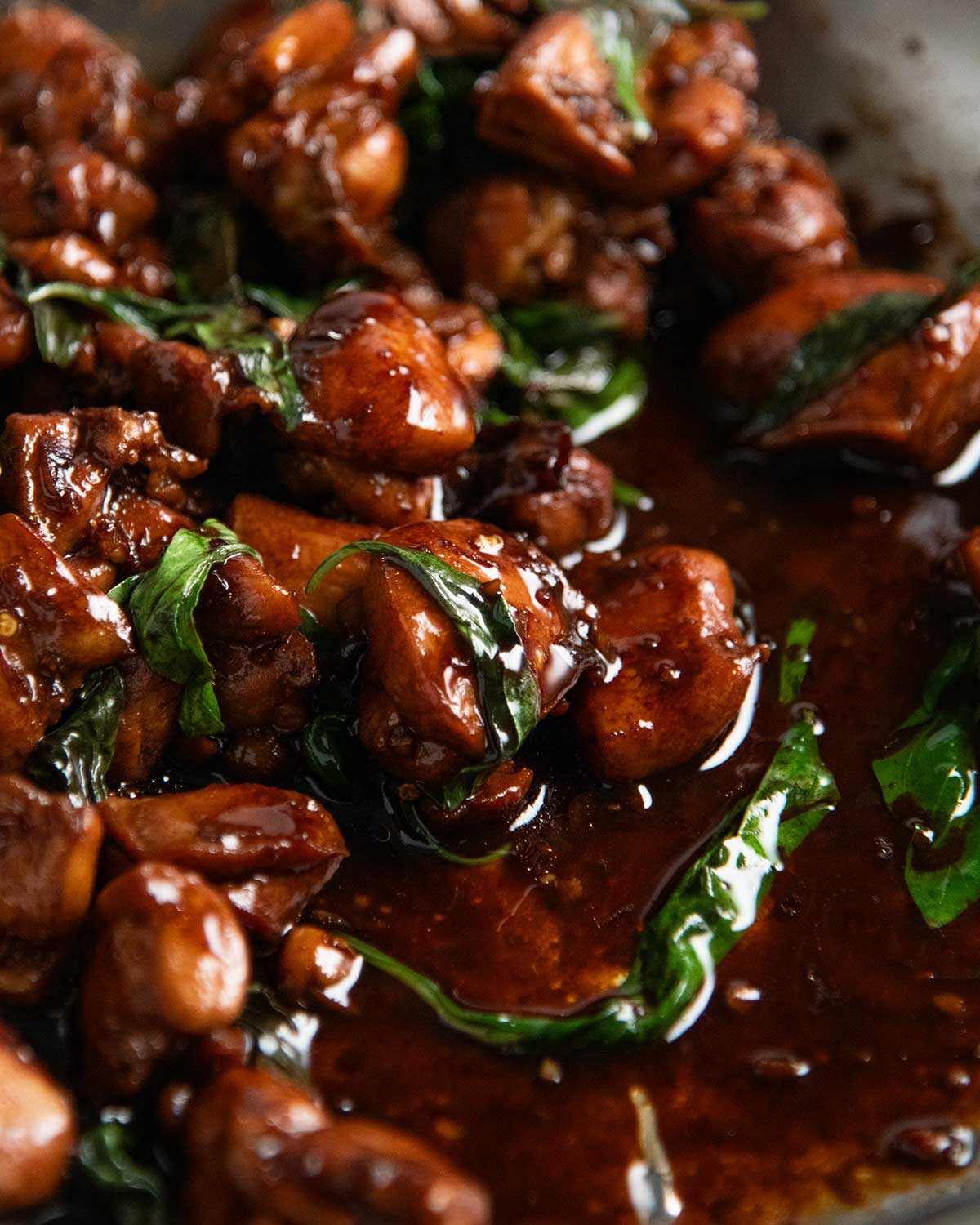
What to serve with Taiwanese Three Cup Chicken
This is quite a strong flavoured dish so serving it with rice is essential, otherwise I think you’ll find it too salty. There’s actually less than 1/4 cup sauce in the pan which I know does not sound like enough to serve 4. But I promise it is, because it’s so concentrated you only need a couple of teaspoons per serving, and there’s sauce coating each piece of chicken too. Spoon the sauce over the chicken then jumble everything together so the rice gets sauced up, then dig in and enjoy!
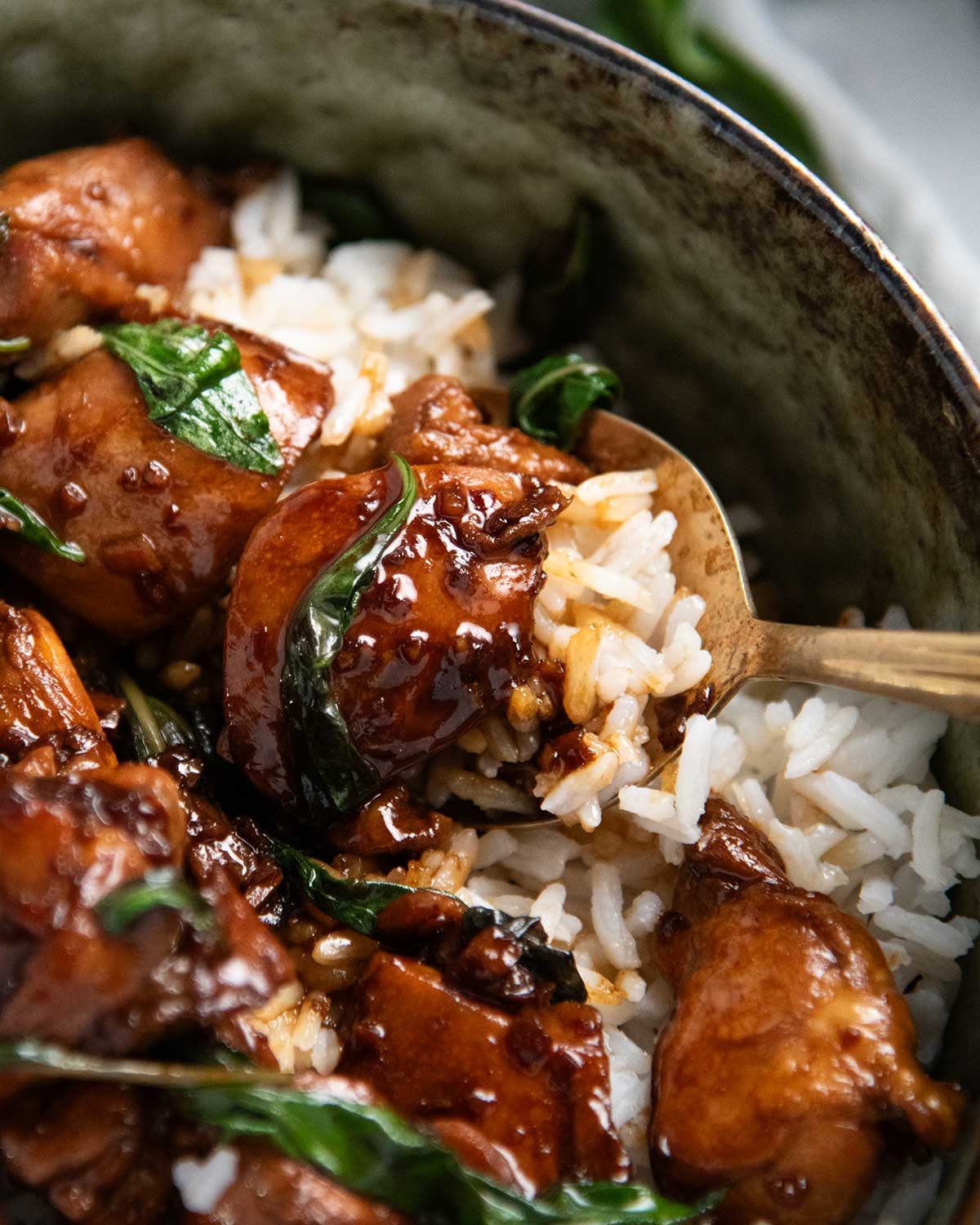
Add some cherry tomatoes and fresh cucumber slices on the side for a lovely fresh contrast, or for something more substantial a big Asian Slaw or Changs Crispy Noodle Salad. If you want a side of steamed vegetables, my go-to Asian Sesame Dressing goes with “everything”, from broccoli to peas, to sautéed cabbage. Make a big bottle and keep it in your fridge! – Nagi x
Watch how to make it
Hungry for more? Subscribe to my newsletter and follow along on Facebook, Pinterest and Instagram for all of the latest updates.
Taiwanese Three Cup Chicken
Main
Asian, Taiwanese
Servings4
Tap or hover to scale
Ingredients
- 1 1/2 tbsp plain oil – canola , vegetable, peanut
- 600g/1.2 lb chicken thighs , boneless, skinless, cut into 2.5cm/1″ pieces (Note 1)
- 6 slices ginger , ~3mm / 1/8″ thick (Note 2)
- 6 cloves garlic , minced (yes, lots!)
- 2 dried red chillies (barely noticeable spicy, but can omit, or sub 1/4 tsp dried chilli flakes)
- 1 1/2 tbsp toasted sesame oil
- 1 cup lightly packed Thai basil leaves , substitute regular basil leaves or 2 green onion stems cut into 5cm/2″ lengths (Note 3)
Prevent screen from sleeping
Instructions
ABBREVIATED RECIPE:
Toast ginger and chilli 30 sec, seal chicken, adding garlic towards end. Add sauce, braise 4 – 5 min until syrupy, stir in sesame oil and basil leaves. Serve!
FULL RECIPE:
Sauce – Mix the ingredients in a small bowl and set aside.
Seal chicken – Heat the oil in a non-stick pan over medium low. Add the ginger and chillies, stir for 30 seconds. Turn heat up to high, add chicken and stir until the surface is changes from pink to white, but it’s still raw inside. Add the garlic and stir for another 30 seconds.
Braise – Add sauce, making sure to scrape out all the sugar from the bowl. Stir, and once it starts bubbling, reduce the heat to medium high or medium so it’s simmering fairly rapidly but not wildly – not too low else it will take ages to reduce, not too high else the sauce will reduce too quickly (if it does, add a splash of water). Simmer for 5 minutes, stirring to stain each piece of chicken all over with colour, until the sauce reduces and changes from watery to a thin syrup.
- Finish – Stir in the sesame oil, then the Thai Basil leaves until it wilts (~15 seconds). Serve over rice, making sure you use all the syrup in the pan! (It’s intense, so you don’t need much)
Recipe Notes:
2. The ginger is traditionally sliced rather than minced so it gently perfumes the sauce as it braises, rather than ending up mixed through it. Just pick the slices out as you eat, or mince the ginger if you prefer.
3. Thai basil leaves – The traditional herb, with a distinctive aniseed flavour that really makes this dish. But don’t let it stop you making it! I’ve made this with Italian basil and loved it. And if I had neither, I’d use green onion. Different, yes, but still delicious and totally worth making.
4. Soy sauces – Don’t substitute the light soy with dark soy as it is much too intense. However, if you don’t have dark soy, you can use more light soy but just be aware the chicken won’t go the golden mahogany colour pictured.
5. Cooking wine brings depth of flavour into the sauce. Taiwanese rice wine (mijiu) would be the traditional choice if you can find it, otherwise Chinese cooking wine (Shaoxing wine) is the most common substitute. It would take an exceptional palette to tell the difference. 🙂 For non alcoholic, use 1/4 cup chicken stock/broth, low sodium.
Leftovers will keep for 3 to 4 days in the fridge. It will freeze ok but it’s much better made fresh.
Nutrition per serving, assuming 4 servings. Excludes rice.
Nutrition Information:
Calories: 272cal (14%)Carbohydrates: 5g (2%)Protein: 26g (52%)Fat: 16g (25%)Saturated Fat: 2g (13%)Polyunsaturated Fat: 5gMonounsaturated Fat: 7gTrans Fat: 0.04gCholesterol: 119mg (40%)Sodium: 783mg (34%)Potassium: 368mg (11%)Fiber: 0.3g (1%)Sugar: 2g (2%)Vitamin A: 30IU (1%)Vitamin C: 2mg (2%)Calcium: 23mg (2%)Iron: 1mg (6%)
Life of Jaffle
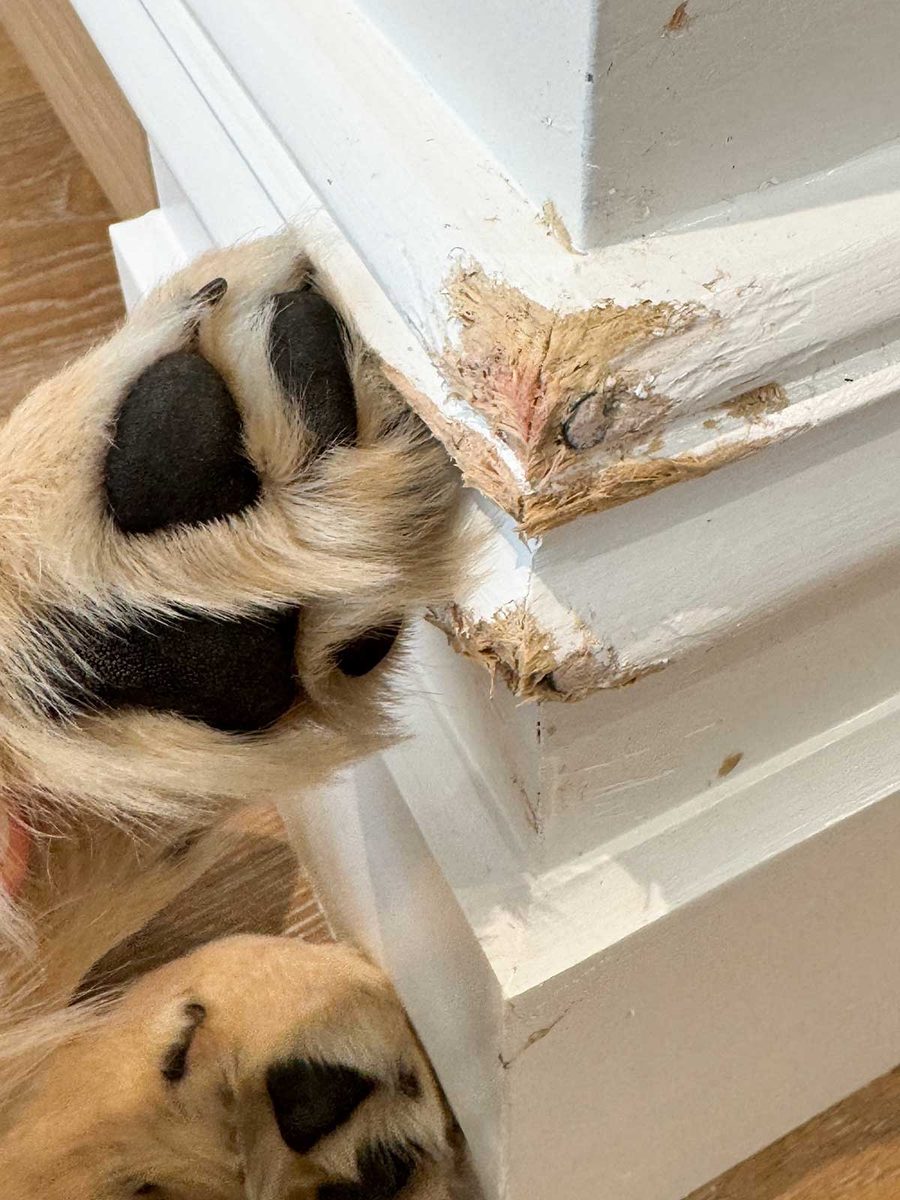
Jaffle update: 10% cuteness. 90% fluffy criminal. Progressing just as expected! Eating the house…

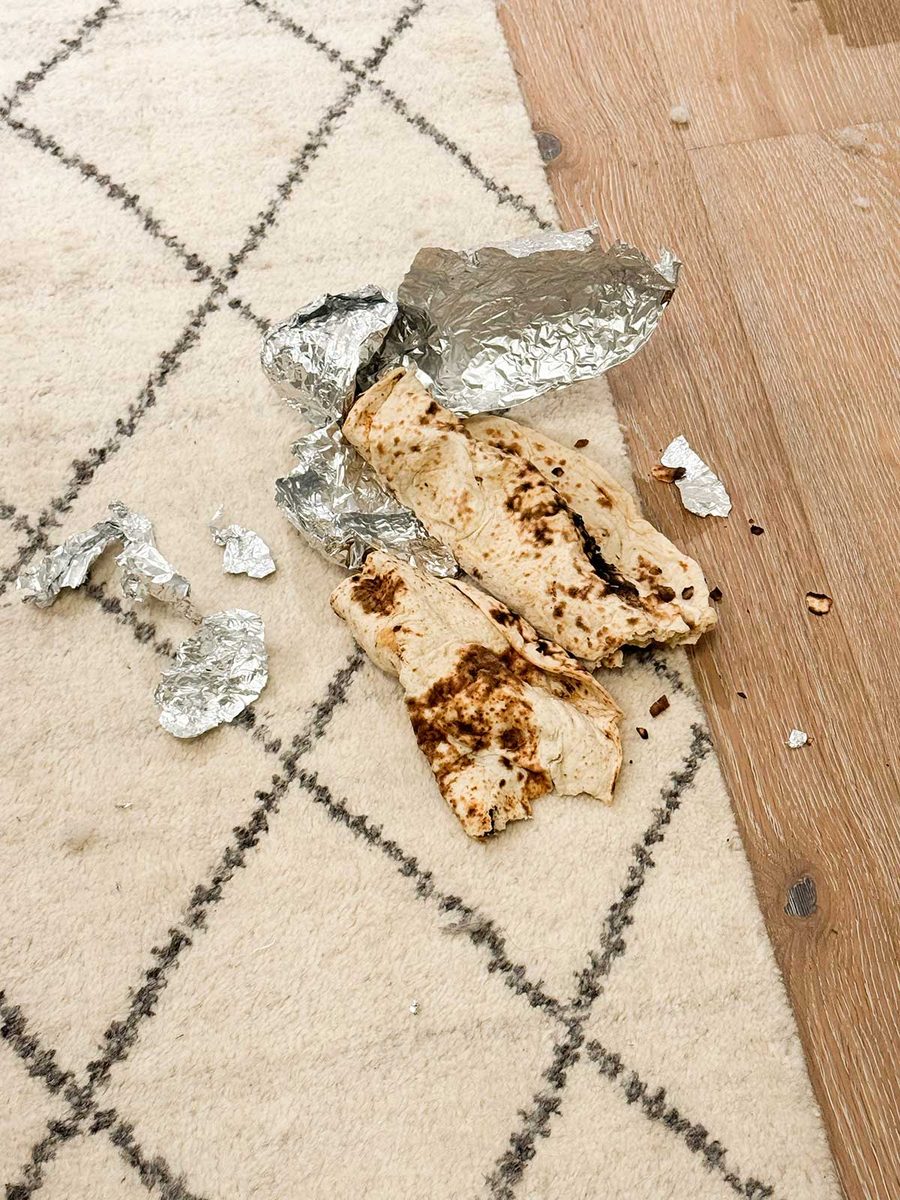
Stole dinner….

Tissue monster….

Slipper thief….

And I am not going to show you a photo of what he just did on my white couch…..🤯😩

But then he looks up at me with his sweet little eyes and I just can’t stay mad at him……😖

Happy Bastille Day everyone! Celebrated on Sunday at the Le Marche French Markets at Woolwich dock (Sydney). Music, food, puppy treats! How did I not know about these monthly markets a stone’s throw from my backyard until 4 days ago???

PS The stall behind me makes Flammekeuche which are the deliciously crisp Alsatian flatbreads topped with crème fraîche instead of tomato sauce, often described as French pizza. I looooove them!! Hoping JB will share a recipe soon!