



Back in the ’80s, when I was searching out used vinyl of On the Beach and Time Fades Away in Chicago record stores, those records felt like guilty pleasures. Neil Young wasn’t widely regarded as a top-drawer artist, like Springsteen or Dylan, although the triple-LP Decade in 1977 made a pretty strong case.
That’s all changed now. Fans and pundits have come to regard Young as the standard-bearer for real, garage-band rock and roll, passing the tradition from the Troggs and The Standells and Seeds in the ’60s to Kurt Cobain and Pearl Jam and Wilco in the ’90s and beyond, carrying the torch through the eras of yacht rock, arena rock, prog rock, synth rock, hair metal and disco. All hail the Godfather of Grunge.
Young has been churning out solo albums for nearly 60 years. Some of the later ones are really good. And that poses a problem: Every time Young puts out a Ragged Glory or Harvest Moon, he pushes the old stuff a little further into the past. Time fades away.
As good as those albums are – I also love Mirror Ball – I don’t think they hold a candle to most of Young’s recordings from roughly the first Decade. In that spirit, let’s go back and revisit the early albums: The first 10 solo studio LPs, from Neil Young through Rust Never Sleeps, and the essential live set Time Fades Away.
Here’s my attempt at a ranking.
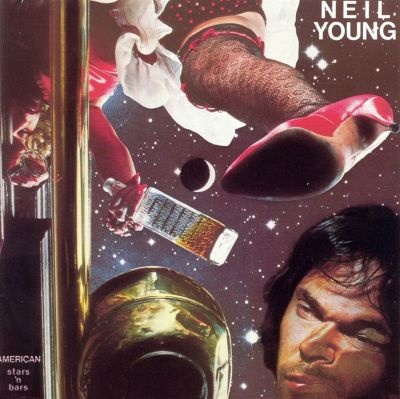 11. American Stars ‘n Bars, 1977
There are no bad Neil Young albums from this era, but American Stars ‘n Bars is probably the most uneven collection from his first decade of solo work. The sessions found him, for once, short of material. Much of the album is archival stuff, evidently written for a pair of earlier projects that Young had shelved, Homegrown and Chrome Dreams. The best-known track is “Like a Hurricane,” a magnificent epic that lit up FM radio in 1977, delighting Neil Young fans at malls across America. The artistic torpor of Stars ‘n Bars set the stage for critics to declare an artistic comeback with Young’s next album, Rust Never Sleeps.
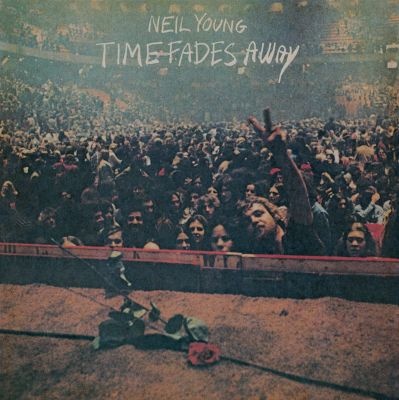 10. Time Fades Away, 1973
Yes, Time Fades Away is a live album. But few other artists would have dared to release a live album of new material, rather than reheated classics. As such, it’s essential listening for any serious Neil Young fan, like the nine records that follow on this list. Several songs are near-classics: “Journey Through the Past” ranks a notch or two below “After the Gold Rush”; a mellower version of “L.A.,” with its “Out on the Weekend” beat, might have fit nicely on Harvest. My favorite is “Don’t Be Denied,” a song about dreaming of stardom that sounds like a statement of purpose.
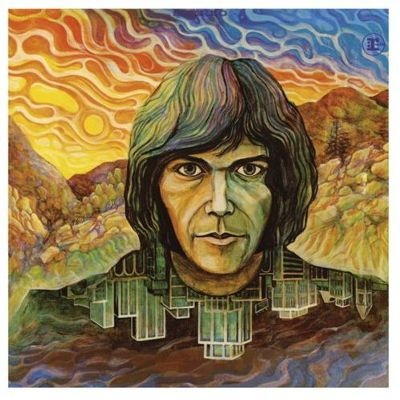 9. Neil Young, 1968
From here on, this list becomes a little subjective: Tough choices among great albums. I’m ranking Young’s debut lower (i.e., higher) because it’s wildly experimental, and not all the experiments work. Three powerful tracks form the backbone of Side One: “The Loner,” “If I Could Have Her Tonight” and “I’ve Been Waiting for You.” All are brilliant pop compositions, with smoldering riffs and deceptively complex chording, establishing Young’s genius for anyone who hadn’t heard his Buffalo Springfield work. Side Two, by contrast, is all over the place. “The Last Trip to Tulsa” may be the weakest of Young’s nine-minute epics.
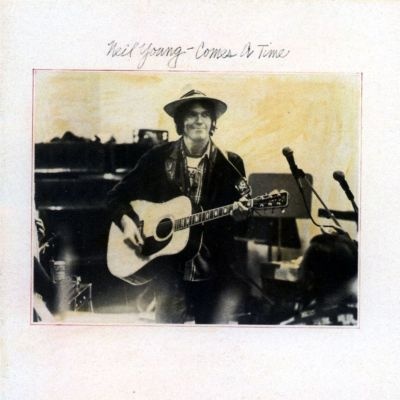 8. Comes a Time, 1978
The original Rolling Stone Record Guide awarded just three stars to Comes a Time (and two to On the Beach), but it’s a much better album than that. The only really weak track is “Motorcycle Mama,” and the set includes a few Neil Young classics. The Bm to G chorus in “Look Out for My Love” is one of the finest things he ever wrote. The tender “Lotta Love” delivered a hit for backup singer Nicolette Larson. Most of the other cuts unfold like dreamy campfire singalongs, propelled by a veritable orchestra of folk guitars. This album collects songs written across multiple years, like American Stars ‘n Bars, but it’s more cohesive, and they’re better songs.
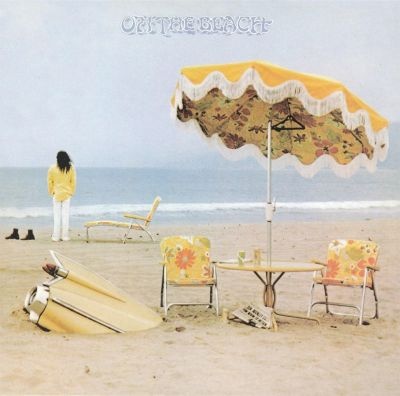 7. On the Beach, 1974
At the time, On the Beach left many critics underwhelmed (see above). Today, many listeners regard it as one of his very best. To me, it’s a transitional album from the MOR ambitions of Harvest to the funereal glory of Tonight’s the Night. But let’s focus on songcraft. Side one is shaky: “Walk On” is catchy, and “For the Turnstiles” is one of Young’s best, but I don’t hear much compositional spark in the other tracks. Still, side two is masterful, and “Ambulance Blues” is one of the most moving songs Young ever wrote: “There ain’t nothin’ like a friend/Who can tell you you’re just pissin’ in the wind.”
 6. Harvest, 1972
If you’re a casual fan, Harvest might easily be your favorite – indeed, your only – Neil Young album. He set out to make a commercial record, mining the lucrative country-rock and singer-songwriter genres, and he succeeded: “Heart of Gold” became his only number-one single in the United States, and Harvest the best-selling album of the year. For a hardcore fan, though, Harvest ultimately lacks depth. Aside from the harrowing “Needle and the Damage Done,” the record seldom gets raw and real. That said, “Harvest” and “Old Man” are beautiful meditations, wise beyond their author’s years.
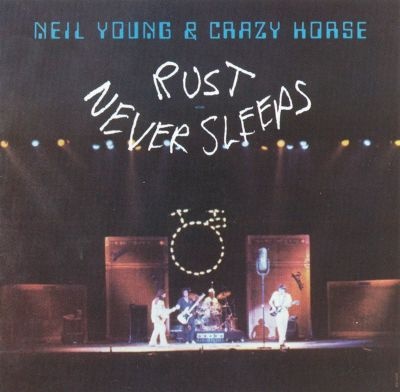 5. Rust Never Sleeps, 1979
Neil Young’s great comeback album might be a tad overrated, precisely because it’s his great comeback album. Rust is hit or miss, but the hits are knockouts. “My My, Hey Hey” connected the dots between the Rock movement and the rebellious genre of punk: “This is the story of Johnny Rotten.” The Godfather of Grunge mythos begins here. “Powderfinger,” whatever its lyrics mean, is indescribably essential, one of the three or four best Neil Young songs. “Thrasher,” “Pocahontas” and “Ride My Llama” are peyote trips on vinyl. Then again, I often lift the phonograph needle after “Powderfinger”: Half of side two is unlistenable. Go figure.
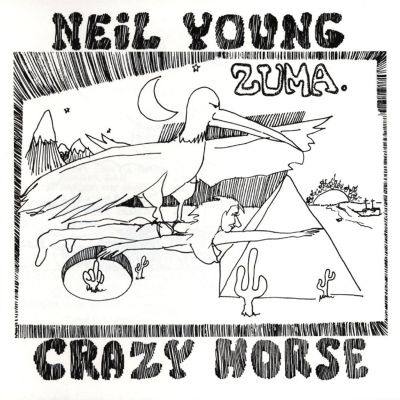 4. Zuma, 1975
This is Neil Young’s breakup album, much of it chronicling his separation from actress Carrie Snodgress. In hindsight, you can view it as the end of a string of great recordings: His next really good record, Comes a Time, would arrive three years later, which was a long wait in 1970s pop music. The epic “Cortez the Killer” is probably the most famous song on the set, seven minutes of three-chord bliss. And all of side one is harrowing, from the bitter “Don’t Cry No Tears” to the plaintive “Pardon My Heart” to the hopeful “Lookin’ for a Love” to the bitter (again) “Barstool Blues.” Raw and real.
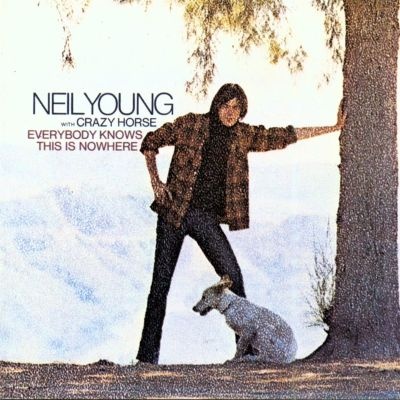 3. Everybody Knows This Is Nowhere, 1969
Or maybe the Godfather of Grunge mythos begins here. Little that had come before – the Buffalo Springfield albums and that artsy, eponymous debut – hinted at what was coming with Nowhere, arguably the first grunge album. Distortion pedals and feedback abounded in 1969, but few artists had unleased this kind of sustained raw power. The essential track is “Down by the River,” possibly the best thing Young ever recorded. “Cinnamon Girl” is a three-minute grunge-pop gem. Even the “lesser” tracks, the woozy “Round & Round” and “Running Dry,” are beautiful. And, naturally, the record ends with a ten-minute jam.
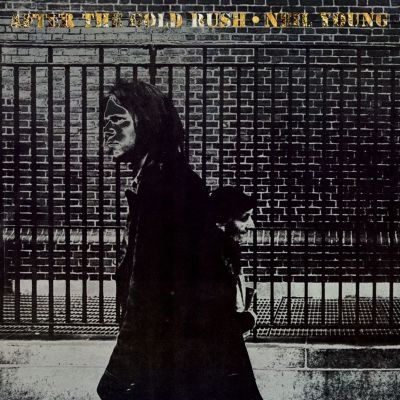 2. After the Gold Rush, 1970
Neil Young rocked out with the best of them, but he was also the most gifted 1970s singer-songwriter this side of Joni Mitchell (who, come to think of it, was also criminally underrated in her day). And After the Gold Rush is Young’s strongest collection of songs. The title track, “Only Love Can Break Your Heart,” “Don’t Let It Bring You Down” and “I Believe in You” all combine melody, harmony and chording in ways that remind me of Paul McCartney at his best. “Tell Me Why” wields pure harmony like CSNY at their best. The album rocks, too, when it has to. “Southern Man” is a searing indictment of entrenched racism. It sparked one of history’s great answer songs, Lynyrd Skynyrd’s “Sweet Home Alabama.” If you buy just one Neil Young album, get this one.
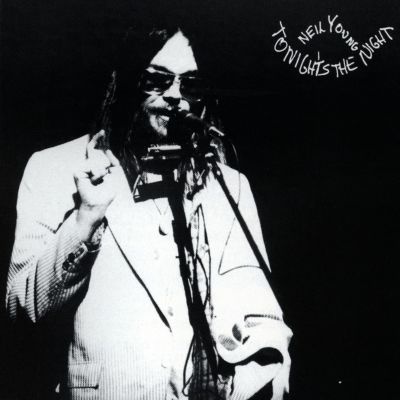 1. Tonight’s the Night, 1975
This is the greatest Neil Young album, but it’s not one to play as you serve dinner or clean house. It’s an album of mourning, recorded to memorialize the death of two men from Young’s entourage, both by overdose. As such, it’s a sort of concept album, although the overwhelming themes – grief, drunkenness, despair – come across less in the lyrics and more in the delivery. The band sounds like it’s been up all night, which it had. Young sounds like he’s on the brink, which he was. (Check out his voice on “Mellow My Mind.”) As for songcraft, I think Tonight’s the Night vies with After the Goldrush as his strongest collection of words and music. Standouts include “Mellow My Mind,” an aching love song; “New Mama,” a glimmer of hope in the darkness; and “Borrowed Tune,” a purloined melody from the Rolling Stones, sung by an artist “too wasted to write my own.”
Daniel de Visé is a frequent AllMusic contributor and author of King of the Blues: The Rise and Reign of B.B. King and The Blues Brothers: An Epic Friendship, the Rise of Improv, and the Making of an American Film Classic.