



As a single parent I’m a one-person show a lot of the time. Although I don’t feel isolated, I haven’t managed to call my best friends for a chat for weeks. I’ve lost touch with exactly how I feel, and whether or not I’m feeling overwhelmed, is lost in the day-to-day juggle, which at times feels like a marathon.
I’m lucky to have a core group of mum friends at my children’s west London primary school, who I can rely on. But I don’t have “fun” uncles and aunts popping in to entertain my offspring because I’ve fallen out with my family over my late dad and his will. Sadly, both my parents are dead, and the children’s only surviving grandmother is immobile in the north of England. And I rarely splash out on a babysitter, which costs £15 to £18 per hour.
It’s not just me. Even my mum friends who are married are feeling burnout, or they disagree with their wider family on parenting styles, which means support is limited. So it came as no surprise to learn that one in ten parents say they have no support network, according to new research by Vitabiotics Pregnacare– and modern parents are struggling to build a “village” around them.
Reasons for not having “village” support include a demanding work life, not living near family members, and being fearful about asking for help plus a lack of tight knit local community, and smaller family networks.
Yet, the advice from experts to exhausted parents like me is often to try harder at building a village: if we’re too busy to meet up for a coffee, or hang out at a community centre, find “our tribe” online to build a “digital village” on Facebook, Instagram and WhatsApp, like 56 per cent of the parents in the study have done. It’s valid advice. But, to me, being told that it takes a village feels like pressure; one more thing to worry about – and a reason to feel I am failing, as I juggle work, childcare, and a cost of living crisis.
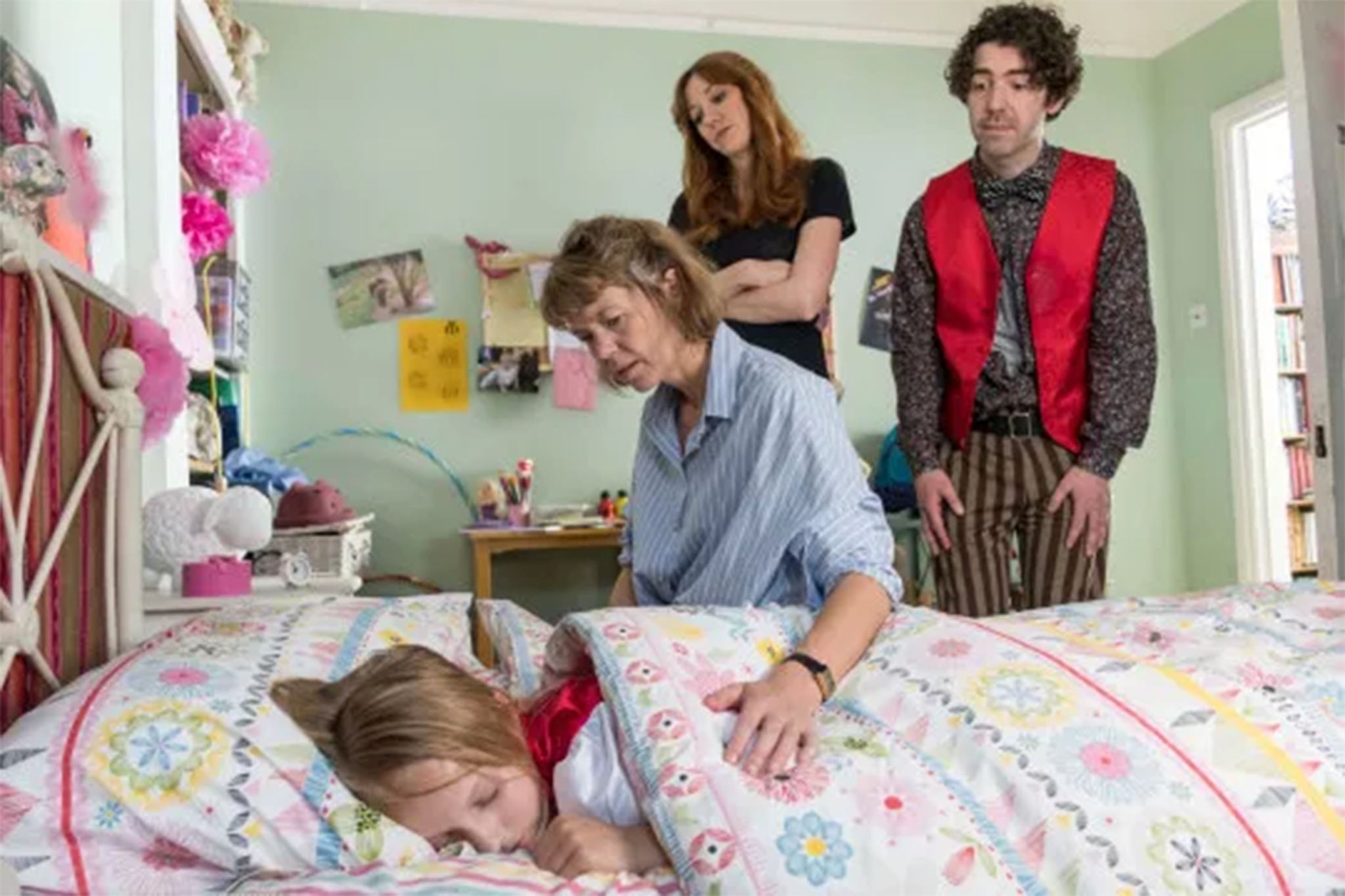
Hillary Clinton is widely credited with popularising the phrase and concept “it takes a village to raise a child” in her 1996 book, It Takes a Village: And Other Lessons Children Teach Us, which argued that children blossom when their families are supported by a community. I’ve seen friends take it to extremes; one single mum has 37 godparents for her child, while others try to adopt the “village mindset” during the school holidays, by taking it in turns to look after a group of kids. For me, that is too logistically complex with multiple drop-offs, unreliability and difficult dynamics, for it to be worth the hassle.
The truth is that to have total control over parenting decisions, diet, discipline, and routines, and avoid disagreements with toxic family or eccentric neighbours, often feels like the easiest path. I know how important it is to have support, especially emotional, which I have, and I’d love more practical support. I just don’t have time to build an entire village, though. So largely it’s just me, myself and I.
Dr Tara Porter is a clinical psychologist and author of 2025’s Good Enough: A Framework for Modern Parenting. She says that while many parents today have found a different sort of village from the traditional ideal with 24/7 access to information from the internet, it still comes with its own challenges.
“We are only a text or WhatsApp group away from our friends – and have ‘digital babysitters’ in the form of sticking out kids in front of an iPad, “ she says. “But the internet can fuel that sense of ‘not being good enough’,” says Dr Porter. “It can heighten anxiety and panic as a parent in an unhelpful way, and it can also fuel a sense of unhelpful comparison or competition,” she adds.
“There are so many reels on Instagram on how to parent that caregivers lose their own intuition on what is right for them and their child.”
The nuclear family was never designed to hold everything we’ve asked it to hold, and the pressure that is placed on isolated parents, as well as on couple relationships, is one of the real consequences of that
Dr Emma Svanberg, a clinical psychologist and author
However, while building a physical village is not realistic for many busy, working parents, it has its advantages over the digital one. “Children develop a sense of resilience by the freedom of doing things on their own – playing with their friends in the local neighbourhood; making their own games, rather than the adult-supervised activities and clubs they get signed up to now,” she says.
Dr Charlotte Faircloth, professor of family and society at the UCL Social Research Institute, tells me that it’s no surprise that parents say that building a village feels like more pressure. “It puts the problem back on them when in fact it’s a structural issue,” she says.
“Society is structured in such a way that it can be hard for parents to build a village – the ideal of the nuclear family, consisting only of parents and their children in their own four walls, is a model that can really make communal support harder by isolating parents and eradicating the village-style, multi-generational, peer-based support networks that traditionally shared the burden of child rearing.”
Long working hours and often long commutes, or living far from extended families, can also add to a sense of atomisation and isolation. “The ‘solution’ to this,” she adds, “is often to replace collaborative community connection with transactional, paid services, such as with childminders or cleaners, which are expensive and often do not ease a sense of ‘burnout’ when it comes at such a cost.”
Village building is difficult, she continues, because we live in a time where parents, and mothers in particular, are informed about the importance of “intensive” parenting with different styles for their babies and children: trendy parenting styles such as helicopter and gentle parenting.
“It asserts that parenting is ‘the most important job in the world’ and no one can be trusted to do as good a job as them,” says Dr Faircloth. “This can make it hard for others – even fathers – to support them.”

She adds: “Socially we also have a distrust of each other; we are very cautious about adult-children relationships – men who want to run playgroups, for example, could be subject to heightened suspicion – and this also makes it harder to have a collective village.”
What’s needed, she explains, is a more collaborative system of care – especially “excellent quality accessible childcare” – which would genuinely take the pressure off parents and make task of raising the next generation a bit easier.
“If there are spaces where people could go and hang out and look after each other’s kids in a less formalised way that would help a lot of people,” she says.
Dr Emma Svanberg, a clinical psychologist and author of 2023’s Parenting for Humans: How To Parent The Child You Have, As The Person You Are tells me that “the village isn’t a myth, it’s a necessity”.
“The nuclear family was never designed to hold everything we’ve asked it to hold, and the pressure that places on isolated parents, as well as on couple relationships to be everything to each other, is one of the real consequences of that,” she says.
“Yet, our response is so often to tell people to just reach out more, and try harder,” she says. “People do reach out and often those around them are too burned out or overworked to reach back in.” While the “craving” for collective care still exists, she says, and is needed for family wellbeing, what’s missing are the conditions.
“The infrastructure, the time, and the trust have been quietly dismantled over years,” she says. “We can start small with our neighbours, showing up where we can , with small acts of mutual care. But we also have to be honest that building a community takes more than individual intention, and that telling exhausted parents its just a matter of trying harder is another way of making feel like they’re failing.”
I have definitely realised how important it is to be able to ask for support. What I have found when I do is that most people feel it’s a privilege to help, just as I do when I’m asked. And, when I reach out I often feel grateful to have people in my life with whom I can be myself with, warts and all.
Yes, I’d love a granny figure to swoop in to give me a real break, and I miss my late dad’s love and support. But, on reflection, perhaps I have more of a village than I first thought. The mum friends I do have – who I see at the school gate most days – make me feel like I’m not doing this alone.