



Teenagers’ access to social media has emerged as a topic of concern among politicians, not just parents, as more and more countries in Europe (and beyond) consider social media bans.
Spain, France, Denmark, Portugal, Germany, Greece, Austria, and others have either initiated or announced plans, or are seriously considering a social media ban for users under the age of 16.
These nations are all following Australia, which, in December implemented a groundbreaking social media ban for under-16-year-olds, resulting in the deletion or restriction of some 4.7 million accounts.
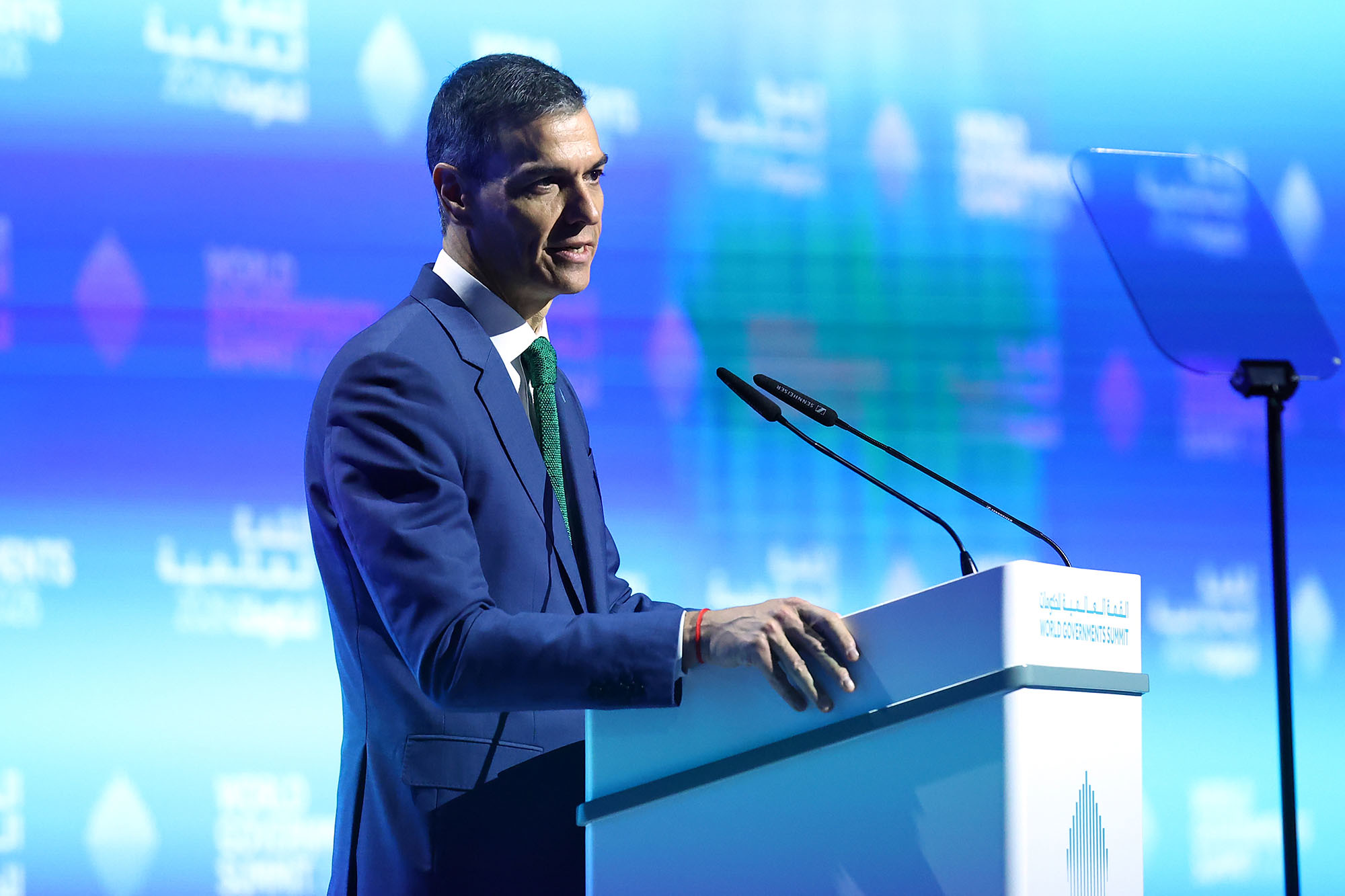
Explaining Spain’s move to a ban, prime minister Pedro Sánchez said this month: “Today our children are exposed to a space they were never meant to navigate alone. A space of addiction, abuse, pornography, manipulation, and violence.”
“We will no longer accept that. We will protect them from the digital Wild West,” he added.
Research cited by both the countries involved and Brussels points to teens being more at risk of the negative effects of social media and its design and environment. One study cited by the European Parliament, found 78 percent of 13 to 17-year-olds checked their devices at least hourly, and 46 percent checked “almost constantly”.
There is strong agreement among governments and digital civil society that there is a need to address the exploitative design of social media.
The EU institutions have been looking into this, but the EU hasn’t been quick enough for some members.
And rather than waiting for an EU-wide solution, EU capitals are now taking matters into their own hands.
But is banning social media, only for kids, individually, the best move?
To ban or not to ban?
There is a division of opinion on banning social media for teenagers, and whether the move can solve the problem it aims to fix.
European citizens support government intervention, with a Eurobarometer study from 2025 finding that over 90 percent of people surveyed want public authorities to help protect kids online.
Explaining why this government intervention might work to EUobserver, Paul Richter, a researcher at Brussels-based think tank Bruegel said: “Their [social media platforms] financial incentives do not fully align with the well-being of citizens, particularly minors. That misalignment justifies regulatory intervention.”
Under the European Digital Services Act (DSA), platforms like Instagram and X must meet obligations to protect their users’, especially minors, well-being.
“[But] the European Commission has not fully used the tools the DSA provides,” said Richter.
And the lack of enforcement puts most of the burden on parents, who may have varying levels of experience or capacity to protect their children.
“Legislative intervention can help provide more consistent safeguards across socioeconomic and educational differences,” Richter pointed out.
However, digital rights groups are sceptical about the bans, questioning the effectiveness of the solution.
“To us, age-verification is a band-aid presented as a solution, which diverts attention and resources from the measures that have the potential to address the root causes of harm,” said Simeon de Brouwer, campaigner at the European Digital Rights (EDRi) group.
Similarly, Andy Demeulenaere, from the Flemish Knowledge Centre on Digital and Media Literacy, based in Belgium, said to EUobserver, “[social] media are not at all comparable to poisonous addictive substances you ingest like drugs or alcohol.”
“They [online platforms] hold a special position in a rights-based society,” he said, referring to the internet providing access to information and expression.
Rather than a ban, his organisation favours targeted measures, such as gradual limits, and protections for all ages.
But is a ban actually enforceable?
Looking to Australia, enforceability looks murky, as reports from Australia suggest the ban might not be as effective as the large total number of deleted accounts may suggest.
In an ABC story, a teen passed the age scan at 14; another didn’t enter their correct birthday when creating the account, and was never subjected to a check. The story also highlights an emerging underground market in which over-16s scan IDs for those younger.
The Australian ban makes a platform use age-verification methods before granting access, which include having users upload their ID, or scan their face using age-estimation technology.
However, the Australian government wrote in its own age-estimation report that the technology, while usable, has shortcomings.
“It is a fundamental misunderstanding of the capabilities of age estimation to test whether it can implement exactly a specific age-restriction without accepting there will be a margin of error,” the report reads.
And there are also Virtual Private Networks (VPNs), which are an online privacy tool, that can also allow users to skirt the ban.
VPNs let users change their geolocation while using the internet, so a user in Spain could make it appear they are searching in Sweden.
People turning to VPNs is a trend when bans come into force. For example, when the UK restricted access to porn websites for minors through its Online Safety Act, which entered into force in 2025. Subsequently, VPN providers saw a surge in their services.
Just a few minutes after the Online Safety Act went into effect last night, Proton VPN signups originating in the UK surged by more than 1,400%.
Unlike previous surges, this one is sustained, and is significantly higher than when France lost access to adult content. pic.twitter.com/W9R5FQBWKa
— Proton VPN (@ProtonVPN) July 25, 2025
To solve this problem, the UK, which is also considering a social media block for teens, is now examining banning VPNs.
And the interplay between member state law and European law is complicated, with states able to put an age limit — but only the commission has competency to make age-verification a platform obligation.
Where’s the EU in all this?
The European Commission is looking into these problems, but hasn’t moved yet — while examining Australia and other countries’ social media bans for lessons and inspiration on how to handle social media for kids effectively.
“We [the commission] have been looking into like-minded partners, including Australia, to learn from them,” confirmed a commission spokesperson to EUobserver.
The commission also sees a unified approach as better than a scattered one, writing in a recent anti-cyberbullying initiative: “A coordinated European approach to age thresholds would ensure all European children receive equal protection and would prevent legal fragmentation in the single digital market”.
For example, the current unified approach raises complications. Austria wants to ban 14-year-olds, while Spain wants to ban 16-year-olds, and it is unclear what happens to the account if a 15-year-old Austrian visits Spain.
This issue has not been neglected by the European Parliament either, as in November, the parliament called on the commission to impose an EU-wide social media ban on under-16-year-olds.
The EU is also developing its own age-verification method, which is already being piloted in five member states: Italy, Spain, France, Greece, and Denmark.
Once set up, EU citizens will confirm their identity on an app, which platforms can then use to comply with regulations, and members can use to set their own boundaries.
“It will be a privacy-preserving and user-friendly app, setting a ‘gold standard’ in age assurance, that citizens can choose to use to verify their age, while keeping full control over the data they share,” the commission spokesperson added.
Meanwhile, the Brussels executive is setting up an expert panel on the topic, with recommendations expected by summer 2026.
But with or without the EU’s intervention, it seems member states are heading down the path of national bans.
And while these measures could indeed offer immediate protection, the long-term challenge remains — as proven already in Australia.
Rather than barring minors from online spaces — where they will spend the rest of their life — a tech-savvy generation may find backdoors to still get in.
Leading some critics to argue that education, media literacy and safer platform design could allow younger teens to navigate social media critically — tackling root causes instead of building digital walls.