



BAKU, Azerbaijan, January 29. The development
of the tourism sector in Tajikistan is increasingly recognized as a
key driver for economic diversification and enhanced international
engagement. This sector holds the potential to significantly impact
investment flows, regional development, and the country’s global
humanitarian relations.
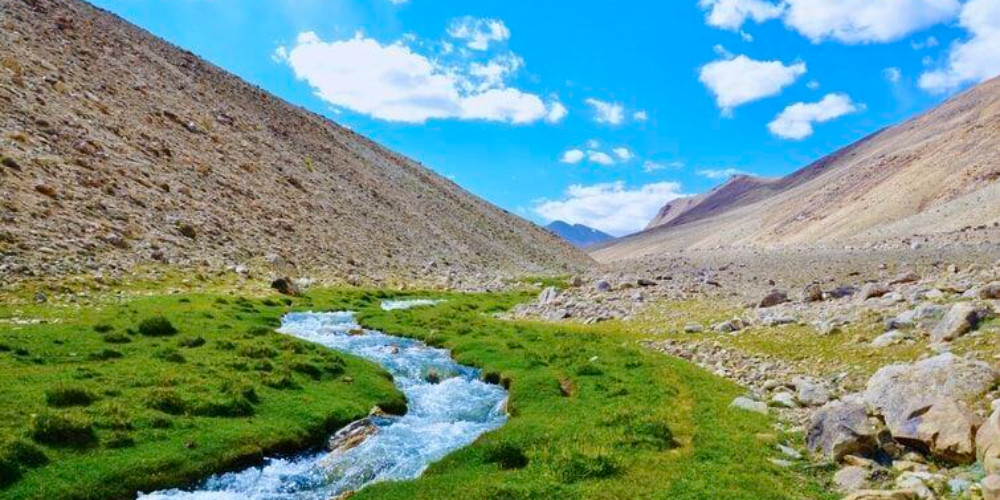
Central to Tajikistan’s tourism offerings are its rich natural
and cultural-historical resources. The country boasts considerable
potential in mountain and eco-tourism, particularly due to the
Pamir region, one of the highest-altitude areas globally.
Additionally, historical sites tied to the Great Silk Road,
alongside the unique cultural traditions and linguistic heritage of
mountain communities, further enrich the country’s tourism
appeal.
Moreover, Tajikistan’s geographical and infrastructural
characteristics create fertile ground for the development of
specialized tourism routes. Despite its relatively compact size,
the country offers a diverse array of attractions for international
tourists, including high-altitude trails, prominent hydraulic
engineering feats, archaeological sites, religious monuments, and
settlements at extreme elevations. These elements can be
strategically utilized to create niche tourism products that cater
to a global audience.
A key condition for the sector’s development remains transport
accessibility. In recent years, international air connections
linking Dushanbe with several cities in Europe and Asia have
gradually expanded. In addition to the national carrier, foreign
airlines operate flights to the country, which helps reduce
logistical barriers and increases mobility for tourists and
business travelers alike.
Alongside these infrastructural developments, international
cooperation in the tourism sector has intensified. In January, a
meeting took place in Ankara between Tajikistan’s Extraordinary and
Plenipotentiary Ambassador to Türkiye, Sodik Imomi, and Türkiye’s
Deputy Minister of Culture and Tourism, Nadir Alpaslan, during
which the current state and prospects of tourism cooperation were
discussed. The parties addressed expanding contacts between
relevant agencies and tourism companies, as well as sharing
expertise in managing tourism zones.
Special emphasis was placed on the development of cultural,
ecological, and mountain tourism, with a particular focus on the
potential to attract investment from Türkiye into Tajikistan’s
tourism infrastructure. Moreover, discussions highlighted the
importance of workforce training and the exchange of industry
specialists, recognizing these as essential components for the
sector’s sustainable, long-term growth.
In a broader geopolitical context, the development of the
tourism sector holds significant potential to influence
Tajikistan’s external relations. Tourism and professional
exchanges, along with joint projects and humanitarian cooperation,
can serve as complementary channels to existing bilateral and
multilateral frameworks, enhancing communication and fostering
deeper ties between nations.
Given these factors, Tajikistan’s tourism development could
follow several possible trajectories. One scenario suggests gradual
expansion driven by improved transport infrastructure and the
establishment of targeted tourism clusters. Another path envisions
a more proactive strategy to attract foreign investments and
integrate Tajikistan into regional tourism networks.
Alternatively, Tajikistan could prioritize the growth of niche
tourism segments, such as eco-tourism, mountain tourism, and
cultural tourism, while deliberately limiting mass tourism flows.
However, if constraints related to infrastructure, logistics, or
investment remain unresolved, the sector’s development could face
considerable limitations.
The realization of any given scenario will depend on a
combination of factors, including institutional conditions, the
dynamics of international cooperation, investment activity, and
overall regional trends.