



Last year’s Antarctic ozone hole is the fourth to fifth smallest since 1992. For the second year in a row, it is significantly smaller than the 1990–2010 average, according to the World Meteorological Organization.
The ozone layer, which has been regenerating since 2000, is expected to make a full recovery within several decades.
The 1987 Montreal Protocol phased out chemicals such as chlorofluorocarbons commonly used in items like fridges and fire-fighting foam. This drove the fight to close the ozone hole.
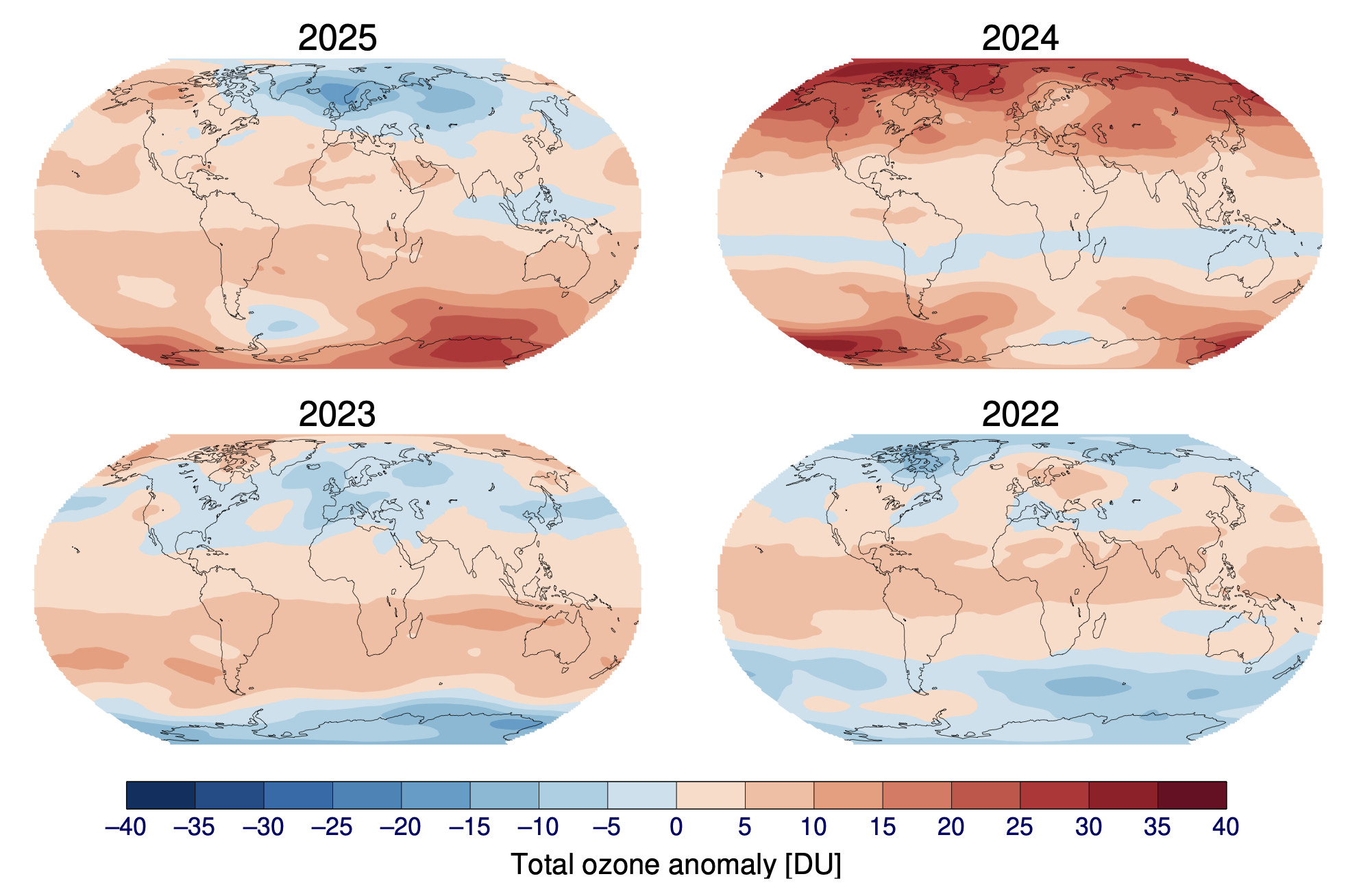
But significant year to year variations in ozone levels persist with ozone levels below average across much of the Northern Hemisphere in 2025, spanning Greenland and Europe to Central Asia and Japan.
The World Meteorological Organization (WMO) warned that despite the ozone layer’s recovery, some regions are seeing more days with a higher UV index.
The UV index is an international standard to measure how strong the sun’s ultraviolet radiation is.
Since the mid-1990s, UV radiation has increased up to 20 percent in some parts of Europe, mainly due to less cloud cover and more sunshine. And higher UV radiation means increased risk of skin cancer and other diseases.
The WMO has stressesed the importance of data tracking. But ozone layer monitoring stations have decreased from 130 in the early 2000s to 110 today, with stations often closing in areas where observations are most sparse to begin with.
On the monitoring-infrastructure side, Europe is actually in a relatively strong position. Europe has one of the world’s densest ground station networks. EuBrewNet alone coordinates around 50 spectrophotometers instruments across the continent, supported by a regional centre in Spain that regularly compares instruments to ensure consistent calibration standards.
“Atmospheric monitoring is essential for protecting the ozone layer and, by extension, life on Earth … With the 2026 ozone hole’s area increasing earlier than average in September, while other key diagnostics remained close to historical averages, this year’s findings illustrate the importance of high-quality datasets,” said Laurence Rouil, the director of the Copernicus Atmosphere Monitoring Service (CAMS) at the European Centre for Medium-Range Weather Forecasts (ECMWF).
“No single diagnostic can tell the whole story,” she added.
Ozone hole fixes do not help changing climate
The ozone hole and climate change are separate problems.
The ozone layer protects us from harmful ultraviolet radiation from the sun, and its depletion was caused mainly by chlorofluorocarbons which were phased out.
By contrast, climate change is caused by rising concentrations of greenhouse gases like carbon dioxide which trap heat in the atmosphere, driving a global temperature rise and extreme weather.
The recent WMO data showing success in fixing the ozone hole is not related to the causes of climate change.