



Somewhere between early-morning rehearsals, competition weekends, and back-to-back classes, energy drinks have become as common a necessity for many dancers as hairspray and TheraBands. But aside from the obvious appeal of its quick boost, is frequent caffeine consumption safe for young artists? And why have these drinks recently become so popular within the dance community?
Why Dancers Can’t Get Enough
Social media has increased the visibility of training, with dancers pushing themselves to new extremes. As dance has grown more competitive, so has a culture of overworking, exhaustion, and, in tow, energy drinks. “Dancers gravitate towards energy drinks because they don’t want to admit they’re tired and overworking themselves,” says Briana Baldovinos, a freelance ballerina and an ambassador for the energy-drink brand Celsius. With professional, college, and even pre-professional dancers promoting energy drinks on TikTok and Instagram—often through paid or official partnerships—brands like Celsius, Alani Nu, and Red Bull have claimed their stakes in the dance world, especially online.

Megan Dang, now entering her junior year on the Butler University Dance Team, grew up in competitive dance. During her senior year of high school, Dang attended more than 12 conventions, where she developed a self-acclaimed caffeine addiction. Her dependence intensified after going the college-dance-team route, where jam-packed national schedules and teammates like Alani Nu ambassador Gracie Nielson increased the appeal of quick-hit energy.
Despite warnings about adverse health effects, like sleep disruption or cardiovascular risks, Dang continues consuming energy drinks and associates the caffeine-rush with success. “It’s obvious the dancers who drink energy drinks right before practice are always locked in when receiving corrections, hitting formations, and making changes,” she says.
Do They Actually Help?
Those benefits may not last, though. Baldovinos is pursuing a master’s degree in biomedical sciences from University of California, Riverside, and her studies have changed the way she understands dancers’ reliance on stimulants like caffeine. When she became a Celsius ambassador as an undergrad, she consumed energy drinks daily to keep up with her ballet training. “There’s a pressure among dancers to be the best, just proving your talent to yourself,” she says. “I relate to that mentality, often making me push past exhaustion.”
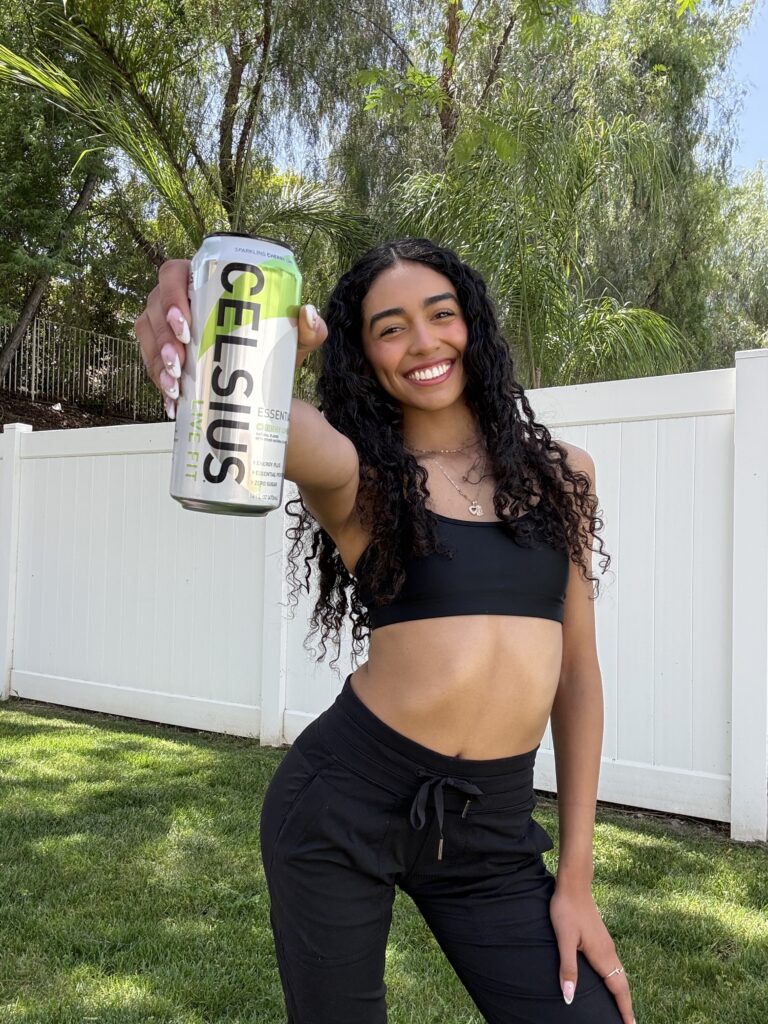
Since then, Baldovino has learned that caffeine only temporarily increases alertness by blocking adenosine receptors in the brain, which regulate energy levels, heart rate, and nervous system activity. Now, she only consumes energy drinks weekly. Baldovinos continues to promote Celsius, as she believes the drinks can be helpful when they’re not overused. “Energy drinks just need to be a last resort,” she says. “Sleep, rolling out your muscles, and taking care of your body should come first.”
The Reality

For many dancers, exhaustion caused by poor nutrition or sleep may enticethem to reach for another Cherry Slush Alani or Mango Loco Monster. “For people aged 13 to 18, the general recommendation is below 100 milligrams of caffeine daily,” says Sherry Lin, a registered dietitian and dancer who specializes in nutrition and recovery. (For perspective, a typical energy drink contains about 200 to 300 milligrams of caffeine.) Lin explains that caffeine is a stimulant that increases heart rate, and repeated overstimulation can contribute to fatigue and increased injury risk—perpetuating, rather than fixing, the cycle.
“Crashes” after consuming energy drinks can also perpetuate anxiety and difficulty concentrating as the body adjusts to the caffeine wearing off. Lin says that those crashes can affect physical recovery, leaving dancers unusually sore, and poorer concentration can increase injury risk. In some extreme cases, consuming too much caffeine can lead to more dangerous effects, such as rapid heart rate or long-term gastrointestinal distress. For dancers already dealing with anxiety, digestive issues, or fatigue, overloading caffeine can make those struggles even harder on the body.
Lin encourages dancers to “fuel like the athletes we are,” with balanced meals and proper hydration. (She recommends hydrating alternatives like sports drinks or coconut water, which provide electrolytes, sugar, and sodium that the body can naturally convert into energy.) And rather than relying on stimulants to push through fatigue, Lin says dancers should treat caffeinated beverages as occasional supplements for enhancing performance—not as a must-have. Remember, she says, “supplements are meant to supplement, not replace.”