



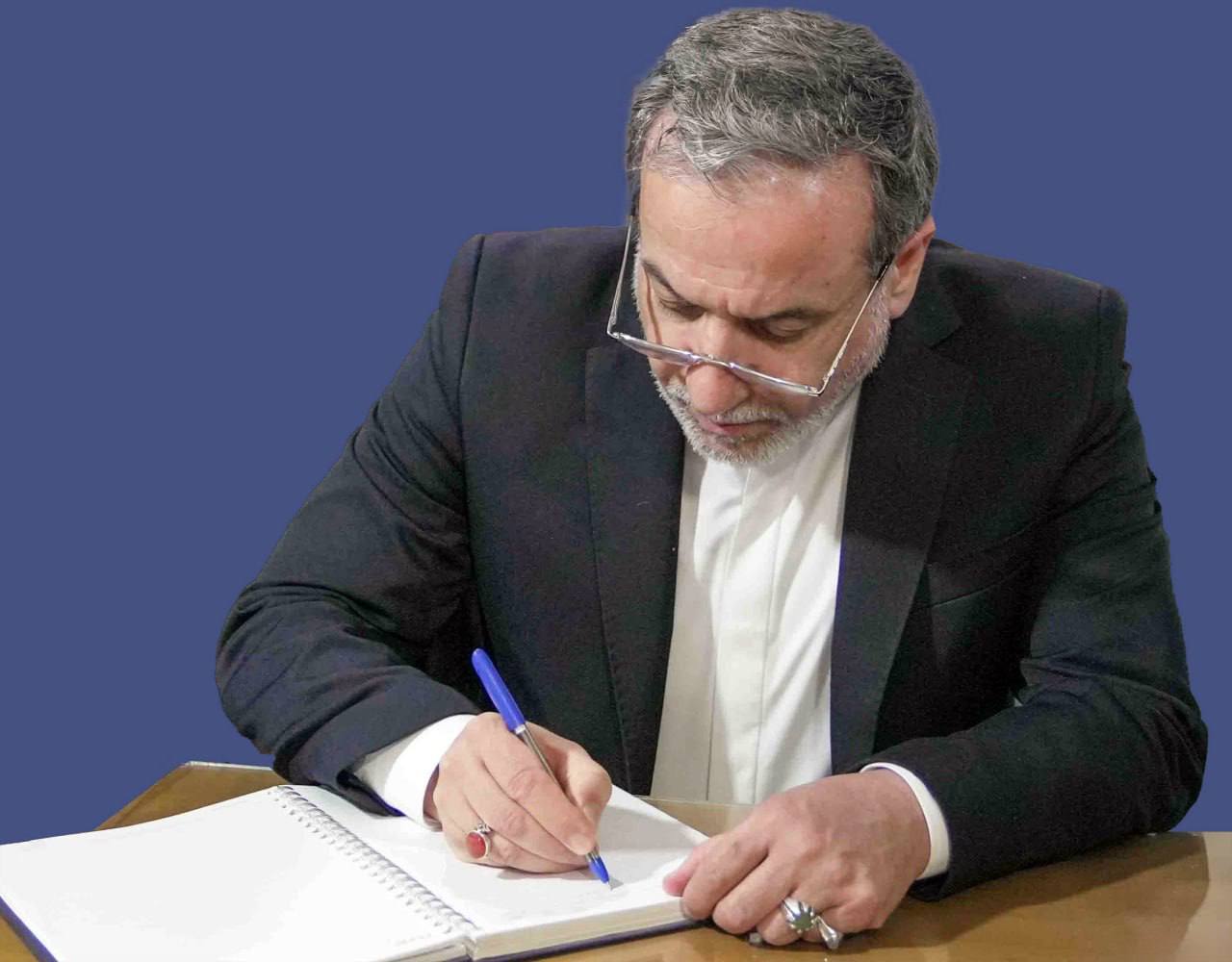
BAKU, Azerbaijan, March 2. Iran’s Foreign
Minister Seyed Abbas Araghchi has sent a letter to the UN
Secretary-General and the President of the UN Security Council
regarding the death of the Supreme Leader of the Islamic
Revolution, Ayatollah Khamenei, Trend reports.
“In a new series of aggressive, unprovoked, and completely
unjustifiable actions against the sovereignty and territorial
integrity of the Islamic Republic of Iran, the United States and
the Israeli regime deliberately targeted the highest official of a
United Nations Member State, namely, the Supreme Leader of the
Islamic Republic of Iran, Ayatollah Seyyed Ali Khamenei, on
February 28, 2026,” the letter reads.
According to the document, Tehran characterized the incident as
a violation of Article 2(4) of the UN Charter and other principles
of international law, including the prohibition on the use of force
and the sovereign equality of states.
“In view of the above, and in a context where the normalization
of gross violations of international law threatens the integrity of
the international system, the Islamic Republic of Iran formally and
strongly calls on the UN Secretary-General and the Security Council
to fulfill their Charter responsibilities for the maintenance of
international peace and security and take immediate, concrete, and
effective measures to ensure that the United States and the Israeli
regime are held fully accountable for this egregious terrorist
act,” Araghchi wrote.
The Iranian foreign minister also requested that the letter be
circulated as an official document of the Security Council.
Following the second round of nuclear talks between Washington
and Tehran on February 17, which ended without progress, the U.S.
increased its presence in areas near Iran, deploying over 150
aircraft to bases in Europe and the Middle East.
The escalation follows the 3rd round of nuclear talks between
Iran and the United States in Geneva on February 26. Held under the
administration of U.S. President Donald Trump, the negotiations
were seen as a last opportunity for a diplomatic resolution.
However, no agreements were reached, as Tehran refused to halt
uranium enrichment, dismantle its nuclear facilities, or accept
indefinite restrictions on its nuclear program. Israel launched its
airstrikes shortly afterward, with the country’s Defense Minister
Katz emphasizing that the operations were preemptive.
As a result of the military airstrikes carried out the previous
day by Israel and the United States, Iran’s Supreme Leader Seyyed
Ali Khamenei and members of his family were killed.