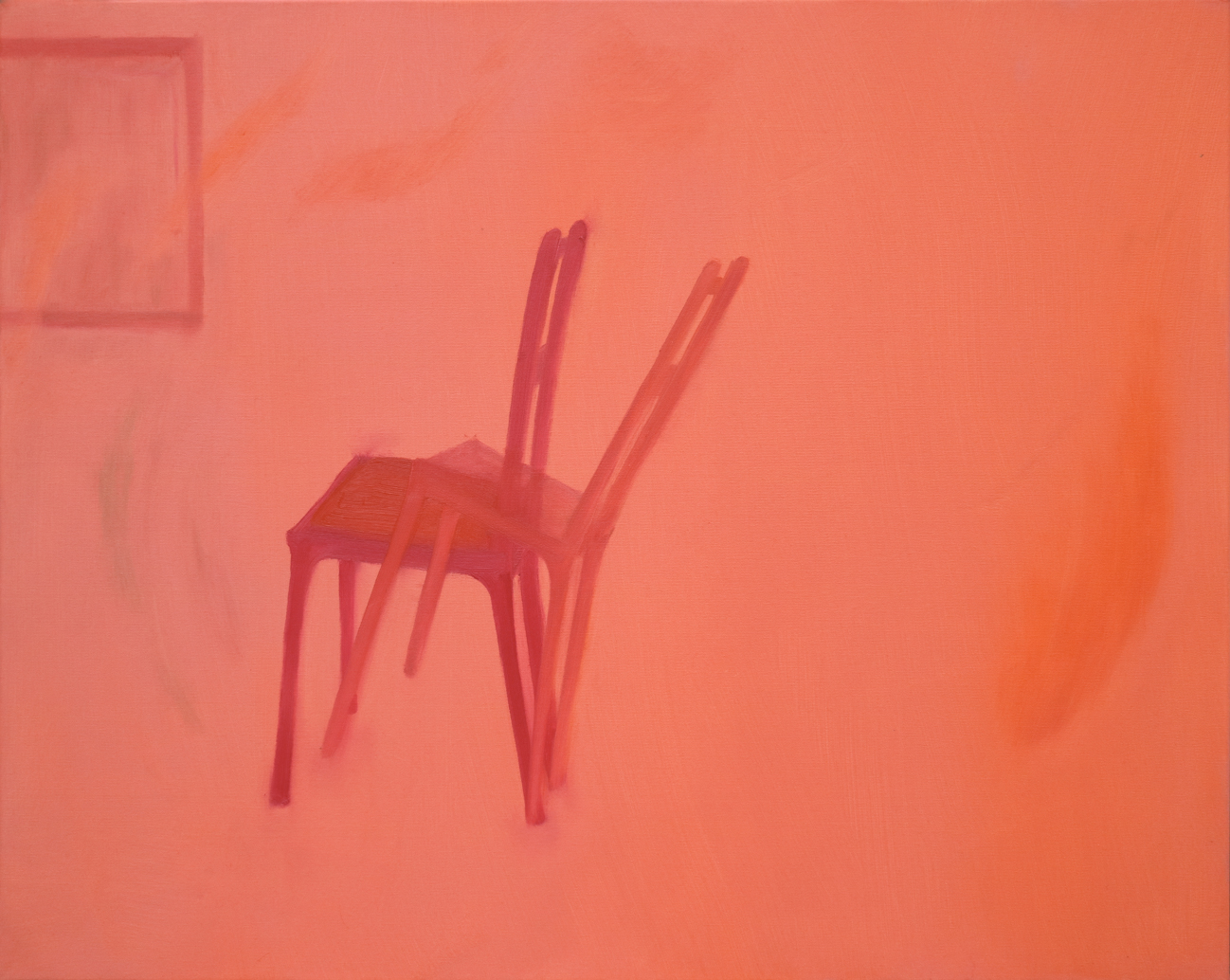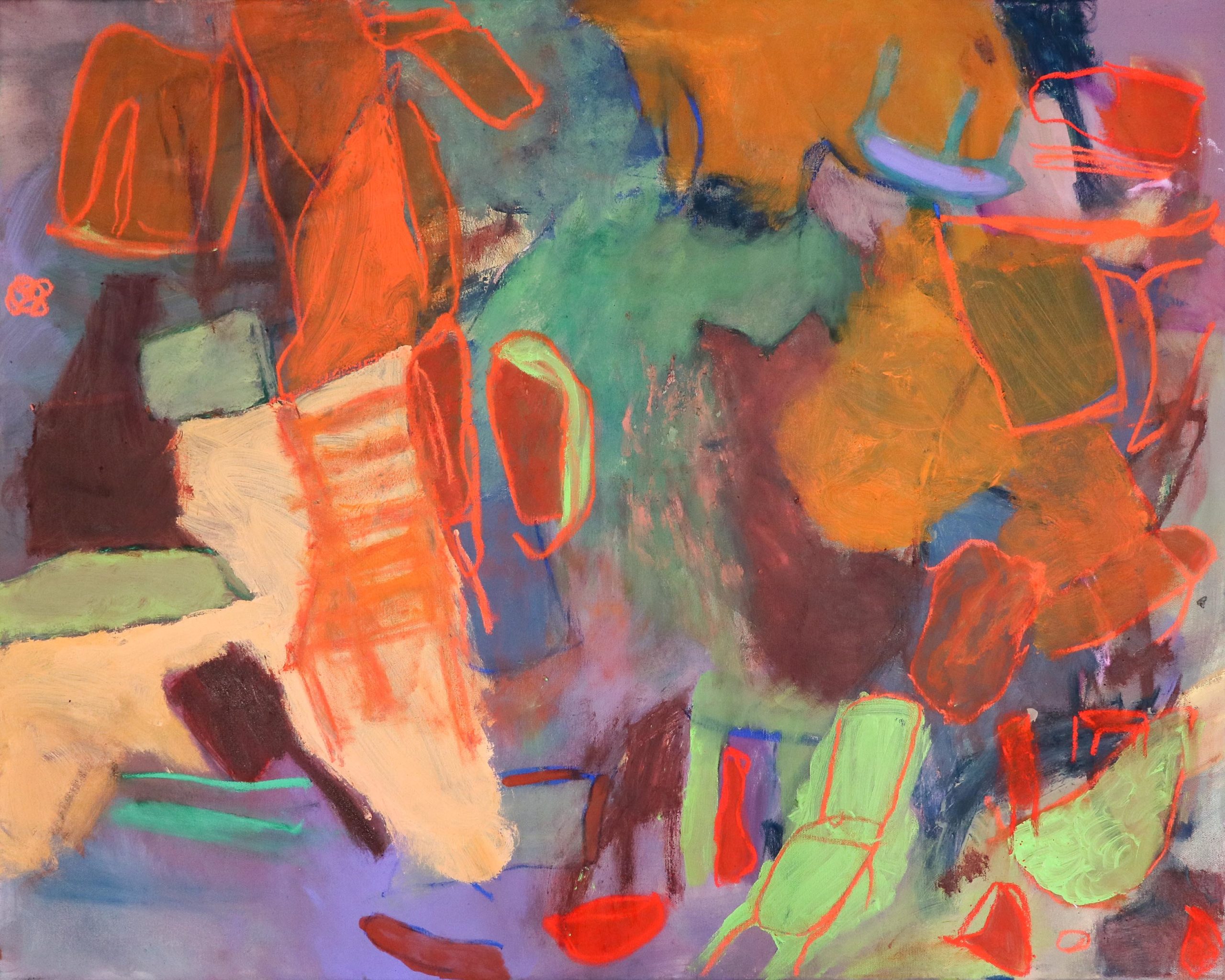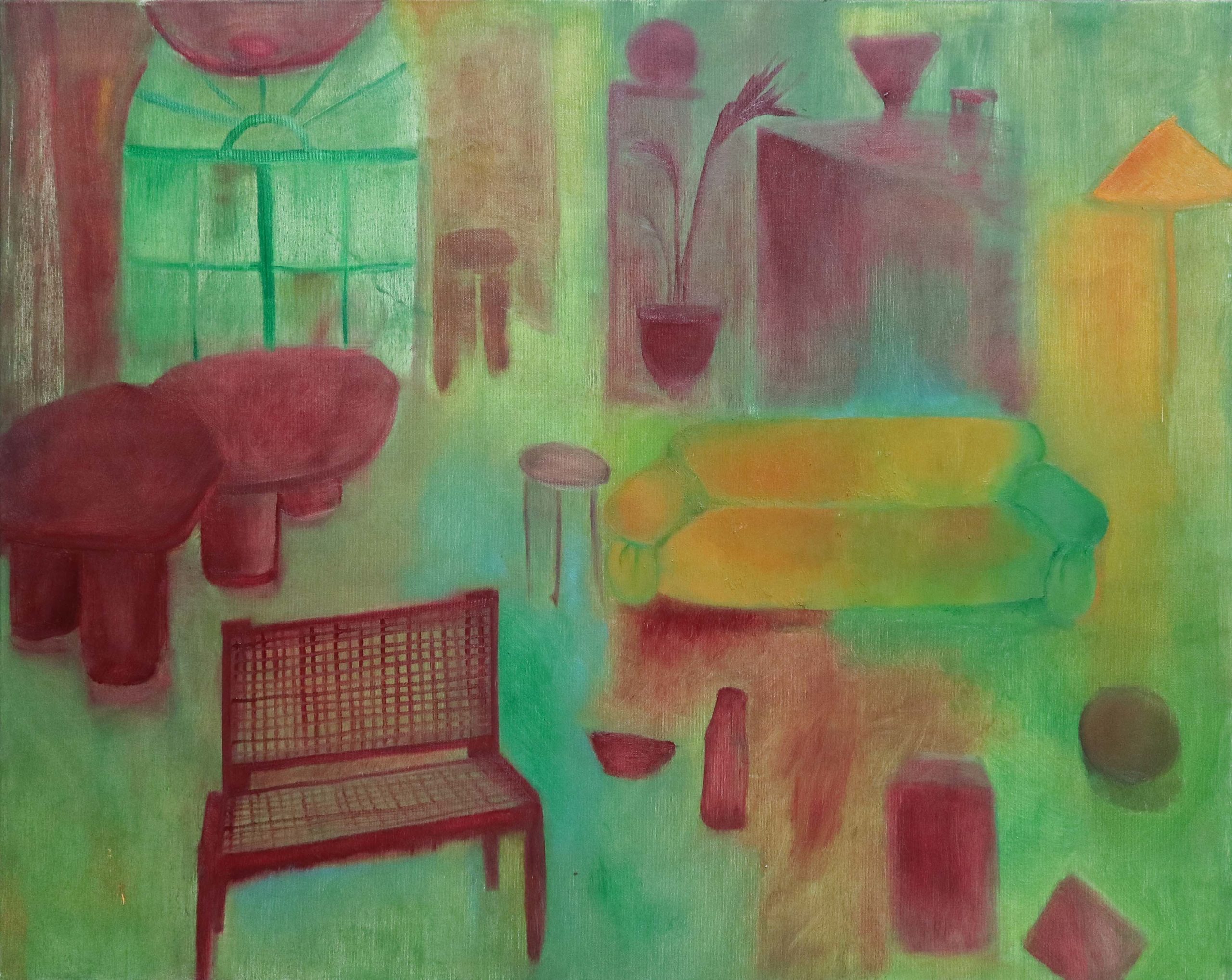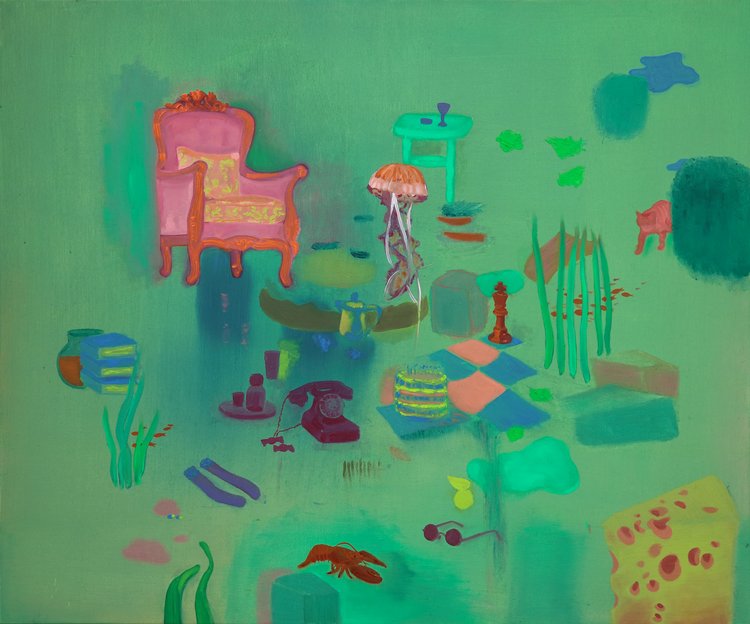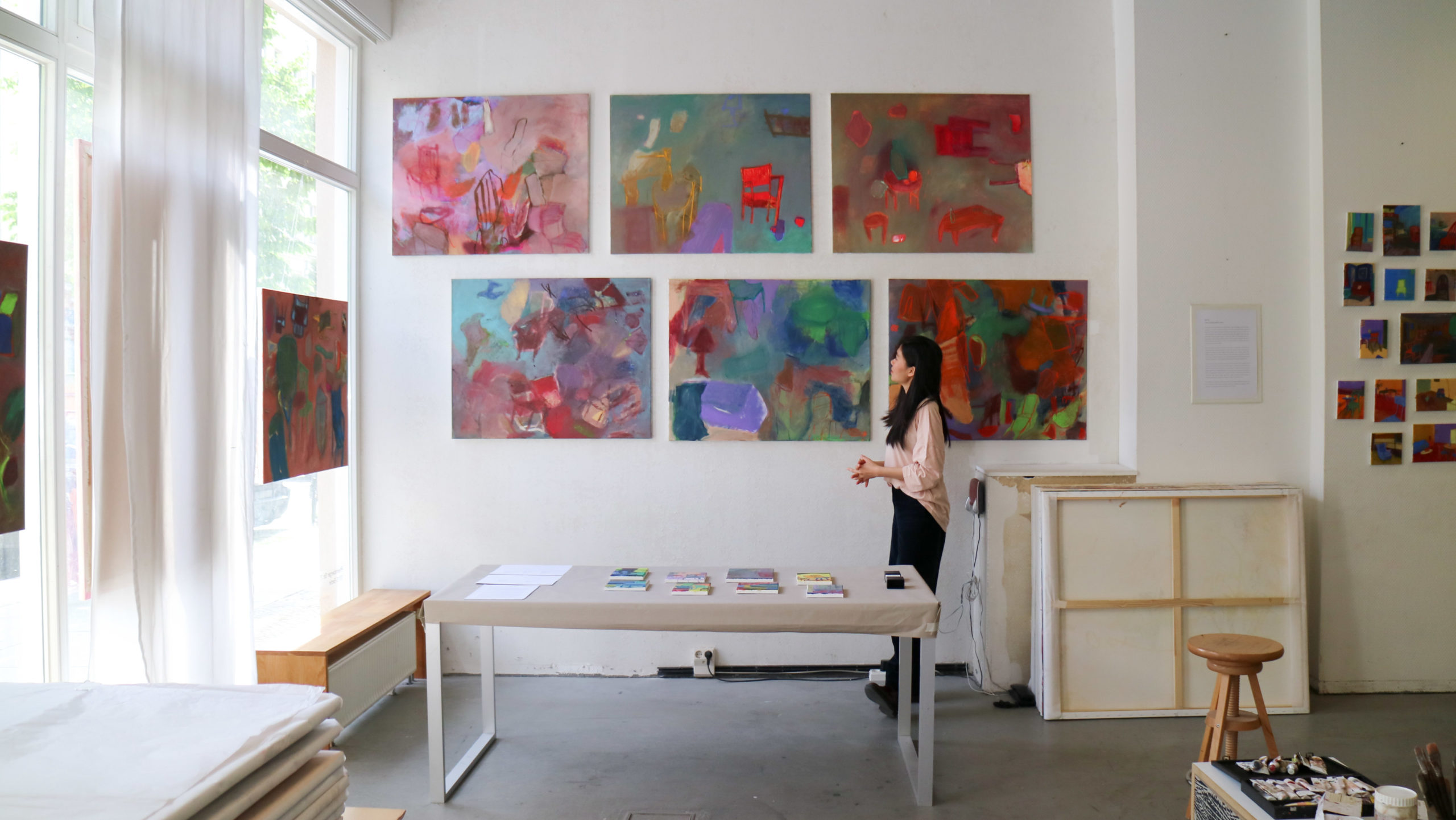



Berlin-based artist Wei Tan loves chairs. In her mixed media paintings, they punctuate swathes of peach, lilac and aquamarine, suspended in rooms without corners, or depth. Tan’s chairs offer the dreamer a place to begin. They’re something of an obsession for the artist. “I discovered not long ago that the word ‘obsession’ comes from Latin ‘obsidere’, meaning ‘to sit in front of,’” Tan tells me.
Though art isn’t her only obsession. “I have always liked both art and music,” she says, but as Tan was only allowed to choose one arts subject at school, she chose music. After studying Music Technology at New York University, where she invented an instrument that “translates live painting into sound,” Tan began to incorporate art into her music, experimenting with drawing, composition and music-as-therapy. “After all that I figured that maybe I just wanted to paint.”
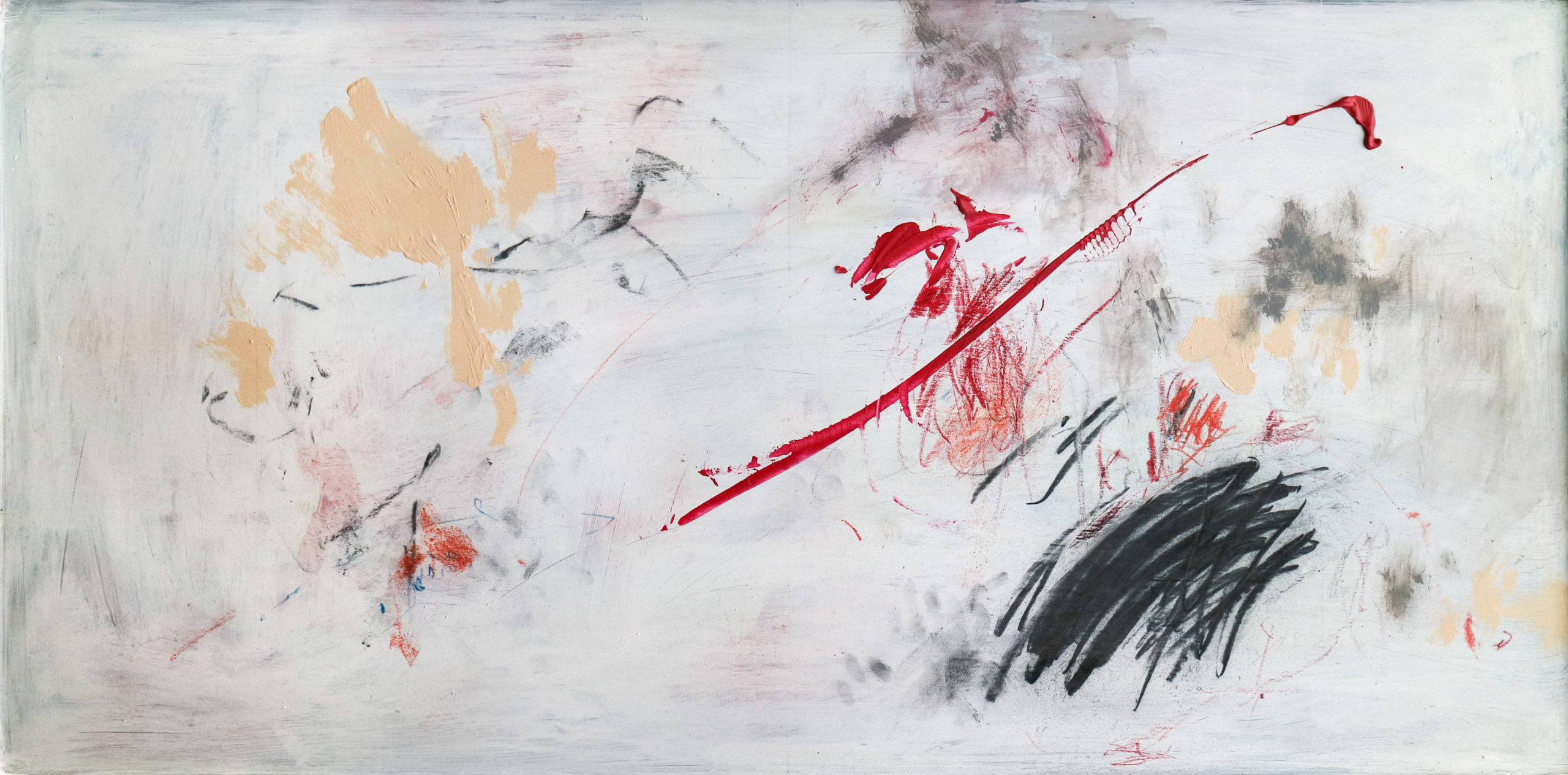
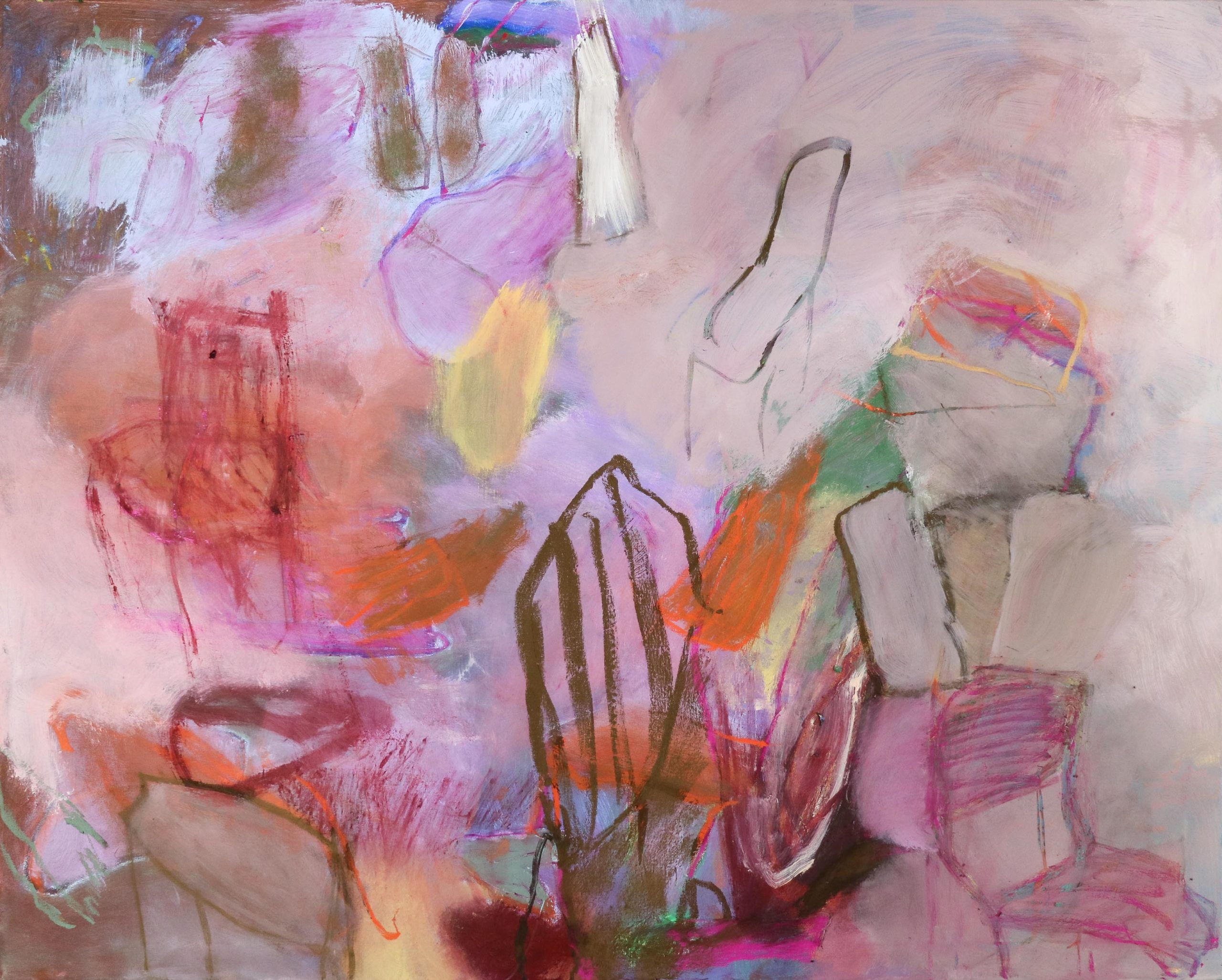
Art opened up for her as a vocation after meeting Gina Bonati, “a magical 60-year-old New Yorker who paints, dances, acts and sings.” Lessons with Bonati turned into a collaboration between the two artists. “We produced over a dozen large abstract paintings over a few weeks,” Tan explains, crediting Bonati for her experimental approach to colour, and her appreciation for Abstract Expressionism. She describes the “endless” possibilities of this tradition, its “too broad” scope. Soon, Tan wanted something “more figurative and tangible.” “I started to incorporate physical objects into the abstract environments of my paintings. For example, I would look around in the studio and start sketching mundane objects like tables, vases… then chairs came into the picture.”
For Tan, this motif is charged with emotion and memory. When she moved to Berlin, Tan “was always hanging out in cafes during quiet hours, and I would take pictures of the empty chairs across the room, or outside.” In Berlin, she explains, “it’s common to see old chairs abandoned on the streets for the next interested passer-by to pick them up. One day I decided to paint them.” She was drawn to chairs because of their anthropomorphic qualities – “they look almost like a human being with arms, legs and a torso.” And like human beings, chairs “absorb emotion”; “everyone who sits on a chair leaves some of themselves behind. An old chair, for example, has years or even decades of emotional memory.”
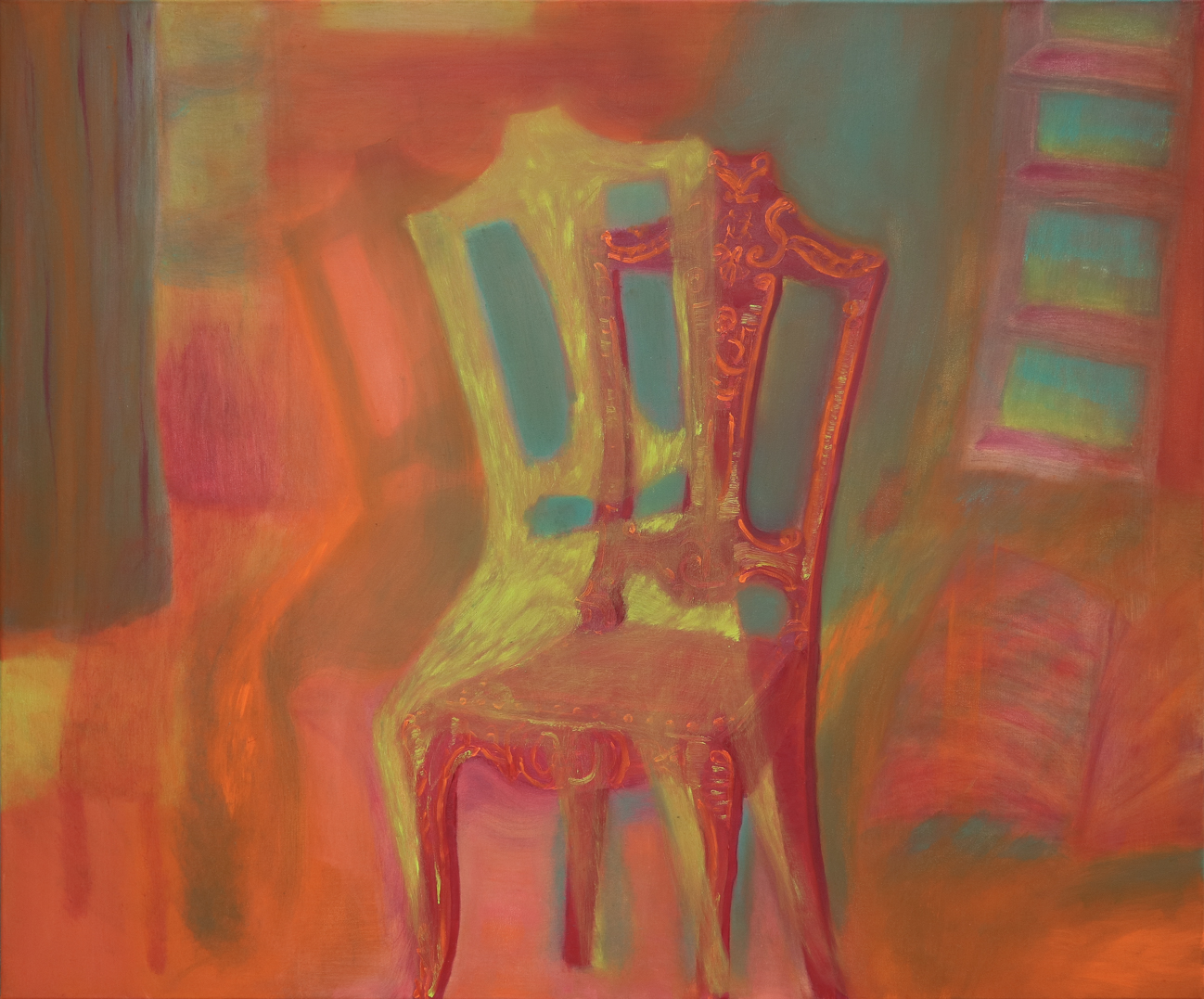
When I suggest parallels between her room paintings and Matisse’s, Tan confesses to being “quite clueless” about art history: “I had to be told by someone that my paintings remind them of Matisse’s room paintings.” Her influences span Pierre Bonnard, Georgia O’Keeffe and Cy Twombly, plus Susan Rothenberg – “another one of my favourites” – although music remains an essential inspiration for Tan’s practice. Her brushstrokes reflect the music she listens to as she paints, and she usually listens to the same album for weeks. Right now it’s Cocteau Twins’ Heaven or Las Vegas.
Tan’s current solo show expresses her multidisciplinary approach, and her “sense of indecision, of wanting to have both worlds, and a resistance to commit to just one.” My Chair is Having an Out-of-Body Experience, on view at Incubartor Wiesbaden in Germany, explores this liminality, offering the chair as a point of departure for dreaming, feeling and remembering. This show also reflects Wei’s current preoccupations, as she is “juggling many different projects and roles at once, and being a bit of a shapeshifter.” Long may the game of musical chairs continue.