



Missed calls cost small businesses real revenue. Owners and teams juggle meetings, job sites, and daily business operations, which makes it impossible to answer every call. Voicemail feels safe, but customers expect immediate responses, and most callers do not wait.
Small businesses get one chance to connect before customers move to a competitor who answers faster. This leads to unanswered calls, lost clients, missed business opportunities, and puts pressure on small teams with limited availability and rising customer expectations. You cannot stay on the phone all day, but you also cannot afford to lose most inbound leads.
Online virtual receptionists fix this problem by answering every call instantly and capturing leads without increasing staffing costs. This guide explains how they work to protect revenue and meet client expectations.
Turn missed calls into customers with XBert AI
Missed calls means missed customers. XBert handles incoming calls even when you can’t.
What Is an Online Virtual Receptionist?
An online virtual receptionist is a remote or automated receptionist service that answers calls, screens inquiries, manages call flows, schedules appointments, routes messages, and performs other tasks on behalf of a business.
These services function like a virtual assistant, auto attendant, virtual phone system, or front desk solution within a virtual office environment, no matter the time. They ensure no calls go to voicemail, even after hours, on weekends, or during holidays, which improves client satisfaction.
There are two main types of virtual receptionist services:
- Live virtual receptionist service: Real people performing remote work to handle customer calls and manage voicemails.
- AI virtual receptionists service: Digital assistants powered by artificial intelligence (AI) and natural language understanding. They answer calls to your business phone number and handle the entire conversation.
Hybrid options exist, where you might outsource your business-hours calls to a real person (live receptionist team) and rely on digital assistants for out-of-hours, but AI receptionists increasingly outperform traditional services in speed, availability, and reduce extra cost. After all, they never need lunch or sleep, so they’re always ready.

Live virtual receptionist vs. AI virtual receptionist
| Feature | Live Virtual Receptionist | AI Virtual Receptionist |
|---|---|---|
| Who They Are | Real people working remotely to answer calls, manage schedules, and handle admin tasks. | Software assistants powered by AI and natural language understanding. |
| Availability | Limited to business hours, though some services offer 24/7 coverage. | Available 24/7 without breaks or downtime. |
| Scalability | Requires hiring or expanding the team for increased volume. | Easily scales to handle thousands of calls simultaneously. |
| Cost | Usually higher due to human labor costs. | More cost-effective long-term after setup. |
| Integration | Limited to manual systems or supported software. | Integrates seamlessly with CRM, calendars, and ticketing tools. |
| Data Handling | May require human discretion; prone to error or privacy risk. | Secure and automated data logging (depending on setup). |
| Best For | Businesses needing personalized, relationship-driven communication. | Businesses prioritizing efficiency, cost savings, and availability. |
How Online Virtual Receptionists Work
Unlike a basic answering service that answers phone calls and takes messages, an online virtual receptionist looks after the entire interaction. For example, instead of simply improving your answer speed, taking a message, and getting an expert to call back, these digital assistants help with troubleshooting and navigation.
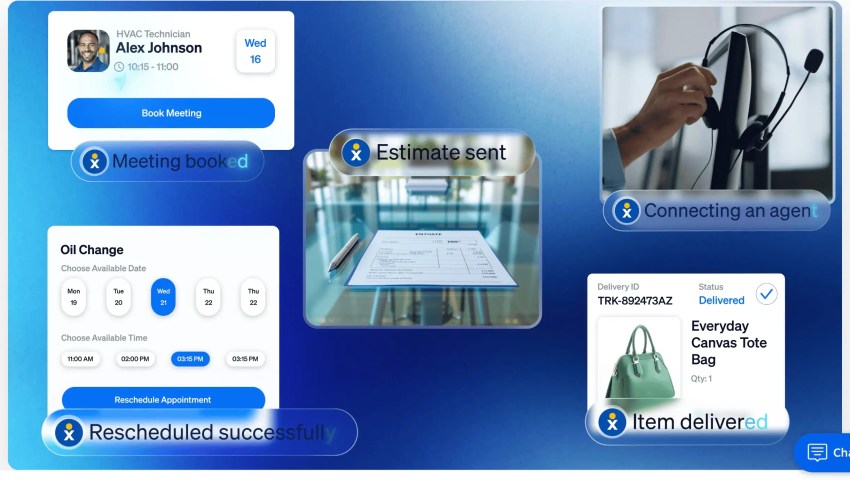
- Call or message intake: The system instantly answers incoming calls, chats, or texts.
- Natural conversation: Using speech recognition and conversational AI technology, it generates AI responses and handles common inquiries.
- Smart call routing: For complex issues, it routes the call to the appropriate department or staff member across different locations.
- Calendar sync: Integrates with scheduling software and automatically books, reschedules, and confirms appointments.
- CRM updates: It captures customer info and logs every interaction for new businesses and future context, ensuring you receive messages and follow up with clients quickly.
How it works
Of course, there’s a lot of complex programming and data processing happening in the background of an online virtual receptionist. These tools act like highly trained receptionists, combining a multitude of technologies into a single digital assistant that constantly self-optimizes.
- AI models trained to interpret intent and sentiment.
- Text-to-speech and voice cloning for lifelike responses.
- Integration with business tools (Google Calendar, Outlook, Salesforce, HubSpot, etc.).
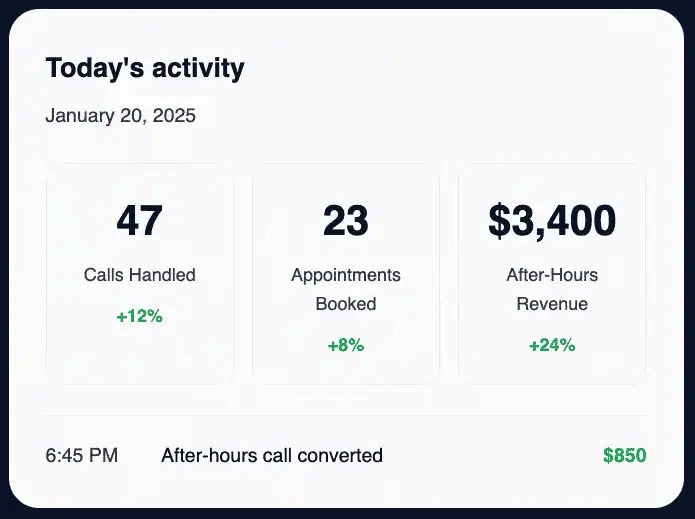
- Real-time analytics dashboards tracking customer calls, bookings, and revenue impact.
Hear a natural, professional AI and see how the AI Receptionist fits into your workflow.
Common Use Cases for Businesses
While viewed as one of the best AI tools for small businesses, online virtual receptionists have use cases across a variety of verticals.
Home and field services
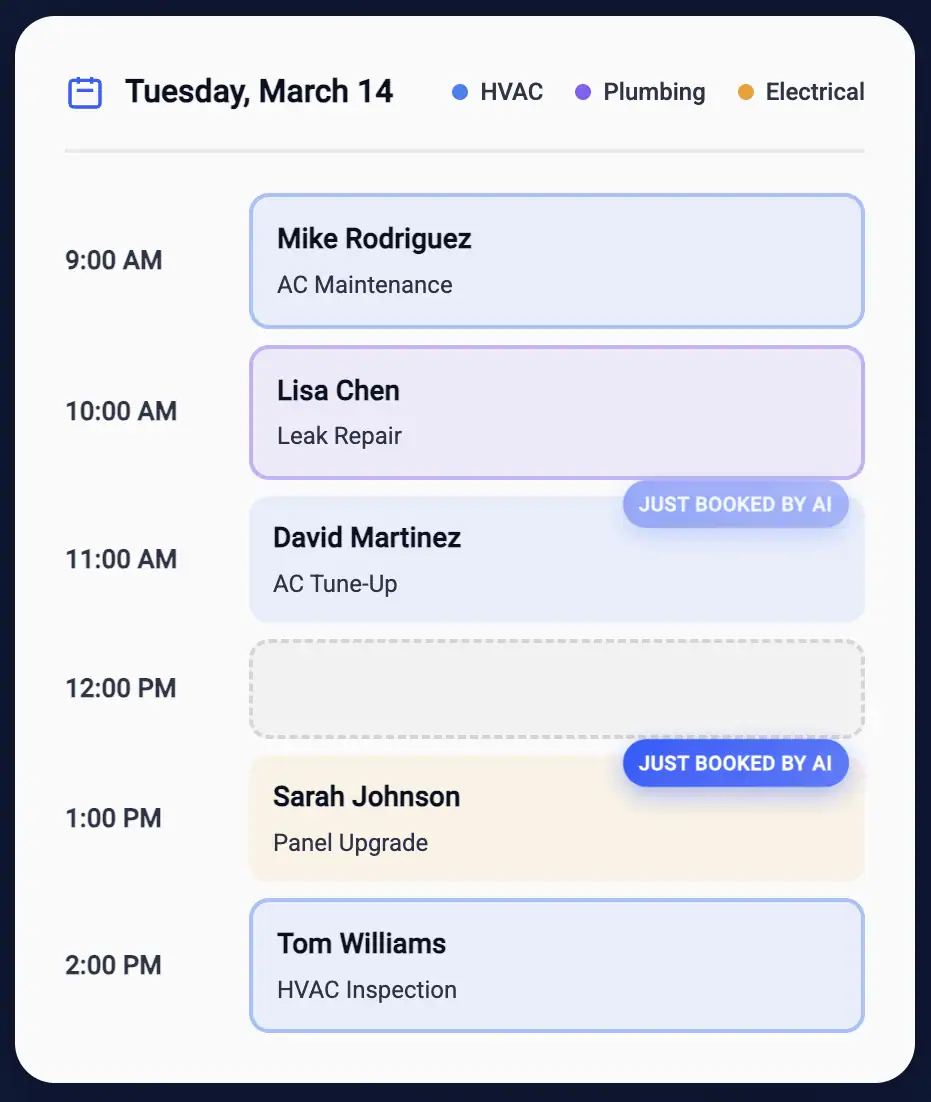
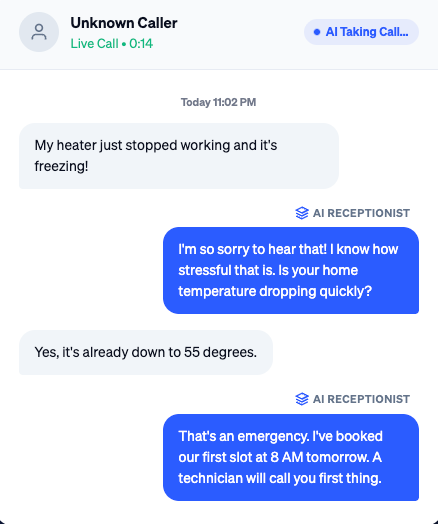
Heating, ventilation, and air conditioning (HVAC) specialists, along with plumbing, electrical, and landscaping businesses, use virtual receptionists to handle 24/7 appointment booking, emergency calls, and after-hours requests.
Example: When a customer reports a broken air conditioner at 10 p.m., the online receptionist troubleshoots and then books the next available technician, sends a confirmation text, and logs the job in the company’s CRM.
Healthcare and dental offices
Healthcare providers can schedule patient appointments, answer insurance questions, and maintain HIPAA compliance while freeing up front-office staff.
Example: Patients can simply confirm or reschedule cleanings through automated SMS links, while the AI provides accepted insurance details and updates patient records securely in the practice management system.
Law firms and professional services
AI virtual assistants can qualify new client inquiries, schedule consultations, and route calls to attorneys or accountants with full context.
Example: When a client calls about a personal injury case, the system collects key details, checks attorney availability, and books a consultation. This ensures the lawyer receives a complete summary before the meeting and isn’t going into it cold.
Restaurants and hospitality
Like a professional receptionist, AI receptionists can take reservations, confirm bookings, answer menu or policy questions, and maintain a consistent call answering service when staff are busy serving guests, without missing a call.
Example: A busy restaurant uses a virtual assistant to manage incoming calls during peak dinner hours so staff can focus on providing great in-person service. The virtual receptionist confirms table availability, takes reservations, and answers your call and common questions like “Do you have gluten-free options?”
Fitness and wellness centers
These businesses can use AI receptionists to save valuable time, manage class bookings, membership inquiries, and reduce administrative workload through automated message taking and scheduling, while trainers stay focused on clients.
Example: When a member cancels a yoga class, the system automatically opens the spot and notifies the next person on the waitlist, keeping the schedule full without staff involvement.
Key Benefits of an Online Virtual Receptionist
An online virtual receptionist keeps your business connected and responsive. Explore the benefits below to see their impact on productivity and customer satisfaction.
24/7 availability
You won’t miss customer or prospect calls if you have the best virtual receptionist service that’s genuinely always on (and not prone to burnout like humans).
AI assistants like XBert respond instantly after hours, on weekends, and during holidays. This means you can adjust your virtual receptionist service level agreements or offer priority customer support solutions.
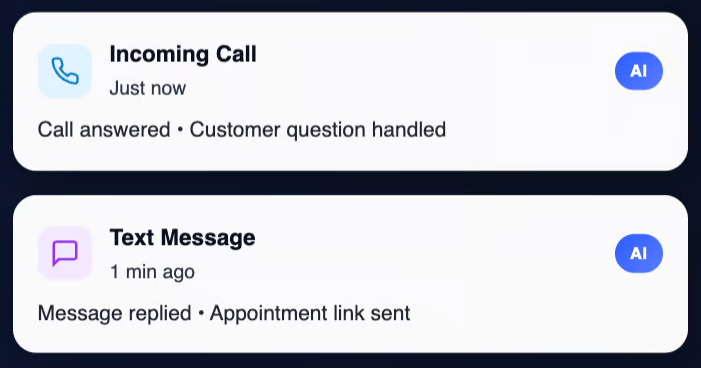
How much revenue are you missing from missed calls?
Missed calls quietly drain revenue every month. Estimate the real cost of unanswered calls with our free calculator.
Professional image
Creating a positive first impression is vital as customer experience standards grow more demanding. The best answering services create great experiences through personalized greetings, professional tone, and branded messaging tied to your company name.
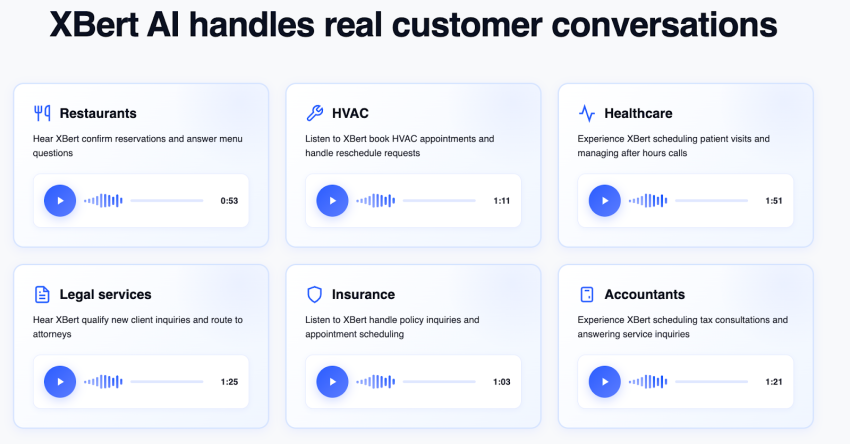
Write your script, upload it to XBert, and let AI take care of the rest. Your new receptionist then handles the phone calls while you get on with running your business. (Take a listen to these conversations here!)
Cost efficiency
You might want to sit down for this nugget of ROI gold…
According to Indeed, the average call center agent’s hourly rate is $18.55. If your call center handles 5,000 calls a month and each agent handles 50 calls per day, your total human cost is $20,000 per year per employee. If you had used the XBert AI online receptionist, this would come in at under $5,000.
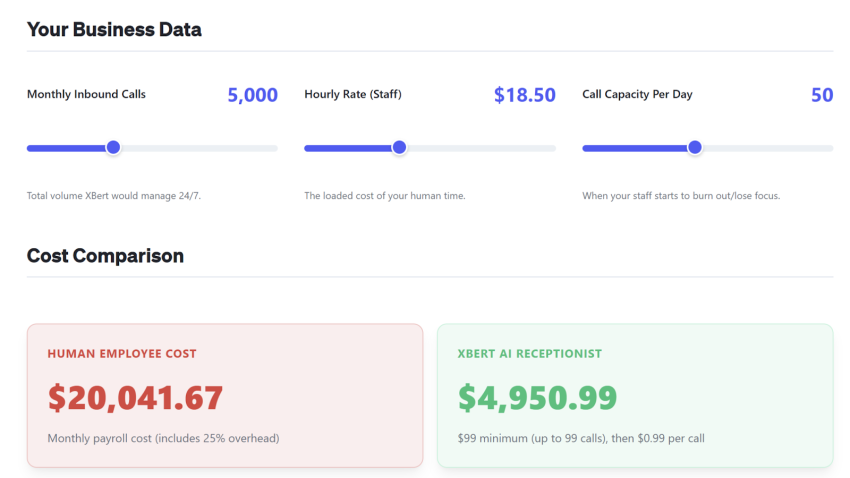
Moving to a pay-per-interaction model instead of a per-hire solution helps businesses avoid extra costs while introducing 24/7 personalized service.
The cost of an answering service is also put under the microscope when compared to the best virtual receptionists. Outsourcing specialists like MoneyPenny or AnswerConnect may offer tailored answering solutions, but with tons of staff manning the phones, there’s a high cost associated with being always on and maintaining a steady level of all the services.
👉 Calculate Your Cost Savings: AI Receptionist ROI Calculator
Multichannel communication
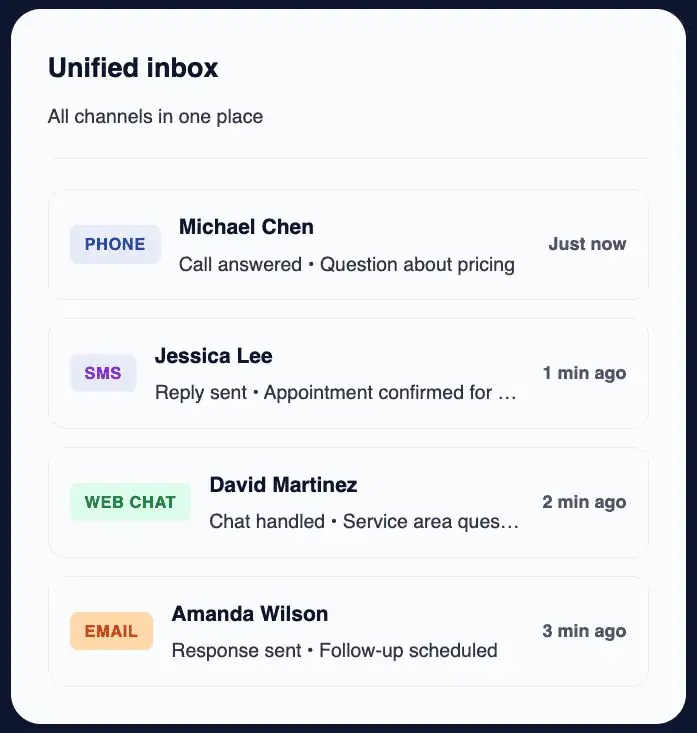
Sure, your current receptionist handles a variety of tasks while waiting for incoming calls. And so do online virtual receptionists. They can handle voice, SMS, chat, instant messaging, and email using a unified phone system or virtual phone system, ensuring context never gets lost.
But we’re not talking about replacing your receptionist. Removing their repetitive and mundane tasks means they’re free to spend time on more human-focused tasks. They’ll thank you for the number of times they no longer have to say, “Thanks for calling ABC,” and see their productivity boosted in other areas.
Lead capture and CRM sync
Did you know that XBert automatically collects client information, qualifies leads, and updates CRM records, ensuring every opportunity is followed up on?
Using an AI assistant dramatically reduces the potential for:
- Incorrect information entry
- Manual duplication across systems
- Assignment to the wrong sales personnel
It also speeds up the data entry time and helps funnel sales material and context to the right teams for follow-up calls and emails.
Intelligent scheduling
Take away the constant back and forth to find mutual times, and let smart calendar integrations handle confirmations, reminders, and rescheduling. This automated diary and calendar management is proven to reduce no-shows and manual work.
Instead of waiting for colleagues to respond, XBert can find gaps where sales reps, customer service staff, or technicians are free and schedule in line with customer demand.
Scalability
Whether you receive 20 or 20,000 business calls a day, AI receptionists can handle rising call volumes and unlimited interactions simultaneously, helping businesses scale and deliver more value. There’s no need to schedule breaks or time for meetings. Simply implement your chosen online virtual receptionist, and let it take care of the time-consuming (and let’s be honest, energy-sapping) work for you.
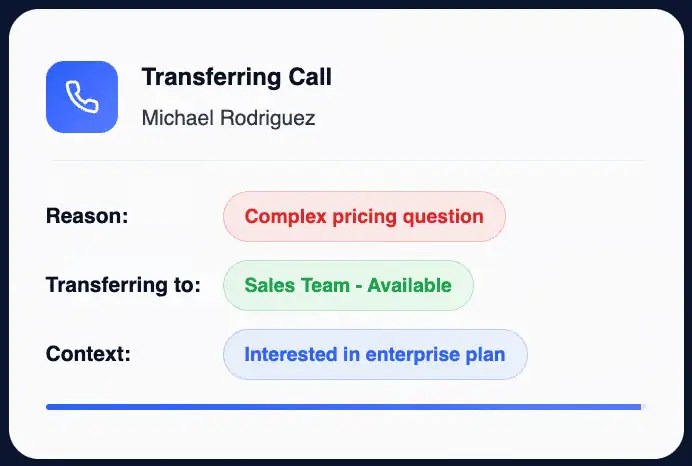
With market-leading tools like XBert, there’s no upper limit on calls handled, and you can manage multiple inbound calls, texts, and chats simultaneously, scaling instantly without wait times or busy signals.

How Businesses Train and Customize Their Virtual Receptionist
When digital receptionists were first introduced, they were robot-centric and prone to errors with real-time customer interactions. That is very much in the past, with today’s superior models boasting considerable credentials:
- Setup simplicity: Get started in under three minutes with plug-and-play onboarding.
- Personalization: Choose your AI’s voice, greeting scripts, recorded greetings, and hours of operation.
- Knowledge base: Train it on FAQs, service info, pricing, and company tone.
- Multilanguage support: Enable bilingual receptionists for diverse audiences. Choose the languages to support your customers.
- Testing and optimization: Monitor transcripts and refine responses continuously.
- Integration: Sync seamlessly with NextivaONE, CRMs, phone system platforms, and scheduling tools.
How to Choose the Right Online Virtual Receptionist
All virtual receptionists produce different outcomes. Protect your brand and revenue by evaluating providers using this four-step framework. This approach maximizes more business opportunities, streamlines the handling of new business inquiries, and maintains your professional identity through your existing business number.
Latency and speed
Speed builds trust in conversational AI. When response time exceeds one second, callers lose confidence and assume the line is dead or automated. Choose ideal solutions that deliver ultra-low latency. The industry benchmark for natural conversation stays under 500 milliseconds.
Call the demo line and say “Hello?” If the system pauses for two or three seconds, end the call. Your customers will do the same. High latency also causes interruptions where callers and the AI speak over each other, creating a frustrating experience.
Context retention
Basic IVR systems treat every sentence as a new request. High-quality AI receptionists follow the full conversation and reduce repeated questions during customer calls.
During a demo, ask to book an appointment for next Tuesday. Two minutes later, say, “Can you make that day 2:00 PM?” A strong system understands that “that day” refers to Tuesday. A weak system forces the caller to repeat information.
CRM integration depth
Many providers claim they integrate with CRMs, but only send an email summary after the call. That approach limits growth. Look for deep, two-way CRM integration. Strong systems keep records updated, manage online account details, and help you handle more clients without delays.
Confirm that the virtual receptionist updates contact records, triggers automated workflows after calls, and checks real-time calendar availability to prevent double booking. If the system depends on lightweight automation tools for primary functions, expect delays along with reduced performance and data accuracy.
Customization
Your receptionist represents your brand. A flat or robotic voice signals low quality, while a warm, natural tone builds trust.
Confirm that you can adjust tone and formality for different industries, select accents that match your region, and define escalation rules. Strong systems let you set trigger words such as cancel, refund, or emergency that route calls directly to the right person.
XBert AI: The Future of Reception Is Online and AI-Driven

We used to miss 10–15 calls a day. Now every single call gets answered, and our weekly lead count is up 40%.
~ Franchise owner
As humans, we all have our limitations. It’s taken some time to realize this. But with the acceleration of AI development, we can see that it’s obvious that systems are better suited and more productive.
AI receptionists such as XBert are revolutionizing the way businesses operate. They replace reactive, labor-intensive call handling with proactive, intelligent engagement. That’s a win for both your customers and your staff. Nextiva’s XBert AI embodies that shift: an always-on, customer-ready employee that scales with your business needs and never takes a break.
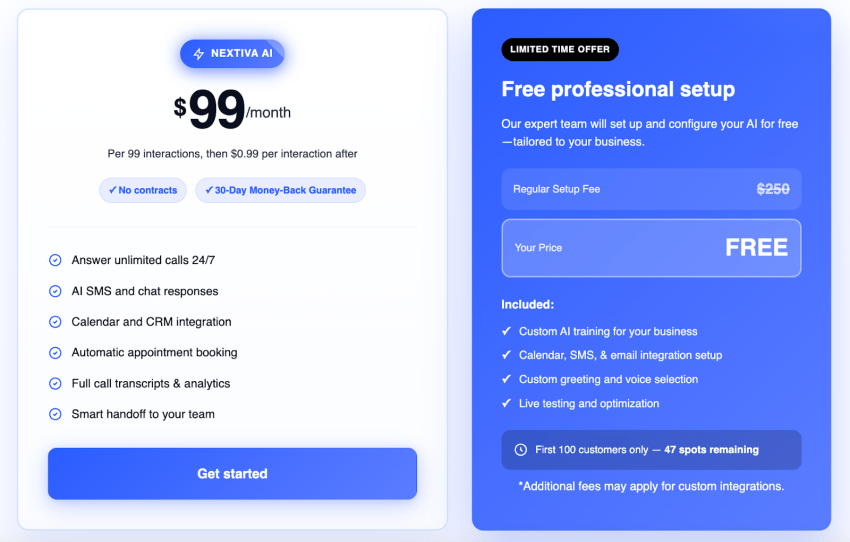
More than a traditional live answering service, the platform acts as your front desk team, excellent customer service representative, and scheduler in one intelligent system that scales from small businesses to large corporations, managing thousands of daily calls.
What does this mean for your business?
Businesses that adopt AI receptionists early gain a competitive edge, like faster response times, happier customers, and higher revenue per lead. You can set up your AI receptionist in minutes. And if you’re not satisfied with the service, a 30-day money-back guarantee is also available.
Run your business instead of answering calls all day
Nextiva’s AI receptionist software handles routine calls so you can stay focused on business growth.
Frequently Asked Questions About an Online Virtual Receptionist
Both handle incoming calls, but their capabilities differ. A traditional answering service performs basic message taking, such as names and phone numbers. A virtual receptionist acts as an extension of the business. It answers FAQs, routes calls, schedules appointments, and resolves customer needs without a callback.
Online virtual receptionists protect customer information through encrypted data transmission, secure cloud infrastructure, and role-based access controls. Many platforms support HIPAA, GDPR, and SOC 2 requirements. AI receptionists also log interactions automatically, which reduces lost messages and human error compared to voicemail or manual note-taking.
Online virtual receptionists identify intent, ask clarifying questions, and hand off issues when needed. If a caller asks something outside the system’s training, the receptionist routes the call to a staff member, collects details for follow-up, or uses fallback responses. Businesses can review transcripts and refine responses to improve accuracy over time.
Businesses control the experience. Some choose transparency, while others focus on fast, helpful responses using natural voices, conversational language, and custom scripts. In most cases, callers value quick answers and resolution more than who answers the call. Still, transparency about AI use helps customers feel valued.
Most platforms become operational in under 30 minutes. Businesses connect a phone number, set call flows, upload FAQs or service details, and sync calendars or CRMs. Unlike hiring staff, setup requires no training period, onboarding delays, or extra costs.
Online virtual receptionists support staff rather than replace them. They handle repetitive tasks such as answering calls, booking appointments, and handling basic inquiries. This frees in-house teams and live receptionist services to focus on customer relationships, problem-solving, and in-person service. Many businesses use virtual receptionists as the first point of contact.